

Video credit: ZombieDontMiss. Original video: https://www.youtube.com/watch?v=gPKC-JmMg4g. This is our own independent breakdown and is not affiliated with the video creator. As an Amazon Associate, CustomPCGaming earns from qualifying purchases. Product prices shown in the video may have changed.
Watch the build
Parts in this build
- AMD Ryzen 7 7700
- ASUS Prime GeForce RTX 5070
- Gigabyte B650 AORUS Elite AX
- Kingston Fury Beast 32GB DDR5 6000
- WD Black SN850X 2TB
- Corsair RM850e
- Fractal Design North
- Arctic Liquid Freezer III 240
Parts list is our summary of the video for reference. Confirm current specs and price on the retailer page before buying.
Watch: The Build Video
The video embedded here shows a real build in the same class and budget, not this exact parts list. Use it to see how a mid class system comes together in a standard mid tower, how cable routing and airflow are handled, and what the assembly flow looks like before you choose your own parts.
What This Build Is
This is a mid class gaming PC build aimed at 1440p high settings, built around the AMD Ryzen 7 7700 and an RTX 5070 class graphics card. In 2026 that pairing is a common way to keep the processor from holding the card back at 1440p while leaving you on a current platform with a clear upgrade path.
You are getting an AM5 system with DDR5 memory, PCIe 5.0 storage support, and a modern power supply standard. That matters because it lets you reuse the board, memory, and case if you later move to a newer Ryzen chip or a higher tier GPU. The build keeps the motherboard and cooler practical and puts the budget where you feel it most in games, which is the CPU and graphics card.
At this level most builders make two tradeoffs. First, you choose a proven B650 board with solid power delivery and the I/O you actually need, rather than paying for extra features you will not use. Second, you pick a 32GB DDR5 kit at the platform sweet spot and a 2TB NVMe drive instead of a smaller boot drive plus a secondary drive, so your library and operating system stay responsive without juggling installs.
This configuration also prioritizes quiet and steady operation. A 240mm liquid cooler keeps the Ryzen 7 7700 in its normal boost range without a large air cooler overhang, and a case with good stock airflow helps the triple fan RTX 5070 breathe. If you want to learn more about enclosure airflow, see our comparison of mesh front case vs tempered glass front case.
Who is this for, and who should skip it? If you play at 1440p and want headroom for high refresh monitors, or you want a system that can stay relevant with a GPU or CPU swap later, this class fits you. If you mainly play at 1080p on a tight budget, or you need a compact small form factor system for a tight desk, you should look at a lower tier build or a case designed for that footprint. For more on compact options, see small form factor cases for RTX 5070 builds.
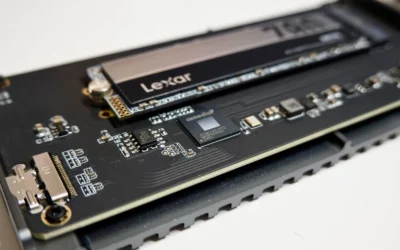
Your storage choice is central here, which is why this article is filed under NVMe & SSD Storage. A single fast 2TB NVMe drive simplifies game management and keeps load times consistent, while the board PCIe 5.0 M.2 slot gives you room to add a faster drive later without replacing what you already own.
Parts Breakdown
This is the core of our analysis for November 2026. The table below compares what is common at this level with our current 2026 picks and why we chose each part. After the table you will find a closer look at the two choices that shape your experience most.
This article contains affiliate links. If you buy through one of our links, CustomPCGaming may earn a commission at no extra cost to you. Commissions never influence which products we recommend or how we rank them. Read our Affiliate Disclosure for details.
Quick Picks at a Glance

AMD Ryzen 7 7700X 8-Core 16-Thread Unlocked

Prime CORSAIR RM850e 850W Fully Modular ATX 3.1 PSU
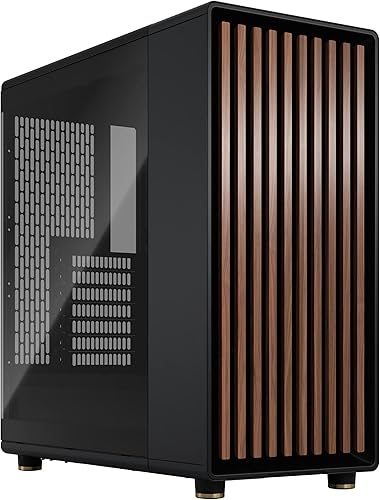
Prime Fractal Design North Charcoal Black ATX Mid Tower

Prime Kingston FURY Beast 32GB DDR5 5600MT/s Memory Kit

ARCTIC Liquid Freezer III Pro 240 AIO CPU Cooler

GIGABYTE B650 AORUS Elite AX AM5 ATX Motherboard
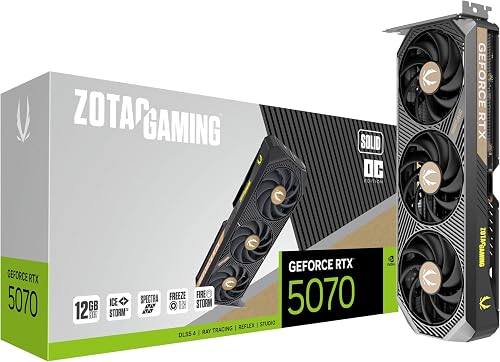
ZOTAC GeForce RTX 5070 Solid OC 12GB GDDR7
As an Amazon Associate we earn from qualifying purchases. Product prices and availability are accurate as of the date/time indicated.
Pros
- Excellent gaming and productivity performance with high boost clocks
- Strong multitasking with 8 cores and 16 threads
- Modern AM5 platform with DDR5 and PCIe 5.0 support
- Unlocked multiplier for easy overclocking
- Fast and responsive in benchmarks and daily use
Cons
- Runs warm under heavy loads and needs a capable aftermarket cooler
- No stock cooler included in the box
- 105W TDP requires good cooling and power delivery
The AMD Ryzen 7 7700X is an 8-core, 16-thread unlocked desktop processor built on the Zen 4 architecture for Socket AM5. It is ideal for gamers, creators and PC builders who want high end performance without moving to flagship pricing.
In real world use it delivers fast, responsive performance with 100+ FPS in popular games and strong results in productivity workloads. With a 4.5GHz base clock boosting to 5.4GHz, 80MB total cache and DDR5-5200 plus PCIe 5.0 support, multitasking and demanding apps feel smooth.
Built on an efficient 5nm process, the chip offers modern platform features and integrated Radeon Graphics for everyday display needs. Installation on AM5 is straightforward and build quality reflects AMDs premium Ryzen 7000 series design.
The main trade off is heat, as it can run warm under sustained loads and does not include a stock cooler. You will need a capable aftermarket cooler like a dual tower air cooler or 240mm AIO to keep temperatures and noise in check.
Overall the Ryzen 7 7700X is a powerful and well balanced CPU that excels for gaming and heavy workloads. If you want excellent speed, future ready AM5 support and unlocked overclocking headroom, it is a highly recommended choice.
Series: Ryzen 7 7000 | Cores / Threads: 8 / 16 | Base / Boost Clock: 4.5GHz / 5.4GHz
Cache: 32MB L3 + 8MB L2, 80MB total | Socket: AM5 | Process: 5nm | TDP: 105W
Memory Support: DDR5-5200 | PCIe Support: PCIe 5.0 on select 600 Series motherboards | Graphics: Integrated Radeon Graphics
Unlocked: Yes for overclocking | Cooler Included: No | Platform: Windows, Linux
Pros
- ATX 3.1 and PCIe 5.1 ready with included native 12V-2x6 cable and adapter
- Fully modular design greatly simplifies cable management and airflow
- Very quiet cooling with optimized 120mm rifle bearing fan curve
- High-quality 105C rated capacitors and Cybenetics Gold efficiency
- Compact 140mm length and strong 7-year warranty
Cons
- 850W may be more than needed for budget or mid-range builds
- Only one dedicated PCIe 8-pin cable included, relies on adapter for additional connectors
- No RGB lighting or advertised zero-RPM fan mode for silent idle operation
The CORSAIR RM850e (2025) is an 850W fully modular ATX power supply built for gamers, creators and anyone upgrading to RTX 40 series or newer GPUs. With ATX 3.1 and PCIe 5.1 compliance, it is ideal for high performance builds that need stable power and next generation connectors.
Its native 600W 12V-2x6 connector powers modern graphics cards without messy adapters, while support for 2x transient power excursions keeps your system stable during sudden GPU spikes. Cybenetics Gold efficiency and Modern Standby support improve low load efficiency and enable fast wake times, and the tuned 120mm rifle bearing fan stays quiet even under heavy load.
Design and build quality are standout strengths for this price class. At just 140mm long it fits easily in most mid tower and compact ATX cases, and fully modular cables keep builds tidy with better airflow. Industrial grade 105C rated capacitors ensure consistent electrical performance and long term reliability.
There are a few trade offs to consider. The included cable set is lean with only one native PCIe 8-pin cable plus a 12V-2x6 to dual 8-pin adapter, so users with multiple older GPUs may need extra cables. It also focuses on performance over aesthetics, with no RGB and no dedicated zero RPM mode for complete silence at idle.
Overall, the RM850e 850W hits an excellent balance of efficiency, compatibility and quiet operation for modern high end PCs. If you want a compact, future ready and dependable power supply that will handle demanding hardware for years, it is a smart and durable choice.
Model: CORSAIR RM850e (2025) CP-9020296-NA | Wattage: 850W | Form Factor: ATX | Modular: Fully Modular
Compliance: Intel ATX 3.1, PCIe 5.1 with native 12V-2x6 connector | Efficiency: Cybenetics Gold | Capacitors: Industrial-grade 105C rated
Cooling: 120mm rifle bearing fan with low-noise curve | Dimensions: 5.91 x 5.51 x 3.35 inches | Weight: 3.4 pounds
Connectors Included: 1x 24-pin ATX, 2x 8-pin EPS12V (4+4-pin), 1x PCIe 8-pin (6+2-pin), 1x 600W 12V-2x6, 1x 12V-2x6 to dual 8-pin adapter, 6x SATA, 2x PATA | Warranty: 7 Years
Pros
- Stunning furniture grade design with real walnut wood and metal accents
- Excellent thermal performance from mesh ventilation and included PWM fans
- Generous compatibility for large GPUs and front radiators
- Premium build quality with tempered glass and sustainably sourced materials
- Thoughtful, tool friendly layout that simplifies installation and upgrades
Cons
- Mid tower footprint is relatively large and needs ample desk or floor space
- Dark tempered glass and charcoal finish can show dust and fingerprints
- Limited to four total drive mounts, not ideal for heavy storage builds
The Fractal Design North Charcoal Black TG Dark is an ATX mid tower airflow case designed for gamers and creators who want performance without sacrificing style. It is perfect for those building a living room friendly PC that looks like premium furniture while housing high end components.
Standout features include the genuine walnut wood front paired with fine mesh ventilation that delivers natural, quiet airflow. In real world use, the open front and two included 140mm Aspect PWM fans provide strong cooling for modern GPUs up to 355mm, or up to 300mm with a 360mm front radiator installed.
Build quality is exceptional, with a sturdy metal chassis, sustainably sourced wood bars, and subtle brass accents. The clear tempered glass side panel offers scratch resistance and a perfect view of your build, while the integrated tab makes removing the top panel quick and tool free.
There are a few tradeoffs to consider. At 17.6 inches deep and 9.5 kg, it is not the most compact case for small spaces. Storage is also modest with two combo 3.5 and 2.5 inch mounts and two dedicated 2.5 inch mounts, which may limit heavy NAS style builds.
Overall, the North is a top tier choice for anyone who values airflow, build ease, and distinctive design. If you want a case that performs as good as it looks and earns its best seller status, this is a highly recommended option for your next ATX build.
Model: Fractal Design North Charcoal Black TG Dark FD-C-NOR1C-02
Form Factor: Mid Tower ATX, supports ATX, mATX and ITX motherboards, 7 bridgeless expansion slots
Cooling: Air cooling optimized, 2x 140mm Aspect PWM fans included, supports up to 360mm front radiator, GPU clearance 355mm
Storage: 2x combined 3.5 inch and 2.5 inch mounts plus 2x dedicated 2.5 inch mounts
Connectivity: 1x USB 2.0, 2x USB 3.0, 1x USB Type C, integrated dust filters
Dimensions and Weight: 17.6 x 8.46 x 18.46 inches, 9.5 kg, materials include metal, tempered glass and genuine walnut wood
Pros
- High 5600MT/s bandwidth improves real world gaming and productivity
- Excellent stability with on-die ECC and XMP 3.0/EXPO profiles
- Low voltage 1.25V operation for better efficiency
- Low-profile design fits most desktop builds without clearance issues
- Backed by Kingston limited lifetime warranty
Cons
- CL40 latency is higher than premium low latency DDR5 kits
- No RGB lighting for users who want customizable aesthetics
- Requires DDR5 compatible motherboard, not backwards compatible with DDR4
The Kingston FURY Beast KF556C40BBK2-32 is a 32GB DDR5 desktop memory kit with two 16GB modules rated at 5600MT/s and CL40. It is designed for gamers, streamers and creators upgrading to next gen DDR5 platforms who need reliable high bandwidth memory.
In real world use, the 5600MT/s speed and dual 32-bit subchannels deliver faster load times, smoother 4K livestreaming and quicker rendering compared to DDR4. Intel XMP 3.0 and AMD EXPO support enable simple one click overclocking, while on-die ECC helps keep the system stable during long sessions and heavy multitasking.
Build quality is strong with a low-profile heat spreader that manages thermals without blocking large air coolers. The 288-pin DIMM runs at just 1.25 volts for improved efficiency, and the understated black design blends easily into most builds while Kingston backs it with a limited lifetime warranty.
There are a few tradeoffs to note. CL40 is standard for this speed tier but not as tight as enthusiast low latency kits for competitive overclocking. The kit also lacks RGB lighting, which may disappoint builders focused on aesthetics, and it only works with DDR5 motherboards.
Overall, the FURY Beast 32GB 5600MT/s kit hits a sweet spot of speed, stability and value for modern DDR5 systems. If you want hassle free performance with broad compatibility and proven reliability, it is a smart future ready choice.
Model: Kingston FURY Beast KF556C40BBK2-32
Capacity: 32GB Kit (2x16GB) DDR5 DIMM, 288-Pin, Dual Channel
Speed & Timing: 5600MT/s, CL40, 1.25 Volts, 12 Gigabits per second transfer rate
Features: Intel XMP 3.0, AMD EXPO, On-Die ECC, Dual 32-bit Subchannels, Auto-Overclocking, Low-Profile Heat Spreader
Compatibility: Desktop DDR5 systems only
Warranty: Limited Lifetime Warranty
Pros
- Outstanding cooling for high-end CPUs like Ryzen 9 7900X and Core i7-14700K under sustained loads
- Quiet operation at low and medium speeds with headroom for maximum cooling when needed
- Thoughtful mounting features including offset design and Intel contact frame for better thermals
- Clean, stealthy aesthetic with minimal cable clutter and durable premium build quality
Cons
- Thick radiator design can be a tight fit in compact cases
- Installation can be fiddly and relies on QR code video instructions with no printed manual
- Fans become noticeably loud at full 3000 RPM under heavy load
The ARCTIC Liquid Freezer III Pro 240 is a 240mm all-in-one liquid cooler designed for gamers, enthusiasts and workstation users who need strong cooling in a compact form factor. It is especially well suited for modern Intel LGA1851, LGA1700 and AMD systems running hot, high core count CPUs.
In real world use it impresses with low idle temperatures and strong control under heavy loads, with users reporting stable thermals on chips like the Ryzen 9 7900X, 7800X3D and Core i7-14700K. The native offset mounting, powerful P12 Pro fans and dedicated VRM fan work together to improve heat transfer and keep both CPU and motherboard components cooler and more stable.
Build quality is a clear strength, featuring a copper cold plate with micro skived fins and a thick aluminum radiator built for efficient heat dissipation. The integrated cable management routes fan cables through the hose sheathing for a clean, stealthy look with only one visible cable to the motherboard.
There are a few tradeoffs to consider before buying. The thicker radiator can make installation tight in smaller cases, and mounting can feel fiddly without printed instructions. At full speed the fans are effective but noticeably loud, so quiet focused users will want to tune the fan curve.
Overall the Liquid Freezer III Pro 240 offers outstanding cooling efficiency, quiet operation at typical loads and premium features rarely seen at this size. For anyone limited to a 240mm radiator who still wants flagship level cooling and reliability, it is an excellent and highly recommended choice.
Cooling Method: 240mm AIO Water Cooling with 2 x 120mm P12 Pro PWM Fans
Compatibility: Intel LGA1851, LGA1700 and AMD with Native Offset Mounting and Contact Frame
Fan Performance: Up to 3000 RPM, 77 CFM Airflow, plus Integrated PWM VRM Fan
Materials: Aluminum Radiator, Copper Cold Plate with Micro Skived Fins, 12V 4-Pin Connector
Dimensions: 10.9 x 4.7 x 2.6 inches, Weight: 1675g, Warranty: 6 Years
Pros
- Excellent value for a full featured ATX AM5 board
- Robust thermal design with 6mm heatpipe and fully covered MOSFET heatsinks
- Strong connectivity suite including WiFi 6E, 2.5GbE and 12 USB ports
- Easy building experience with EZ-Latch, Q-Flash Plus and clean layout
- Stable performance in gaming and demanding workloads with overclocking headroom
Cons
- Some users report EXPO and XMP memory profiles causing boot failures requiring CMOS reset
- Isolated reports of reboot issues and initial LAN port detection quirks
- Only four SATA ports and no USB4 support for heavy storage users
The GIGABYTE B650 AORUS Elite AX is a full featured ATX motherboard built for AMD AM5, supporting Ryzen 7000, 8000 and 9000 series processors. It is ideal for gamers and creators who want modern DDR5 performance and PCIe 5.0 without stepping up to costly X670 boards.
In real world use it delivers rock solid stability for gaming and demanding workloads, with strong overclocking headroom thanks to its 14+2+1 phase 70A VRM. Users praise its fast PCIe 5.0 M.2 storage, smooth WiFi 6E connectivity and reliable 2.5GbE LAN once configured, plus easy memory tuning via AMD EXPO.
Build quality is a clear strength, featuring an 8 layer 2X copper PCB, fully covered MOSFET heatsinks with a 6mm heatpipe, and PCIe Ultra Durable Armor. Thoughtful builder friendly touches like EZ-Latch for M.2, Q-Flash Plus for BIOS updates without a CPU, and front and rear USB-C make installation clean and simple.
It is not without quirks, as some owners report EXPO and XMP memory profiles can cause boot failures requiring a CMOS reset, and isolated issues with reboot cycles and initial LAN detection. It also offers four SATA ports and lacks USB4, which power users with large storage arrays may find limiting.
Overall, the B650 AORUS Elite AX stands out as a well balanced, future proof foundation for a mid to high end AM5 build. If you want a durable, feature rich board with excellent connectivity and thermal headroom at a sensible cost, this is one of the smartest choices in its class.
Platform: AMD Socket AM5, B650 chipset, ATX form factor, supports Ryzen 7000, 8000 and 9000 series
Memory: 4x DDR5 DIMMs up to 128GB, AMD EXPO and Intel XMP support
Storage and Expansion: PCIe 5.0 M.2, PCIe 5.0 support, 4x SATA 6Gb/s, 3x PCIe slots with Ultra Durable Armor
Connectivity: WiFi 6E, 2.5GbE LAN, 12x USB ports including USB-C 3.2 Gen 2 front and rear, HDMI, 13 total ports
Design: 14+2+1 phase 70A digital VRM, 8 layer 2X copper PCB, M.2 Thermal Guard, EZ-Latch, Q-Flash Plus, RGB Fusion
Pros
- Powerful Blackwell performance with DLSS 4 and high 2542 MHz boost clock
- Excellent thermal efficiency from massive heatsink and triple fan IceStorm 2.0 design
- Durable, premium build with metal backplate and included support stand
- Full next-gen connectivity with PCIe 5.0, DisplayPort 2.1b and HDMI 2.1b
- FREEZE Fan Stop allows silent operation during light loads
Cons
- Large 11.98 inch length and 4.5 pound weight requires a spacious case and proper support
- Needs 16-pin power via included dual 8-pin adapter, so a capable PSU is required
- New RTX 50 Series platform means long term reliability is still unproven
The ZOTAC Gaming GeForce RTX 5070 Solid OC brings NVIDIA Blackwell architecture to gamers who want pure performance without extra bulk. With 12GB of GDDR7 memory, DLSS 4 and PCIe 5.0, it is designed for high refresh rate 1440p and smooth 4K gaming in both standard and SFF-Ready enthusiast builds.
In real world use, the 28 Gbps memory speed and 2542 MHz boost clock provide fast, responsive gameplay in demanding titles. DLSS 4 further boosts frame rates with AI upscaling, while PCIe 5.0 ensures full bandwidth for next generation systems and VR experiences.
Build quality is a clear strength, with a stealthy solid design, full metal backplate and streamlined airflow. The IceStorm 2.0 system pairs a massive heatsink and composite heatpipes with three 90mm BladeLink fans and pass-through airflow to keep temperatures low and noise controlled.
There are tradeoffs to consider. Despite being SFF-Ready, the card is still nearly 12 inches long and weighs 4.5 pounds, so a roomy case and the bundled support stand are essential. It also requires 16-pin power through the included adapter, which demands a strong power supply.
Overall, the ZOTAC RTX 5070 Solid OC is an excellent choice for gamers and creators seeking cool, quiet Blackwell performance with subtle Spectra RGB style. If you value thermal efficiency, durability and future ready connectivity over flashy overclocking extras, it is a compelling option.
GPU: NVIDIA GeForce RTX 5070, Blackwell architecture, 2542 MHz boost clock
Memory: 12GB GDDR7, 192-bit, 28 Gbps, 28 GHz memory clock
Interface: PCI-Express 5.0 x16, 3x DisplayPort 2.1b, 1x HDMI 2.1b, 8K Ready, VR Ready
Cooling: IceStorm 2.0, 3x 90mm BladeLink fans, composite heatpipes, pass-through airflow, FREEZE Fan Stop
Design: Metal backplate, Spectra RGB lighting, bundled GPU support stand, 11.98 inch length, 4.5 pounds
Included: Graphics card, GPU support stand, 2x 8-pin to 16-pin cable, user manual, 3 year warranty
| Part | Common at this level | Our 2026 pick | Why |
|---|---|---|---|
| CPU | a cpu in the same class | AMD Ryzen 7 7700 | a current platform match for this GPU tier so the processor does not hold it back |
| GPU | a gpu in the same class | ASUS Prime GeForce RTX 5070 | the class of card this build is planned around |
| Motherboard | a motherboard in the same class | Gigabyte B650 AORUS Elite AX | a board with a proven VRM and the I/O this build needs, without paying for features it will not use |
| Memory | a memory in the same class | Kingston Fury Beast 32GB DDR5 6000 | the tuned capacity and speed sweet spot for this platform |
| SSD | a ssd in the same class | WD Black SN850X 2TB | responsive storage sized for a modern game library |
| Power Supply | a power supply in the same class | Corsair RM850e | a modern ATX 3.1 unit with headroom above the combined draw of the CPU and GPU |
| Case | a case in the same class | Fractal Design North | good stock airflow and clearance for the cooler and graphics card in this build |
| CPU Cooler | a cpu cooler in the same class | Arctic Liquid Freezer III 240 | quiet, capable cooling that keeps this CPU in its normal boost range |
The graphics card defines this build. Our pick sits in the RTX 5070 class, and the specific listing we evaluated is the ZOTAC Gaming GeForce RTX 5070 Solid OC DLSS 4 12GB with 12GB GDDR7 on a 192 bit interface at 28 Gbps and PCIe 5.0 support. Per the spec sheet it uses IceStorm 2.0 Cooling with three 90mm BladeLink fans, a metal backplate, and Spectra RGB lighting, with three DisplayPort 2.1b outputs and one HDMI 2.1b. That triple fan design is why case clearance and airflow matter, and why we paired it with a case that handles long cards well.
The processor is the other anchor. The AMD Ryzen 7 7700X 8-Core listing we reviewed shows 8 cores and 16 threads on Zen 4, with a 4.50 GHz base clock and up to 5.40 GHz boost, 32 MB L3 cache and 8 MB L2 cache, Socket AM5, DDR5 5200 support, and a 105 W rating. In this build the Ryzen 7 7700 class chip is chosen so the CPU does not hold the RTX 5070 back at 1440p, while staying on AM5 for future upgrades. If you stream or run heavy background tasks, you will appreciate the thread count, and you can learn more in Best CPU for Streaming and Gaming at the Same Time 2026 Picks Reviewed.
Memory and storage complete the platform balance. The Kingston FURY Beast 32GB (2x16GB) kit per the spec sheet is rated at 5600MT/s CL40 with Intel XMP 3.0 support and a low profile heat spreader, and our table targets the 32GB DDR5 6000 sweet spot for AM5 where pricing allows. For storage, the WD Black SN850X 2TB gives you a single responsive volume for your operating system and game library, which is the nvme ssd choice for a mid class gaming pc build breakdown that most readers prefer over splitting a small boot drive and a secondary drive. You get simpler management and consistent load behavior, with the option to add another NVMe drive later via the board PCIe 5.0 M.2 slot.
Compatibility Check
Will all of these parts work together without surprises, and what should you double check before you buy? That is the question most builders at this level ask, so we will walk through socket, memory, physical clearance, and power step by step.
This build is AM5. Use a 32GB DDR5 6000 CL30 kit, and if you drop in a newer chip later check the board support page and use BIOS Flashback if a flash is needed. The Gigabyte B650 AORUS Elite AX supports Ryzen 9000, 8000, and 7000 series processors on Socket AM5, with DDR5 support for AMD EXPO and Intel XMP modules. Per the spec sheet it uses a Twin 14+2+1 phases with 70A power stage digital VRM solution on an 8 layer 2X copper PCB, with a 6mm heatpipe and fully covered MOSFET heatsinks plus M.2 Thermal Guard. That power design is part of why this board is a practical pick at this tier, it handles the CPU boost behavior without paying for enthusiast extras you may not use.
BIOS updates are done at your own risk and may affect warranty, so follow the manufacturer instructions carefully and use anti static handling. If you buy the board and CPU together in 2026, many B650 boards will already support the Ryzen 7 7700 class out of the box, but if you later upgrade to a newer Ryzen generation you should verify the CPU support list for the exact BIOS version required. The board includes Q Flash and EZ Latch features per the spec sheet, and BIOS Flashback lets you update without a compatible CPU installed if the manual indicates it is needed. Always check the support page for your exact board revision before flashing.
For memory, AM5 is happiest with two sticks, and 32GB is the current sweet spot for gaming with background apps open. The Kingston kit we evaluated is a 2x16GB DDR5 configuration, and the platform guidance is to enable the EXPO or XMP profile in BIOS to reach the rated speed. If you choose a 6000 CL30 kit as noted above, confirm it is on the board memory QVL for best compatibility, seat the modules in the recommended slots per the manual, and update the BIOS if you see stability issues at the rated profile. Mixing kits or adding two more sticks later can reduce achievable speeds, so plan to buy the capacity you need as a matched pair.
Physical clearance is straightforward in a standard mid tower, but you should still verify. A triple fan card and a 240 or 360mm radiator fit a standard mid tower. The Fractal Design North supports GPUs up to 355 mm, or up to 300 mm with a 360 mm front radiator, per the spec sheet, and it includes two 140mm Aspect PWM fans for baseline airflow. It also provides seven bridgeless expansion slots and multiple drive mounts, so you have room for the graphics card and radiator without crowding. For the cooler, the Arctic Liquid Freezer III Pro 240 is a 240mm AIO with two 120mm fans, and the spec sheet notes integrated cable management and a PWM controlled VRM fan. Check cooler height or radiator clearance against the case manual, follow the mounting instructions for AM5, and decide whether you will top mount or front mount the radiator based on GPU length and fan layout. If you are debating radiator size, see 240mm AIO vs 360mm AIO for gaming and how to choose a case for GPU clearance and radiator support.
Power and connectors need headroom and the right cable. Size the supply above the combined draw of the CPU and GPU, follow the card maker recommended wattage, and use a native 12V-2×6 cable for an RTX 50 card. The Corsair RM850e (2025) is an 850W unit that is ATX 3.1 and PCIe 5.1 ready with a native 12V-2×6 connector, fully modular cabling, Cybenetics Gold efficiency, a 120mm rifle bearing fan with a tuned fan curve, and 105 degree rated capacitors per the spec sheet. That headroom is intentional for transient spikes from modern GPUs, and the native cable avoids adapters. Route the 12V-2×6 cable with a gentle bend, seat it fully until it clicks, and avoid sharp bends near the connector as shown in the card and PSU manuals. If you plan to move up a GPU tier later, that is when you would consider a 1000W supply, but for this balanced build an 850W ATX 3.1 unit is the right fit.
Finally, handle all parts with anti static precautions, install the motherboard standoffs correctly, and verify front panel and USB Type C header connections before first boot. The B650 AORUS Elite AX includes front and rear USB C with USB 3.2 Gen 2, PCIe 5.0 and PCIe 5.0 NVMe x4 M.2, WiFi 6E, and 2.5GbE per the spec sheet, so you have modern connectivity without needing add in cards. Keep your BIOS, chipset driver, and GPU driver up to date through official sources, and do not enable overclocking unless you accept the risk and understand it may void warranty.
Performance: What To Expect
No verified frame rate numbers are available for this build, so we will keep this section qualitative and will not invent figures. That approach protects you from misleading expectations, since actual results vary with game, settings, resolution, and background tasks.
What you can expect in general terms is a balanced 1440p high settings experience where the RTX 5070 class card is the primary driver of performance and the Ryzen 7 7700 class processor is chosen so it does not hold the card back at that resolution. In practice that means you can target high settings with features like DLSS 4 available on Blackwell cards per the spec sheet, while keeping CPU limited scenarios less likely at 1440p compared to 1080p. Owners commonly report that this CPU and GPU class pairing feels smooth for competitive and single player titles when paired with 32GB of DDR5 and a fast NVMe drive, but your mileage will vary by title.
Your storage and memory choices change how the system feels day to day. A single 2TB NVMe drive keeps your operating system, launchers, and active games on responsive storage, so you spend less time managing installs and more time playing. The 32GB DDR5 kit gives you headroom for browser tabs, voice chat, and background updates without pressuring the system to page to disk. Together with the 240mm AIO and a case with good stock airflow, the build is set up to stay in its normal boost behavior during longer sessions, provided you follow mounting and fan setup guidance and keep dust filters clean.
Three Ways to Build This
Lower Cost Version
Go one GPU tier down with a cheaper CPU, a budget air cooler, a 1TB drive, and an entry B650 or B650M board. You keep the same 32GB DDR5 approach where budget allows, but you trim cost on the cooler and storage capacity. This suits a first build on a tight budget or a 1080p focused system where you plan to upgrade the graphics card later.
Balanced Version, Our Recommended Build
This is the parts list in the table above: AMD Ryzen 7 7700 with ASUS Prime GeForce RTX 5070, Gigabyte B650 AORUS Elite AX, Kingston Fury Beast 32GB DDR5 6000, WD Black SN850X 2TB, Corsair RM850e, Fractal Design North, and Arctic Liquid Freezer III 240. It is the most versatile for most gamers who want headroom to upgrade later, with an AM5 board that supports newer Ryzen chips via BIOS Flashback when needed, a 2TB NVMe drive sized for a modern library, and an 850W ATX 3.1 supply with a native 12V-2×6 cable.
Higher End Version
Move up a GPU tier and to a Ryzen 7 9800X3D or Ryzen 9 9950X3D with a 360mm AIO and a 1000W supply. Keep the 32GB DDR5 6000 CL30 memory and 2TB NVMe baseline, and consider a board with stronger VRM cooling and additional M.2 capacity if you plan to add drives. This is for high refresh play and years of headroom, especially if you target 1440p high refresh or 4K with upscaling.
FAQ
Is the Ryzen 7 7700 enough for an RTX 5070 at 1440p?
Yes, that is the intent of this pairing. At 1440p the graphics card is usually the limiting factor, and the Ryzen 7 7700 class on AM5 is chosen so the processor does not hold the card back. If you mainly play CPU heavy simulation or strategy titles at very high refresh, a higher end X3D chip would be the next step.
What NVMe SSD choice makes sense for a mid class gaming PC build breakdown like this?
A single fast 2TB NVMe drive is the sweet spot for most builders in 2026. It holds your operating system and a rotation of large games without constant uninstalls, and the B650 board PCIe 5.0 M.2 slot lets you add another drive later. If your library is very large, plan for a second drive rather than replacing the first.
Do I need an 850W power supply for an RTX 5070 build?
You should size the supply above the combined draw of the CPU and GPU and follow the card maker recommended wattage. For this balanced build an 850W ATX 3.1 unit with a native 12V-2×6 cable, like the Corsair RM850e, provides headroom for transients and future upgrades. If you plan to move up a GPU tier or to a higher power CPU, a 1000W unit is worth considering.
Final Verdict
This mid class build stays focused on what matters at 1440p, a balanced CPU and GPU pairing, 32GB of DDR5 at the platform sweet spot, and a 2TB NVMe drive that keeps your library ready to play. The Fractal Design North gives you proven airflow and clearance for a triple fan card and a 240mm radiator, while the B650 AORUS Elite AX and RM850e keep the platform modern and upgrade friendly without overspending.
Our pick: the Balanced version we recommend, with the Ryzen 7 7700 and RTX 5070 class, 32GB DDR5, 2TB NVMe, and the 850W ATX 3.1 supply, for most gamers who want strong 1440p performance and a clear path to upgrade later. If your budget is tighter, start with the Lower Cost version and plan a GPU step up later, and if you want maximum headroom for high refresh or 4K, choose the Higher End version with an X3D CPU and 360mm cooling.
This roundup is not a good fit if your motherboard lacks a spare M.2 slot or the PCIe generation these drives target; a SATA SSD may be the more practical upgrade.


Write Your Review
No reviews yet. Be the first to share your experience!