

Your system still boots slowly, games take forever to load, and you are constantly juggling files to free up space. If that sounds familiar, moving to a modern NVMe drive is the single most noticeable upgrade you can make, and this guide is built for gamers, students and creators who want responsive performance without complexity.
We evaluated five popular M.2 options from Acclamator, KingSpec, Fikwot and more, focusing on real world speed, endurance features and broad compatibility. You will see how each model handles everyday multitasking, gaming and creative work, plus how to match a drive to your laptop or desktop. If you are pairing a new drive with a quiet build, our guide to the best quiet PC case for a gaming build shows how case airflow influences drive thermals.
This article contains affiliate links. If you buy through one of our links, CustomPCGaming may earn a commission at no extra cost to you. Commissions never influence which products we recommend or how we rank them. Read our Affiliate Disclosure for details.
Quick Picks at a Glance
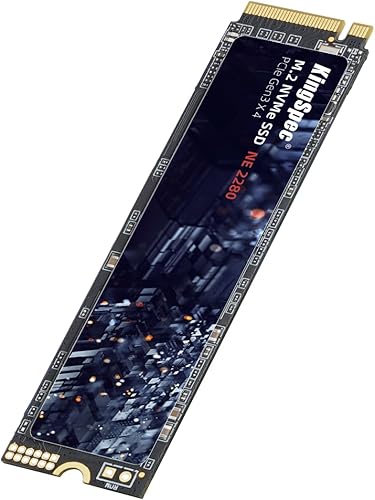
Prime KingSpec 512GB NVMe SSD M.2 2280 Gen3x4 Up

Prime EDILOCA EN680E 512GB NVMe M.2 SSD PCIe Gen3 x4

Prime COLORFUL CN600 512GB NVMe SSD M.2 2280 PCIe Gen3x4

Fikwot FX550 512GB NVMe SSD M.2 2280 PCIe 3.0 x4

Acclamator N20 512GB NVMe M.2 2280 PCIe Gen3x4 SSD
As an Amazon Associate we earn from qualifying purchases. Product prices and availability are accurate as of the date/time indicated.
Pros
- Fast 2400MB/s sequential read for its class
- Broad device and OS compatibility
- Strong data protection and endurance features
- Compact M.2 2280 design for easy upgrades
- 3 year warranty with lifetime support
Cons
- Gen3x4 interface is slower than newer Gen4 drives
- NAND type listed as TLC/QLC and DRAM cache not specified
- Write speeds and endurance rating not clearly detailed for heavy workloads
The KingSpec NE-2280 512GB is an M.2 2280 NVMe Gen3x4 internal SSD designed as an affordable performance upgrade for desktops and laptops. It is ideal for students, office users and casual gamers looking to replace a slow SATA drive or small stock SSD.
With sequential reads up to 2400MB/s and 3D NAND TLC/QLC flash paired with a capable controller, it delivers noticeably faster boot times, game loads and file transfers than SATA. Support for S.M.A.R.T., TRIM, Wear Leveling and LDPC ECC helps maintain consistent performance and data integrity during daily multitasking.
Built in the standard 2280 form factor with PCIe Gen3x4 interface, installation is straightforward in most modern laptops and desktops. The 3D NAND construction and features like Garbage Collection, Over Provisioning and E2E Data Protection contribute to stable, long lasting operation.
As a Gen3 drive, it cannot match the 5000MB/s plus speeds of newer Gen4 models, and sustained write performance may vary since the NAND type and DRAM cache are not fully specified. Users with demanding 4K video editing or heavy workstation workloads may want a higher tier drive with explicit DRAM and endurance ratings.
Overall, the KingSpec NE-2280 offers excellent value for everyday computing, gaming and multimedia use where fast, reliable storage matters. If you need a simple, compatible and efficient 512GB NVMe upgrade with a 3 year warranty, this is a smart and dependable choice.
Capacity: 512GB, Form Factor: M.2 2280, Interface: PCIe Gen3x4 NVMe, Sequential Read: Up to 2400MB/s, Data Transfer Rate: Up to 2200MB/s.
Flash: 3D NAND TLC/QLC, Controller: High quality NVMe controller, Features: S.M.A.R.T., TRIM, Wear Leveling, LDPC ECC, E2E Data Protection, Garbage Collection, Native Command Queuing, Over Provisioning.
Compatibility: Desktops and Laptops, OS Support: Windows 7 to 10, RHEL, CentOS, Linux, Ubuntu, Hardware Platform: X86, Installation: Internal.
Warranty: 3 Year Warranty with lifetime technical support, Model: NE-2280, Use Cases: Business, Gaming, Multimedia.
Pros
- Significantly faster than SATA SSDs for boot times, game loads and file transfers
- Effective graphene cooling and thermal management sustain performance during heavy use
- Strong reliability features including 3D NAND, TRIM, shock resistance and AES-256 encryption
- Wide compatibility with most PCs and laptops plus complete DIY installation kit included
Cons
- PCIe Gen3 interface is slower than newer Gen4 drives and not compatible with PS5
- 1000MB/s write speed is modest compared to other Gen3 SSDs
- Uses Host Memory Buffer instead of dedicated DRAM cache, limiting sustained heavy workloads
The EDILOCA EN680E is a 512GB M.2 2280 NVMe SSD using a PCIe Gen3 x4 interface to deliver a major leap over traditional SATA drives. It is built for students, office users, and casual gamers who want a fast, affordable system upgrade without needing cutting edge Gen4 hardware.
In daily use, sequential reads up to 2050MB/s and writes up to 1000MB/s mean quicker system boots, faster game level loads, and smoother handling of large files. Dynamic SLC caching and HMB memory buffering help keep the drive responsive during multitasking, video editing, and heavy business workloads.
Design focuses on efficiency and durability, pairing 3D NAND flash with a nano-coated graphene heat spreader and auto-adaptive thermal management. At just 7g, the slim M.2 2280 stick fits most laptops and desktops easily, while TRIM support, shock resistance, and AES-256 encryption enhance longevity and data security.
Drawbacks are tied to its Gen3 platform, which cannot match the peak speeds of Gen4 or Gen5 drives and is not suitable for PS5 storage expansion. The write speed is also on the lower side for its class, and the lack of dedicated DRAM cache means intensive sustained writes may slow sooner than premium models.
Overall, the EN680E is a reliable and cost effective choice for breathing new life into a compatible PC or laptop. If you need future proof speeds or console compatibility, look to Gen4, but for everyday computing, gaming, and light creation, it offers excellent value and stable performance.
Capacity: 512GB, Form Factor: M.2 2280, Interface: PCIe Gen3 x4 NVMe 1.4, Sequential Read up to 2050MB/s, Sequential Write up to 1000MB/s.
Technology: 3D NAND Flash, Dynamic SLC Cache, HMB Memory Buffering, TRIM Support, AES-256 Encryption.
Thermal and Durability: Nano-coated Graphene Heat Dissipation, Auto-Adaptive Thermal Management, Mechanical Shock Resistance, Low Power Consumption.
Compatibility: Windows 7/8/10/11 and Linux, Desktop and Laptop with M.2 NVMe slot, Not compatible with PS5. Includes screwdriver, screws, and user manual with 3-year limited service.
Pros
- Fast sequential read performance up to 2500MB/s for a noticeable speed boost over SATA SSDs
- 3D NAND technology improves reliability and endurance with a 3 year warranty
- Wide compatibility with Windows and Linux laptops and desktops
- Shock resistant, low power design with no moving parts and efficient thermal control
- Ultra lightweight at 6.8g and easy to install in M.2 2280 slot
Cons
- PCIe Gen3 interface is slower than newer Gen4 drives for high end gaming or content creation builds
- 512GB capacity may be limiting for users with large game or media libraries
- No DRAM cache specified and screwdriver not included for installation
The COLORFUL CN600 is a 512GB NVMe SSD in the standard M.2 2280 form factor using a PCIe Gen3x4 interface. It is designed for budget conscious gamers, students and general PC users who want to upgrade from SATA or a hard drive to faster NVMe storage without paying for Gen4 prices.
In real world use, the drive delivers sequential read speeds up to 2500MB/s, with rated speeds of 1800MB/s, which significantly improves boot times, game level loading and large file transfers. The 3D NAND flash helps maintain stable read and write performance during everyday multitasking, gaming and multimedia workloads.
Build quality is solid for its class, featuring a slim, no moving parts design that offers excellent shock resistance and low power consumption. At just 6.8g and 0.08 inches thick, it fits easily into tight laptop and desktop builds while managing heat well to protect data and extend system longevity.
Drawbacks are modest but worth noting. As a PCIe 3.0 drive, it cannot match the peak speeds of PCIe 4.0 models, and 512GB will fill quickly if you store many AAA games or 4K video. The package includes mounting screws but no screwdriver, and COLORFUL does not list a DRAM cache.
Overall, the CN600 is a dependable and cost effective internal SSD upgrade that balances speed, reliability and compatibility. If you need an affordable way to make a compatible laptop or desktop feel much more responsive, it is a smart and practical choice.
Model: COLORFUL CN600 512GB NVMe SSD
Form Factor: M.2 2280, PCIe Gen3x4, NVMe
Capacity: 512GB with 3D NAND Flash Technology
Performance: Sequential read up to 2500MB/s, rated 1800MB/s transfer rate
Compatibility: Windows 7, 8, 10, 11 and Linux, Desktop and Laptop with M.2 interface
Features: No moving parts, shock resistant, low power, heat management
Dimensions and Weight: 3.15 x 1.86 x 0.08 inches, 6.8g
Warranty: 3 year manufacturer warranty, includes 2 mounting screws
Pros
- Fast PCIe 3.0 x4 performance that is a major upgrade over SATA SSDs and HDDs
- Low power and intelligent thermal control helps extend laptop battery life
- Easy installation with slim single sided design, includes screw and screwdriver
- Strong reliability features and 5 year limited warranty for peace of mind
- Great value for budget conscious everyday computing and casual gaming
Cons
- QLC NAND and 1300 MB/s write speed offer lower endurance and slower sustained writes than TLC drives
- DRAM less design relies on Host Memory Buffer, not ideal for heavy sustained workloads
- PCIe 3.0 interface and no PS5 support limits future proofing on newer systems
The Fikwot FX550 is a 512GB M.2 2280 PCIe 3.0 x4 NVMe SSD built as an affordable performance upgrade for desktops, laptops and mini PCs. It is ideal for everyday users, students and casual gamers who want faster boots and app loading without paying for PCIe 4.0 hardware.
With sequential reads up to 3200 MB/s and writes up to 1300 MB/s, plus dynamic SLC cache and Host Memory Buffer technology, it feels noticeably snappier than SATA drives. Real world use shows quick boots in about 10 seconds, smoother multitasking and reduced load times for games and creative apps.
The drive uses a slim single sided layout with a graphite composite thermal sticker that helps dissipate heat in tight slots. It operates silently with low power draw, shock resistance and intelligent temperature and power management that also helps extend laptop battery life.
As a QLC based DRAM less drive, it trades some endurance and sustained write performance for cost savings, and PCIe 3.0 caps peak speeds below newer PCIe 4.0 models. It also does not support PS5, so heavy content creators or users with demanding sustained workloads may prefer a TLC or PCIe 4.0 alternative.
Overall, the FX550 delivers excellent value with useful protections like TRIM, SMART, AES 256 encryption and wear leveling, backed by a 5 year warranty. For budget conscious upgraders seeking a simple, fast and efficient everyday NVMe SSD, it is a smart and dependable choice.
Capacity: 512GB, Form Factor: M.2 2280 single sided, Interface: PCIe 3.0 x4 NVMe, Backward compatible
Performance: Up to 3200 MB/s sequential read, up to 1300 MB/s sequential write, 3D QLC NAND with dynamic SLC cache and HBM
Reliability Features: TRIM and SMART support, AES 256 encryption, advanced wear leveling and reserved space technology
Thermal and Power: Graphite composite heat spreader, adaptive temperature control and power performance management
Compatibility: Windows 8, 10, 11 and Linux, desktops, laptops and mini PCs with M.2 2280 NVMe slot, PS5 not supported
In the Box: FX550 512GB SSD, mounting screw and screwdriver, 5 year limited warranty
Pros
- Much faster than SATA drives for OS, games and large files
- Simple plug and play installation in M.2 2280 slot
- Silent, energy efficient and durable with 3D NAND
- Great value for budget gaming, multimedia and everyday computing
Cons
- Lesser known brand with reports of difficult warranty support access
- PCIe Gen3 speeds are slower than newer PCIe Gen4 drives
- Advertised read speed is inconsistent between 2200MB/s and 2500MB/s
The Acclamator N20 is a 512GB M.2 2280 NVMe SSD that uses a PCIe Gen3x4 interface to deliver a major speed boost over SATA drives. It is aimed at budget conscious gamers, students and everyday PC users looking to speed up boot times and add reliable storage without complexity.
With sequential read speeds up to 2500MB/s and SLC caching, it handles OS boot, game loading and large file copies with ease. Real world feedback shows it performs as advertised for everyday tasks and makes an excellent secondary game drive or affordable boot drive.
The compact M.2 2280 design weighs just 8 grams and fits most modern laptops and desktops with a compatible slot. Built with 3D NAND flash, it offers low power draw, low heat, silent operation and strong shock resistance for portable systems.
As a PCIe Gen3 drive, it cannot match the peak speeds of newer Gen4 models, and the listed read speed varies between 2200MB/s and 2500MB/s. The biggest concern is brand support, as some users report difficulty finding warranty contact information if a failure occurs.
Overall, the N20 512GB delivers fast, reliable NVMe performance at a budget friendly level with solid endurance rated at 250TBW and a 1 million hour MTTF. If you want an easy, affordable upgrade for faster everyday computing and gaming, it is a practical choice if you are comfortable with a lesser known brand.
Capacity: 512GB
Model: Acclamator N20
Form Factor: M.2 2280
Interface: PCIe Gen3x4 NVMe, compatible with Gen4 and Gen2
Sequential Read Speed: Up to 2500MB/s with SLC caching
Flash Type: 3D NAND, 250TBW endurance, 1 Million Hours MTTF
Compatibility: Desktop, Laptop, PC, Mac, Linux
Features: Low power, low heat, zero noise, shock resistant
Warranty: 3 Years
Buying Guide: What to Look for in a Budget NVMe SSD
Shopping for an affordable NVMe SSD means balancing interface speed with reliability and thermal control. The five drives in this roundup all use the M.2 2280 form factor and PCIe Gen3x4, which remains the sweet spot for value, compatibility and fast load times in 2026.
Interface, Protocol and Real World Speed
All of these drives use NVMe over PCIe Gen3x4, so you get much quicker boot and game load times than SATA. Look beyond headline sequential numbers and consider how the drive uses SLC caching and HMB to keep performance steady when you copy large files or launch heavy applications.
The Fikwot FX550 NVMe SSD 512GB M.2 SSD PCIe 3.0×4 advertises up to 3200 MB/s reads with dynamic SLC cache and HBM buffering, while the Colorful 512GB NVMe SSD M.2 PCIe Gen3x4 2280 reaches up to 2500 MB/s and the KingSpec SSD 512GB, M.2 NVMe Gen3x4 SSD 2280 hits up to 2400 MB/s. The Acclamator 512GB SSD NVMe M.2 2280 PCIe Gen3x4 and Ediloca 512GB NVMe M.2 SSD PCIe Gen 3×4 trade a bit of peak speed for consistent everyday responsiveness, which you will feel more than synthetic benchmarks.
NAND Type, Cache and Endurance Features
NAND type and firmware features determine how long your drive stays fast and safe. Drives built with 3D NAND TLC or QLC paired with intelligent SLC cache deliver strong burst performance, while features like TRIM, S.M.A.R.T., wear leveling and LDPC ECC protect data integrity over time.
KingSpec highlights LDPC ECC, E2E Data Protection and wear leveling, while Fikwot adds AES-256 encryption, advanced wear leveling and reserved space technology. Acclamator notes 250TBW endurance and a 1 million hour MTTF rating, and Ediloca pairs 3D NAND with auto adaptive thermal management and AES-256 encryption. If you are building on a modern platform, also review how to choose a B550 motherboard for gaming to confirm M.2 slot support and lane sharing.
Thermal Design and Power Efficiency
NVMe drives throttle when they get too hot, so thermal design matters as much as raw speed. A good controller with adaptive temperature control and effective heat spreading keeps performance stable during long gaming sessions, video exports or large file transfers, and it also helps extend battery life in laptops.
Ediloca uses a nano coated graphene heat dissipation layer to minimize throttling, while Fikwot applies a graphite composite sticker plus adaptive temperature and power management. Colorful and Acclamator rely on low power, no moving parts designs that run cooler and quieter than hard drives. For systems that already run warm, see how to choose an airflow case for a hot GPU to keep both your graphics card and storage within ideal temperature ranges.
Compatibility, Form Factor and Support
All five models are single sided M.2 2280 drives that fit most desktops, laptops and mini PCs with an NVMe slot, and they support Windows and Linux. PCIe Gen3 drives are forward compatible with Gen4 slots and backward compatible with Gen2, though you will be limited to the slower interface speed, and none of these Gen3 models are intended for PS5 expansion.
Check your motherboard manual for M.2 keying and length support, and confirm whether you need a mounting screw or standoff. Ediloca includes a toolkit with screws and screwdriver, Fikwot bundles a screw and screwdriver, and Colorful includes screws, while KingSpec and Acclamator focus on broad OS compatibility and multi year support. If you are cooling a high performance CPU alongside your new storage, the best air cooler for the Ryzen 7 9800X3D in 2026 and our Thermalright Peerless Assassin 120 SE vs Noctua NH-D15 G2 comparison can help you plan clearance around your M.2 slots.
Final Thoughts
For most users seeking balanced speed and proven reliability, we recommend the Fikwot FX550 NVMe SSD 512GB M.2 SSD PCIe 3.0×4 for its higher sequential throughput and advanced thermal controls, while the KingSpec SSD 512GB, M.2 NVMe Gen3x4 SSD 2280 is a dependable alternative with strong error correction and broad system compatibility.
Frequently Asked Questions
Can I use a PCIe Gen3 NVMe SSD in a Gen4 or Gen2 M.2 slot?
Yes. PCIe is backward and forward compatible, so a Gen3x4 drive like those in this guide will work in Gen4 and Gen2 slots. You will simply run at the speed of the slower component, which still delivers a huge improvement over SATA for boot times and game loads in 2026.
Do I need a heatsink for gaming with these budget NVMe SSDs?
Most users do not need an aftermarket heatsink for Gen3 drives, especially models with graphene or graphite heat spreading and adaptive thermal management. If your case has limited airflow or you do long sustained writes, adding a motherboard integrated heatsink or improving case ventilation will help maintain consistent performance.
How much capacity do I need for gaming and everyday use?
Many gamers find 512GB workable for an OS drive plus several large titles, but 1TB gives you far more headroom for modern games, recordings and creative projects. If you play titles with large updates, consider how quickly your library grows and whether you prefer to keep games installed or reinstall them as needed.
Will these M.2 2280 drives fit my laptop?
Most modern laptops with an NVMe M.2 2280 slot will accept these single sided drives, and they support Windows 7 through 11 and Linux. Check your laptop manual for NVMe support, available length and whether an extra mounting screw is required. For performance context when upgrading an older gaming system, our RTX 4060 ti vs RTX 5060 breakdown shows how storage speed complements GPU upgrades.
Browse more picks in our NVMe & SSD Storage category, or see our related guide on Top 2TB Gen4 NVMe SSDs for Gaming in 2026: 5 Fast Drives Compared.
This roundup is not a good fit if your motherboard lacks a spare M.2 slot or the PCIe generation these drives target; a SATA SSD may be the more practical upgrade.
Write Your Review
No reviews yet. Be the first to share your experience!