

Video credit: Paul's Hardware. Original video: https://www.youtube.com/watch?v=DwLQESuZx38. This is our independent parts analysis and is not affiliated with the video creator. As an Amazon Associate, CustomPCGaming earns from qualifying purchases. Product prices shown in the video may have changed.
Watch the build
Parts in this build
- Intel Core Ultra 5 245K
- MSI GeForce RTX 5060 Ti 16GB Ventus
- MSI PRO B860-P WiFi
- Kingston Fury Beast 32GB DDR5 6000
- Lexar NM790 2TB
- be quiet! Pure Power 12 M 750W
- Lian Li Lancool 207
- DeepCool AK620 Digital
Parts list is our summary of the video for reference. Confirm current specs and price on the retailer page before buying.
Watch: The Build Video
This is our independent parts analysis and is not affiliated with the video creator. As an Amazon Associate, CustomPCGaming earns from qualifying purchases. Product prices shown in the video may have changed.
The video embedded here shows a real build in the same class and budget, not this exact parts list. Use it to see how a mid class system comes together in practice, from case airflow and cable routing to cooler mounting and component clearance. Our breakdown below details the specific parts we recommend for 2026 and how they work as a balanced 1440p high settings system.
What This Build Is
This is a mid class gaming PC build planned around 1440p high settings, with the headroom to handle modern titles at high refresh without pushing into flagship pricing. The core pairing is the Intel Core Ultra 5 245K and the GeForce RTX 5060 Ti 16GB class card, which keeps the processor from holding the graphics card back at the target resolution. That balance matters more at 1440p than at 1080p, where the CPU can become the limit, and it is why this level often prioritizes the CPU and GPU first.
The platform is Intel LGA1851 with an Intel 800 series chipset, specifically a B860 board. You get DDR5 support, PCIe 5.0 for the primary graphics slot and at least one M.2 slot, and modern I/O like Wi-Fi 7 and fast LAN. Compared with entry level builds, you are not cutting memory capacity or storage to afford the graphics card. Compared with higher end builds, you are not paying for an oversized power supply, a 360mm AIO, or a premium overclocking board you may not use.
Builds at this level usually make two practical tradeoffs. First, the motherboard and cooler stay sensible. You want a board with a proven VRM and the connectivity you will actually use, and a quiet air cooler that keeps the CPU in its normal boost range, rather than a flagship board or large liquid cooler. Second, the budget goes into the graphics card tier and into responsive storage. A 32GB DDR5 6000 kit hits the sweet spot for this platform, and a 2TB PCIe Gen4 drive gives you room for a modern library without juggling installs.
If you are choosing between AM5 and LGA1851 at this budget, the am5 motherboard choice for a mid class gaming pc build breakdown often comes down to upgrade path and feature set. This particular configuration is Intel LGA1851, so your motherboard, memory QVL, and cooler mounting all follow that platform. If you already own an AM5 board, you would look at a Ryzen alternative in the same class, but you would still follow the same logic: match the CPU tier to the GPU tier, confirm memory support, and keep airflow and power headroom practical.
This build suits you if you play at 1440p, want high settings with room for ray tracing and upscaling, and prefer a system that is easy to build, cool, and upgrade later. It is not the right choice if you need a compact small form factor system, if you plan to push heavy CPU overclocking, or if you want to chase the highest refresh competitive settings at 1080p where a different CPU focus would make more sense.
Parts Breakdown
This is the core of the article. The table below shows what is common at this level and what we recommend for 2026, followed by why each pick fits this 1440p build.
This article contains affiliate links. If you buy through one of our links, CustomPCGaming may earn a commission at no extra cost to you. Commissions never influence which products we recommend or how we rank them. Read our Affiliate Disclosure for details.
Quick Picks at a Glance

Lexar NM790 2TB NVMe SSD PCIe Gen4 M.2 2280

LIAN LI LANCOOL 207 Compact ATX Mid Tower

Intel Core Ultra 5 245K 14-Core Unlocked Desktop
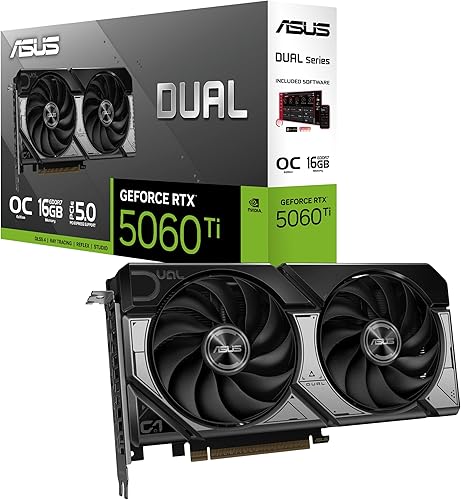
Prime ASUS Dual GeForce RTX 5060 Ti 16GB GDDR7 OC

be quiet! Pure Power 13 M 750W ATX 3.1 PSU

MSI PRO B860M-A WiFi mATX Motherboard for Intel
As an Amazon Associate we earn from qualifying purchases. Product prices and availability are accurate as of the date/time indicated.
Pros
- Exceptional sequential speeds up to 7400MB/s read for next level responsiveness
- Broad compatibility with desktop, laptop and PlayStation 5 via M.2 2280 slot
- Single-sided, low power design runs cooler and fits compact systems easily
- Reliable TLC NAND with high endurance and five year limited warranty
Cons
- No dedicated DRAM cache, relies on Host Memory Buffer which can be slower under heavy sustained writes
- Heatsink not included, separate cooling may be needed for PS5 or high performance desktops
- Requires PCIe Gen4 compatible system to achieve maximum advertised speeds
The Lexar NM790 2TB is a high performance PCIe Gen4 NVMe SSD built for gamers, content creators and power users who demand both speed and capacity. With its M.2 2280 form factor, it is designed as a direct upgrade for desktops, laptops and the PlayStation 5.
In real world use, the drive delivers on its rated 7400MB/s read and 6500MB/s write speeds, cutting game load times and accelerating large file transfers. Thanks to HMB 3.0 and Dynamic SLC Cache, it maintains smooth and consistent performance even without onboard DRAM, while offering twice the speed of Gen3 drives.
Lexar uses a single-sided design that makes installation simple, even in compact laptops and the PS5 expansion slot. The build is also highly efficient, consuming up to 40 percent less power than DRAM equipped competitors, which helps keep temperatures lower during extended gaming or editing sessions.
There are a few tradeoffs to consider. The lack of dedicated DRAM means extremely heavy sustained writes may not match premium DRAM cache drives, and no preinstalled heatsink is included. You will also need a Gen4 capable system to unlock its full potential.
Overall, the NM790 2TB offers an outstanding balance of speed, capacity and efficiency for its class. For gamers and creators looking to expand storage with top tier Gen4 performance and proven reliability, it is an excellent choice.
Capacity: 2TB, Form Factor: M.2 2280, Interface: PCIe Gen4 x4 NVMe, Model: LNM790X002T-RNNNU
Performance: Up to 7400MB/s read, 6500MB/s write, 2x faster than PCIe Gen3, Endurance: 1500TBW
Technology: HMB 3.0, Dynamic SLC Cache, TLC NAND, Single-sided design for wide compatibility
Compatibility: Desktop, Laptop, Sony PlayStation 5, Power Efficiency: Up to 40% lower than DRAM cache Gen4 SSDs
Warranty: Five year limited warranty, Material: Metal enclosure, Color: Black
Pros
- Excellent thermal performance with mesh design and four powerful pre-installed fans
- Surprisingly spacious interior fits full ATX boards and extra large GPUs up to 410mm
- Premium build quality with sturdy steel, no sharp edges and tool-free panels
- Smart compact design saves desk space while supporting high end components
- Great value with included ARGB infinity mirror fans and adjustable GPU anti-sag bracket
Cons
- Front fans can produce humming or resonance at certain speeds and may need fan curve tuning
- Tight space behind motherboard tray makes cable management tricky, flat cables recommended
- No reset button and no dust filter for bottom rear intake, limited ARGB control on Linux
The LIAN LI LANCOOL 207 is a compact mid tower gaming case that cleverly packs full ATX compatibility into a chassis the size of a Micro-ATX case. It is designed for gamers and builders who want high end performance without a massive tower dominating their desk.
Its standout feature is the reinvented layout with a front mounted PSU and recessed motherboard tray, which allows for a 360mm radiator on top and GPUs up to 410mm long. Real world performance impresses, with users reporting noticeably lower CPU and GPU temperatures thanks to two thick 140mm ARGB front fans and two dedicated 120mm bottom fans that cool the graphics card directly.
Build quality lives up to LIAN LI standards with solid SECC steel, clean finishes and no sharp edges. Tool free side and top panels, thoughtful cable channels with Velcro ties, and a pre installed adjustable GPU anti sag bracket make building easy and keep the final look clean and professional.
There are a few minor drawbacks to consider. Cable management behind the motherboard can be tight, so flat cables work best, and some users note a humming resonance from the front fans at certain RPMs that is fixable with tuning. The case also lacks a reset button and a bottom rear dust filter.
Overall, the LANCOOL 207 delivers outstanding airflow, smart space saving design and premium feel. For gamers downsizing from a full tower or building a powerful yet compact ATX system, it is an easy recommendation that balances performance, aesthetics and practicality.
Model: LIAN LI LANCOOL 207 Black (LAN207RX)
Case Type: Mid Tower with front mounted PSU, supports ATX motherboards
Cooling Support: Up to 360mm radiator on top, 2x 140x140x30mm ARGB front fans and 2x 120mm PWM bottom fans included
GPU & PSU Clearance: GPUs up to 410mm, ATX PSU up to 160mm with adapter cable
Materials & Dimensions: SECC steel, 17.9 x 8.62 x 17.9 inches, 20 pounds, mesh panels on front, top and bottom
Extra Features: Adjustable GPU anti-sag bracket, 2x USB ports, 2x 3.5 inch bays, 4 expansion slots
Pros
- Excellent multicore performance for gaming and productivity
- Runs cool and power efficient for 24/7 operation
- Modern platform with DDR5 and PCIe 5.0 future proofing
- Built-in AV1 encoding saves cost on a discrete GPU
Cons
- No thermal solution included, aftermarket cooler required
- Requires new LGA 1851 motherboard with Intel 800 series chipset
- 125W base power needs robust cooling and power delivery
The Intel Core Ultra 5 245K is a Series 2 unlocked desktop processor built for gamers, creators and power users who want efficient multitasking. With 14 cores and 14 threads, it balances high performance with modern efficiency on the Intel 800 series platform.
In real world use, the hybrid architecture with 6 Performance cores and 8 Efficiency cores handles gaming, streaming and productivity with ease. The 5.2 GHz boost clock and 26MB cache deliver quick responsiveness, while DDR5 and PCIe 5.0 support keep your system ready for next generation GPUs and storage.
Built on Intel's latest hybrid design, the chip intelligently prioritizes workloads to run cooler and quieter under load. Reviewers note it runs efficiently for 24/7 builds like media servers and benefits from built in AV1 encoding that removes the need for a discrete GPU.
There are a few tradeoffs to consider. No thermal solution is included, so you will need an aftermarket cooler, and it requires a new LGA 1851 motherboard which adds to upgrade costs. Its 125W base power also demands solid cooling and power delivery for sustained performance.
Overall, the 245K is a powerful and efficient mid range CPU that offers excellent value for new builds and upgrades. If you want unlocked performance, modern connectivity and efficient operation for gaming and productivity, it is a compelling choice.
Processor: Intel Core Ultra 5 245K, 14 cores (6 P-cores + 8 E-cores), 14 threads, up to 5.2 GHz, 26MB total cache with 24MB L2 cache, unlocked.
Platform: LGA 1851 socket, Intel 800 Series chipset compatible, DDR5 support, PCIe 5.0 and 4.0 support, Intel Optane Memory support, Turbo Boost Max Technology 3.0.
Power and Package: 125W Processor Base Power, no thermal solution included, Windows 11 ready, 3 year manufacturer warranty, model BX80768245K.
Pros
- Large 16GB GDDR7 frame buffer is excellent for future gaming and creative workloads
- Compact 2.5-slot design fits small and mid-tower builds without sacrificing cooling
- Very quiet operation with 0dB tech and durable dual ball bearing Axial-tech fans
- Strong out-of-box performance with OC mode and DLSS 4 support
Cons
- 2.5-slot thickness may still be tight for ultra-compact mini-ITX cases
- Dual-fan cooler has less thermal headroom than larger triple-fan models for heavy overclocking
- Requires a desktop with PCIe x16 slot and adequate power supply
The ASUS Dual GeForce RTX 5060 Ti 16GB GDDR7 OC Edition is a compact, high-performance graphics card built on NVIDIA Blackwell architecture. It is designed for gamers and creators who want flagship-level features like DLSS 4 and 16GB GDDR7 in a smaller, more compatible form factor.
Real-world performance stands out with a boost clock up to 2632 MHz in OC mode and 767 AI TOPS for DLSS 4 upscaling and frame generation. The 16GB GDDR7 memory ensures smooth 1440p, capable 4K gaming and excellent handling of texture-heavy and AI workloads.
Build quality is a clear strength, with two Axial-tech fans that use a smaller hub, longer blades and a barrier ring to increase air pressure. Dual ball bearings last longer than sleeve designs, while 0dB technology keeps the card silent during light loads and Dual BIOS offers Quiet and Performance modes.
There are a few tradeoffs to consider. The 2.5-slot design is compact but not single-slot, so ultra-small cases may still struggle. As a dual-fan model, it will run warmer and offer less overclocking headroom than larger triple-fan cards.
Overall, the ASUS Dual RTX 5060 Ti 16GB OC is a smart pick for gamers who want powerful, future-proof performance without a huge card. It balances efficiency, acoustics and size exceptionally well, making it ideal for compact builds that still demand heavyweight graphics power.
Model: ASUS DUAL-RTX5060TI-O16G, NVIDIA GeForce RTX 5060 Ti, Blackwell architecture
Memory: 16GB GDDR7, 2632 MHz boost clock in OC mode, 2602 MHz default
Interface and Outputs: PCI-Express x16, 3x DisplayPort 2.1b, 1x HDMI 2.1b, max resolution 7680x4320
Cooling and Design: Dual Axial-tech fans, dual ball bearings, 0dB technology, Dual BIOS, 2.5-slot, 9 x 4.7 inches, 0.66 kg
Features: DLSS 4, 767 AI TOPS, compact compatibility for small chassis, 3-year warranty
Pros
- Exceptionally quiet operation with Zero RPM mode and airflow optimized fan
- Future proof connectivity for PCIe 5.1 graphics cards
- High 80 PLUS Gold efficiency reduces heat and power costs
- Fully modular design simplifies cable management
- Solid build quality with reliable single rail power delivery and 10 year warranty
Cons
- Included cables are not braided and look plain compared to premium competitors
- Customer support responsiveness has been reported as slow by some users
- 750W may be limiting for extreme flagship builds with top tier GPUs
The be quiet! Pure Power 13 M 750W is an ATX 3.1 fully modular power supply designed for gamers, creators and quiet PC enthusiasts. It is a great fit for modern mid to high end builds that need efficient, stable power for current and next generation hardware.
In real world use it stands out for efficiency and stability, delivering up to 94.3% efficiency with 80 PLUS Gold certification for cooler, quieter operation. The native 12V-2x6 connector plus four PCIe 6+2 pin connectors covers both new PCIe 5.1 and current GPUs, and the single massive 12V rail handles power spikes up to double the rated wattage with ease.
Design and build quality are excellent for the class, with a compact ATX footprint, sturdy construction and fully modular cables that make installation tidy. The be quiet! fan features airflow optimized blades and semi-passive cooling, staying completely off at low loads and remaining very quiet under heavier gaming or creative tasks.
There are a couple of drawbacks to consider. The cables are functional but not braided, which some builders feel looks less premium and less durable. A few owners also noted slow customer support responses, and users planning extreme overclocked or flagship GPU systems may want higher wattage headroom.
Overall, the Pure Power 13 M 750W delivers an impressive mix of silence, efficiency and future ready features. For most gaming and productivity PCs where quiet operation and dependable power matter, it is a highly recommended choice.
Model: be quiet! Pure Power 13 M 750W BP026US, ATX 3.1, PCIe 5.1
Efficiency: 80 PLUS Gold certified, up to 94.3% efficiency with LLC topology
Connectors: 1x native 12V-2x6, 4x PCIe 6+2 pin, fully modular ATX cabling
Cooling: 1x airflow optimized fan with semi-passive Zero RPM mode, air cooling
Form Factor and Size: ATX, 6.3 x 5.91 x 3.39 inches, 2.94 kg, single 12V rail design
Pros
- Proven rock solid stability even with high speed DDR5 at 8000MHz and heavy 24/7 use
- Premium next gen connectivity including WiFi 7, 5G LAN, Bluetooth 5.4 and Thunderbolt 4 with 8K display support
- Strong thermal design with extended heatsink, chipset heatsink and 7W/mK MOSFET pads
- PCIe 5.0 and M.2 Gen5 support provides excellent future upgrade headroom
- User friendly features like BIOS flash without CPU and easy Windows 11 installation
Cons
- mATX form factor offers fewer PCIe slots and expansion options than full ATX boards
- Front panel power switch headers are not clearly labeled, making setup tricky
- Only 4 SATA ports which may limit large NAS or storage heavy builds
The MSI PRO B860M-A WiFi is a micro ATX motherboard built for Intel Core Ultra Series 2 processors on the LGA 1851 socket and B860 chipset. It is designed for professionals, creators and compact gamers who want efficient, stable performance without sacrificing next generation features.
Real world performance stands out for stability and memory handling, with users reporting rock solid operation even with DDR5 at 8000MHz and 6400MHz. You get a PCIe 5.0 x16 slot for top tier GPUs and triple M.2 slots including a Gen5 x4 slot with EZ M.2 Shield Frozr II to keep SSDs cool under load.
Build quality reflects MSI business elegance with a durable server grade PCB, improved SMT soldering and Steel Armor on the PCIe slot. Cooling is comprehensive with a 12 Duet Rail P-PAK VRM, dual 8 pin CPU power, extended heatsink, chipset heatsink and 7W/mK MOSFET thermal pads for reliable power delivery.
The compact mATX layout does mean fewer PCIe slots and only four SATA ports, which may limit heavy expansion or large storage arrays. Some users also noted the front panel power switch headers are not clearly labeled, which can make the initial build a bit fiddly.
Overall, the PRO B860M-A WiFi offers exceptional value by combining future ready specs like WiFi 7, Bluetooth 5.4, 5G LAN and Thunderbolt 4 in a compact, reliable package. It is an excellent choice for anyone building a modern Intel system that needs strong connectivity, fast storage and proven everyday stability.
Socket: LGA 1851 for Intel Core Ultra Series 2, Chipset: Intel B860, Memory: 4x DDR5 DIMM up to 256GB and 8600+ MT/s OC, Storage: 1x M.2 Gen5 x4 128Gbps, 1x M.2 Gen4 x4 64Gbps, 1x M.2 Gen4 x2 32Gbps plus 4x SATA ports.
Expansion: 1x PCIe 5.0 x16 with Steel Armor, Connectivity: WiFi 7, Bluetooth 5.4, Realtek 5G LAN, Thunderbolt 4 Type-C 40Gbps with display output, 7.1 HD Audio with Audio Boost, Form Factor: mATX, Warranty: 3 Year Manufacturer.
| Part | Common at this level | Our 2026 pick | Why |
|---|---|---|---|
| CPU | a cpu in the same class | Intel Core Ultra 5 245K | a current platform match for this GPU tier so the processor does not hold it back |
| GPU | a gpu in the same class | MSI GeForce RTX 5060 Ti 16GB Ventus | the class of card this build is planned around |
| Motherboard | a motherboard in the same class | MSI PRO B860-P WiFi | a board with a proven VRM and the I/O this build needs, without paying for features it will not use |
| Memory | a memory in the same class | Kingston Fury Beast 32GB DDR5 6000 | the tuned capacity and speed sweet spot for this platform |
| SSD | a ssd in the same class | Lexar NM790 2TB | responsive storage sized for a modern game library |
| Power Supply | a power supply in the same class | be quiet! Pure Power 12 M 750W | a modern ATX 3.1 unit with headroom above the combined draw of the CPU and GPU |
| Case | a case in the same class | Lian Li Lancool 207 | good stock airflow and clearance for the cooler and graphics card in this build |
| CPU Cooler | a cpu cooler in the same class | DeepCool AK620 Digital | quiet, capable cooling that keeps this CPU in its normal boost range |
The two most important choices are the CPU and GPU together. The Gaming CPUs category shows why pairing matters: the Intel® Core™ Ultra 5 Desktop Processor 245K 14 offers 14 cores with 6 P-cores and 8 E-cores up to 5.2 GHz and a 26M cache, with PCIe 5.0 and DDR5 support on Intel 800 series boards. That keeps the processor from limiting the ASUS Dual GeForce RTX 5060 Ti 16GB GDDR7 OC at 1440p, where the graphics card should be the primary performance driver. The card itself brings 16GB of GDDR7, a 2.5 slot design, Axial-tech fans, and support for NVIDIA Blackwell features including DLSS 4, which helps you stay in the high settings range without sacrificing smoothness.
Storage, memory, and power round out the balance. The Lexar 2TB NM790 Internal NVMe SSD, 7400/6500 MB/s is a PCIe Gen4x4 M.2 2280 drive rated up to 7400 MB/s read and 6500 MB/s write, with HMB 3.0 and Dynamic SLC Cache, so load times and game installs stay responsive. A 32GB DDR5 6000 kit is the practical sweet spot for this platform when it is on the motherboard QVL, and the be quiet! Pure Power 13 M 750W, ATX 3.1 gives you ATX 3.1 with a native 12V-2×6 connector and headroom above the combined CPU and GPU draw. The LIAN LI LANCOOL 207 Compact ATX RGB and the DeepCool AK620 Digital keep thermals and noise in check without overspending on cooling you do not need at this tier.
For context on platform decisions, see our Motherboards & Compatibility archive. If you are weighing AMD alternatives, our guide on how to choose a B650 motherboard for ryzen 7 9800X3D compatibility explains how chipset and BIOS relate to CPU support, which is a useful comparison even though this build is LGA1851.
Compatibility Check
Will all of these parts fit and work together without surprises? That is the question most builders at this level want answered before ordering, so we walk through socket, memory, clearance, and power in order.
This build is Intel LGA1851 (Core Ultra Series 2). Use a 32GB DDR5 6000 kit on the memory QVL, confirm cooler support for the socket, and size the supply above the combined CPU and GPU draw with a native 12V-2×6 cable for an RTX 50 card. The MSI PRO B860M-A WiFi Motherboard, mATX represents the B860 class we recommend. It uses the Intel B860 chipset for LGA1851, with a 12 Duet Rail Power System VRM, Core Boost, 7W/mK MOSFET thermal pads, and an extended heatsink. That VRM design is intended to handle a 125W processor like the 245K at stock settings without thermal throttling, while keeping board cost below premium Z series options.
BIOS and platform setup deserve attention. B860 boards launched for Core Ultra Series 2, so most units ship ready for the 245K, but if you buy early stock or open box, verify the BIOS revision supports your CPU before you build. BIOS updates are done at your own risk and may void warranty if done incorrectly, so follow the board maker instructions, use a stable power source, and do not interrupt the flash. Also handle components with anti static precautions and install the CPU, cooler, and memory before mounting the board if your case layout makes access easier.
Memory support is straightforward if you stay on the QVL. The board provides four DDR5 DIMM SMT slots with overclocking support up to 8600+ MT/s OC, and our pick is DDR5 6000. That speed is a balanced choice for Intel 800 series platforms, and being on the QVL improves the chance that XMP or EXPO profiles apply cleanly. If you buy a kit not on the QVL, you may need to run at JEDEC defaults or tune manually, which adds time and risk for little gain at this tier.
GPU length, slot, and case clearance line up well here. The board offers a PCIe 5.0 x16 SMT slot with Steel Armor rated at 128GB/s, plus triple M.2 connectors including one Gen5 x4 128Gbps slot with EZ M.2 Shield Frozr II, one Gen4 x4 64Gbps, and one Gen4 x2 32Gbps. The LANCOOL 207 is a compact ATX case that still supports graphics cards up to 410mm and ATX power supplies up to 160mm, with a recessed motherboard tray and mesh panels at the front, top, and bottom. It also supports up to a 360mm radiator on top, which tells you there is vertical clearance for tall air coolers like the AK620 Digital. To be safe, confirm the specific cooler height against the case CPU cooler clearance spec and check that your GPU thickness at 2.5 slots does not interfere with bottom fans or cables.
Airflow and fan layout help thermals without extra cost. The LANCOOL 207 includes two 140x140x30mm ARGB fans at the front up to 1900 RPM with an infinity mirror, and two 120x120x25mm PWM fans at the bottom up to 1950 RPM with 11 blades to feed the GPU directly. The front top fan directs air toward the CPU area, and the offset motherboard position places the bottom fans under the graphics card. That stock configuration is why we can recommend a capable air cooler instead of an AIO at this budget. If you later move to a 360mm AIO, the case already supports it, but you should still verify radiator and fan thickness against motherboard heatsinks and memory height. For help visualizing fit, see how to choose a case for GPU clearance and radiator support and mesh front case vs tempered glass front case.
Power and connectors are the last check. The be quiet! Pure Power 13 M 750W is an ATX 3.1, 80 PLUS Gold unit rated up to 94.3 percent efficiency, with one massive 12V rail, LLC topology, and semi passive zero RPM cooling at low load. It includes a native 12V-2×6 connector for PCIe 5.1 graphics cards and four PCIe 6+2 pin connectors for current generation cards, and it is designed to handle power excursions up to double its rated power for short spikes. For an RTX 50 card, use the native 12V-2×6 cable and follow the GPU maker recommended wattage, sizing the supply above the combined CPU and GPU draw. Do not assume any wattage handles any card, and route the 12V-2×6 cable with a gentle bend and full insertion until it clicks, per the manufacturer guidance.
Performance: What To Expect
No verified frame rate numbers are available for this build, so we keep this section qualitative and do not invent figures. That approach avoids misleading comparisons, since actual results vary with game, settings, resolution, and system configuration.
Qualitatively, this pairing is planned for 1440p high settings with headroom for modern effects. The 16GB VRAM on the RTX 5060 Ti class card gives you breathing room for high texture settings and future titles that use larger texture pools, while the 245K keeps the graphics card fed at 1440p so you are GPU limited in most games, which is the desired balance. The PCIe Gen4 SSD with up to 7400 MB/s read helps with level loads and asset streaming, and 32GB of DDR5 6000 keeps background tasks and browser tabs from crowding your games.
In practice, you should expect smooth high settings play at 1440p, with the option to enable DLSS 4 or other upscaling where supported to recover headroom for ray tracing or higher refresh targets. If you move down a GPU tier, you will lean more on upscaling or slightly lower settings to hold the same smoothness. If you move up a GPU tier and to a higher end CPU, you gain headroom for high refresh 1440p and more demanding future titles, but you also increase power and cooling needs, which is why that path pairs with a larger cooler and higher wattage supply.
Three Ways to Build This
Lower Cost Version
One GPU tier down with a cheaper CPU, a budget air cooler, a 1TB drive, and an entry B860 board. You keep the same 1440p target but accept more settings tuning and less storage headroom. This suits a first build on a tight budget where every component must earn its place and you plan to add storage later. You still want a case with good stock airflow and a power supply sized above the combined draw, but you can save by choosing a simpler board and cooler.
Balanced Version, The One We Recommend
The parts listed here: Intel Core Ultra 5 245K, MSI GeForce RTX 5060 Ti 16GB Ventus class card, MSI PRO B860-P WiFi, Kingston Fury Beast 32GB DDR5 6000, Lexar NM790 2TB, be quiet! Pure Power 12 M 750W, Lian Li Lancool 207, and DeepCool AK620 Digital. This is the balanced pick for most gamers who want headroom to upgrade later without overspending now. You get 16GB VRAM, responsive 2TB storage, ATX 3.1 power with a native 12V-2×6 cable, and a case with proven airflow and GPU clearance up to 410mm.
Higher End Version
Move up a GPU tier and to a Ryzen 7 9800X3D or Ryzen 9 9950X3D with a 360mm AIO and a 1000W supply, for high refresh play and years of headroom. This path makes sense if you target high refresh 1440p or plan to keep the system longer before a major upgrade. Pair it with a case that supports a 360mm radiator on top and confirm cooler and radiator clearance, and consider 240mm AIO vs 360mm AIO for gaming when you choose the cooler size.
FAQ
Is the Intel Core Ultra 5 245K enough for an RTX 5060 Ti at 1440p?
Yes, that is the intent of this pairing. The 245K with 14 cores up to 5.2 GHz is chosen so the processor does not hold the RTX 5060 Ti 16GB back at 1440p high settings, where the graphics card should be the main limit. If you play mostly at 1080p high refresh, a different CPU focus could make more sense, but for 1440p this balance is appropriate.
Do I need to update the BIOS for LGA1851 and B860?
Most B860 boards ship ready for Core Ultra Series 2, but early stock may need an update. Check the board support page for your exact CPU and follow the maker instructions carefully. BIOS flashing is done at your own risk and may void warranty if interrupted, so use stable power and do not power off during the process.
Will the DeepCool AK620 Digital fit in the Lian Li Lancool 207 with this GPU?
In this class the combination is intended to fit, with the Lancool 207 supporting ATX boards, GPUs up to 410mm, and up to a 360mm radiator on top, which indicates good vertical clearance. Still, confirm the AK620 Digital height against the case CPU cooler clearance and verify that a 2.5 slot card plus bottom fans leaves room for cables. Also confirm cooler support for LGA1851 and use the correct mounting hardware.
Final Verdict
This mid class build stays disciplined where it should and spends where it counts. You get a current LGA1851 platform, a 14 core CPU that matches the GPU tier, 16GB VRAM for high textures, 32GB of DDR5 6000 on the QVL, and a 2TB PCIe Gen4 SSD, all in a mesh airflow case with an ATX 3.1 supply that has the right native connector for RTX 50 cards. It is easy to assemble, quiet under load, and leaves clear upgrade paths for storage, graphics, or cooling.
Our pick: the balanced version we recommend, with the Intel Core Ultra 5 245K and RTX 5060 Ti 16GB, for most gamers who want strong 1440p high settings today and headroom to upgrade later without rebuilding the whole system.



Write Your Review
No reviews yet. Be the first to share your experience!