

Figuring out what PSU wattage do you need for a RTX 5070 Ti is one of the most important decisions in your build, because your power supply determines stability, noise, and how much room you have for future upgrades. You are balancing your resolution and refresh target, your CPU and platform, your case size and airflow, and whether you plan to keep this GPU for years or upgrade again soon.
In 2026 most RTX 5070 Ti builds center around a 750W or 850W ATX 3.1 power supply with a native 12V-2×6 connector, but the right choice depends on your total system draw and how much headroom you want. This guide gives you a simple framework to choose with confidence, plus a few example models that show how wattage, efficiency, and features differ in practice.
What Actually Matters
1. Total System Wattage and Headroom
Start with your combined power draw, not just the graphics card. Add your CPU power under load, plus your motherboard, memory, storage, fans, and any overclocking you plan, then compare that total to the capacity of the power supply. You want comfortable headroom above that combined number so the unit runs quietly, efficiently, and without tripping during brief power spikes.
A good rule is to follow the GPU maker recommended wattage for your specific RTX 5070 Ti model and then add headroom if you run a high core count CPU, a lot of storage, or an aggressive fan setup. For many gamers, a quality 750W unit covers a typical single GPU build, while 850W gives you extra cushion for a power hungry CPU, future upgrades, or a case with limited airflow where you want the fan to stay slower. For more context on how power fits into the rest of your system, browse the Power Supplies category and the Graphics Cards section together.
2. ATX 3.1, PCIe 5.1, and the Native 12V-2×6 Connector
For a RTX 5070 Ti you should prioritize a power supply that is compliant with ATX 3.1 and PCIe 5.1 and that includes a native 12V-2×6 connector. This newer standard is designed to handle transient power excursions from modern GPUs more gracefully, which helps prevent shutdowns when the card briefly draws well above its average power. It also lets you connect the GPU directly without an adapter, which simplifies cable management and improves reliability.
When you evaluate a unit, check the spec sheet for explicit ATX 3.1 compliance and PCIe 5.1 support, and confirm it lists a native 12V-2×6 cable in the box. Owners commonly report that native cables seat more securely and are easier to route in compact cases, especially when paired with fully modular designs. If you are building in a tight chassis, also review your Cases & Airflow clearance so the stiff 12V-2×6 cable has a gentle bend radius.
3. Efficiency Ratings and Noise
Efficiency tells you how much AC power is converted to DC power without wasting it as heat. An 80 PLUS Gold rating means the unit is designed for high efficiency under typical loads, which usually translates to lower heat, lower fan speed, and lower energy use over time. Some models also carry a Cybenetics rating, such as Cybenetics Gold or Cybenetics Platinum, which provides a more detailed view of efficiency and noise across different load levels.
Noise matters as much as efficiency if your PC sits on your desk. Look at fan size and control strategy. A larger fan, such as a 135 mm fluid dynamic bearing fan with hybrid control, can move the same air at lower speed, while a well tuned 120 mm rifle bearing fan can also stay quiet under load. Per the spec sheet, some designs emphasize low noise operation and optimized fan curves, which helps keep acoustics down during gaming without sacrificing cooling.
4. Modularity, Build Quality, and Protections
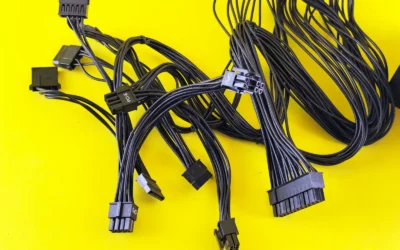
Fully modular cabling lets you connect only the cables your build needs, which improves airflow and makes installation cleaner. This is especially helpful in mid tower and compact builds where extra cables can block front intake. Look for flexible, low profile cables and clear labeling, and verify the unit includes enough PCIe and CPU power connectors for your motherboard and GPU without needing splitters.
Build quality shows up in components and protections. Features such as 105C rated capacitors, modern standby compatibility, and support for high transient spikes indicate a design intended for steady, reliable power delivery. You should also check the warranty length and the physical dimensions, especially length, to ensure the unit fits your case and allows proper cable routing. As covered in guides like how to choose an airflow case for a hot GPU, good cable routing and unobstructed intake help any power supply run cooler and quieter.
This article contains affiliate links. If you buy through one of our links, CustomPCGaming may earn a commission at no extra cost to you. Commissions never influence which products we recommend or how we rank them. Read our Affiliate Disclosure for details.
Quick Picks at a Glance

Prime ASRock PRO 850G 850W ATX 3.1 Power Supply
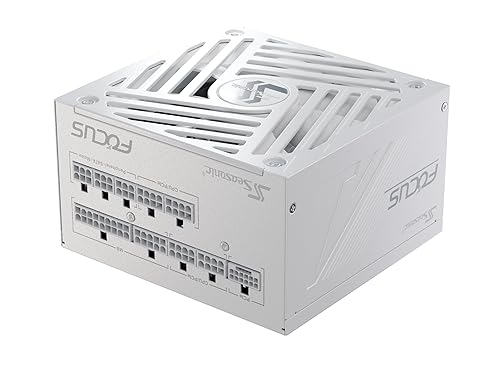
Prime Seasonic Focus GX-750 White 750W ATX 3.1 PSU

Prime CORSAIR RM850e 850W Fully Modular ATX 3.1 PSU

Corsair RM850x 850W Fully Modular ATX 3.1 Power
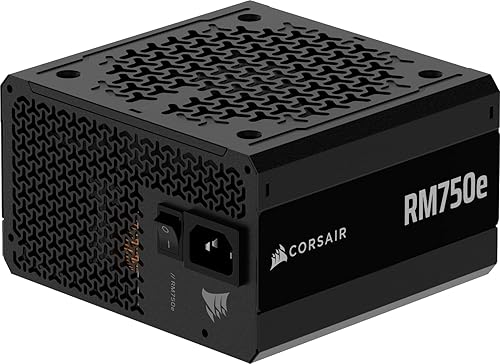
CORSAIR RM750e 750W ATX 3.1 Fully Modular PSU
As an Amazon Associate we earn from qualifying purchases. Product prices and availability are accurate as of the date/time indicated.
Pros
- High 80 Plus Gold efficiency reduces heat and energy use
- Fully ready for next gen hardware with ATX 3.1, PCIe 5.1 and native 12V-2x6 connector
- Very quiet operation with no coil whine noted by users
- Proven stable performance during power fluctuations and heavy loads
- Compact ATX size fits most cases and installs easily
Cons
- Non modular design with all cables permanently attached makes cable management more difficult
- Some users report a temporary chemical smell during initial break in period
- Three year warranty is shorter than many competing Gold rated units that offer 7 to 10 years
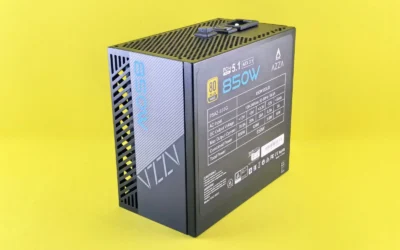
The ASRock PRO 850G is an 850 watt power supply built for modern gaming and workstation PCs that need reliable power for next generation hardware. It is ideal for builders upgrading to new GPUs or assembling a future proof system without overspending.
Its standout strengths are 80 Plus Gold efficiency and full ATX 3.1 and PCIe 5.1 compliance with a native 12V-2x6 connector for secure GPU power. In real world use, reviewers note stable operation through power blips and storms, quiet cooling, and no coil whine even under load.
Built in a compact standard ATX form factor, the unit measures just 5.51 x 5.91 x 3.39 inches and fits most cases easily. The 120mm low noise fan provides effective airflow while keeping acoustics minimal, and quality components ensure consistent delivery during high power spikes.
The main tradeoff is its non modular design, as all cables are permanently attached which requires extra space to stash unused cables. Some users also reported a temporary odor during initial break in, and the three year warranty is modest compared to longer premium warranties.
Overall, the PRO 850G offers excellent efficiency, modern connectivity, and proven stability for its class. It is a smart, budget friendly choice for gamers and creators who want next gen readiness and quiet performance without paying for fully modular features.
Model: ASRock PRO-850G (90-UXR085-GNUAA2) | Form Factor: ATX | Wattage: 850W | Efficiency: 80 Plus Gold Certified
Compliance: ATX 3.1 and PCIe 5.1 Ready | Connectors: Native 12V-2x6, 20+4 Pin System Bus, PCI Express, SATA | Design: Non-Modular
Cooling: Air cooling with single 120mm low noise fan | Dimensions: 5.51 x 5.91 x 3.39 inches | Warranty: 3 Years Manufacturer
Pros
- Full ATX 3.1 and PCIe 5.1 compliance with native 12V-2x6 connector, no adapter needed
- Dual certified 80 PLUS Gold and Cybenetics Platinum efficiency
- OptiSink thermal design plus hybrid fan control for quiet, cool operation
- Compact ATX size with premium white finish ideal for showcase builds
- Exceptional 10-year warranty and 10-year EU spare parts support
Cons
- 750W capacity may be insufficient for heavily overclocked flagship systems using RTX 5080/5090 class GPUs
- White ATX 3.1 model carries a premium over standard black or older ATX 3.0 units
- No software monitoring or digital control features, air cooling only
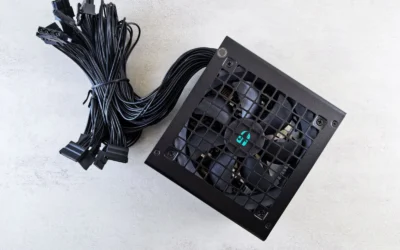
The Seasonic Focus GX-750 White is a fully modern 750W ATX power supply built for current and next generation gaming PCs. It is designed for gamers and builders planning around NVIDIA RTX 5070 Ti or AMD RX 9000 series graphics cards who want clean power and future proof connectivity.
Its headline feature is true ATX 3.1 and PCIe 5.1 readiness with a native 12V-2x6 connector, so you can power new GPUs directly without bulky adapters. Combined with 80 PLUS Gold and Cybenetics Platinum efficiency, it delivers stable, efficient power while keeping waste heat and operating costs low.
Build quality is classic Seasonic, with a compact 5.5 x 5.9 x 3.4 inch ATX chassis, premium white housing, and the improved OptiSink layout for better thermal transfer. The 135mm fluid dynamic bearing fan with hybrid control stays off or near silent during light loads and ramps smoothly when gaming.
There are a few tradeoffs to consider. At 750 watts, it is perfect for most mid to high end builds but power hungry enthusiasts with heavily overclocked CPUs and flagship GPUs may want 850W or more. The white finish also tends to cost more than the standard black version.
Overall, the Focus GX-750 White is an excellent, efficient and quiet choice for a modern white build that needs reliable next gen GPU support. If you want proven Seasonic reliability, top tier efficiency and a 10-year warranty in a stylish, compact package, this is one of the best 750W options available.
Model: Seasonic Focus GX-750 White ATX 3.1 | Form Factor: ATX | Wattage: 750W | Efficiency: 80 PLUS Gold and Cybenetics Platinum
Compliance: ATX 3.1 and PCIe 5.1 ready with native 12V-2x6 connector | Cooling: Air cooling with 1x 135mm FDB fan, hybrid fan control, OptiSink design | Input: 100 to 240V AC
Dimensions: 5.5 x 5.9 x 3.4 inches | Weight: 3.5 pounds | Connectors: ATX system bus | Warranty: 10 Years with 10-year spare parts availability
Pros
- ATX 3.1 and PCIe 5.1 ready with included native 12V-2x6 cable and adapter
- Fully modular design greatly simplifies cable management and airflow
- Very quiet cooling with optimized 120mm rifle bearing fan curve
- High-quality 105C rated capacitors and Cybenetics Gold efficiency
- Compact 140mm length and strong 7-year warranty
Cons
- 850W may be more than needed for budget or mid-range builds
- Only one dedicated PCIe 8-pin cable included, relies on adapter for additional connectors
- No RGB lighting or advertised zero-RPM fan mode for silent idle operation
The CORSAIR RM850e (2025) is an 850W fully modular ATX power supply built for gamers, creators and anyone upgrading to RTX 40 series or newer GPUs. With ATX 3.1 and PCIe 5.1 compliance, it is ideal for high performance builds that need stable power and next generation connectors.
Its native 600W 12V-2x6 connector powers modern graphics cards without messy adapters, while support for 2x transient power excursions keeps your system stable during sudden GPU spikes. Cybenetics Gold efficiency and Modern Standby support improve low load efficiency and enable fast wake times, and the tuned 120mm rifle bearing fan stays quiet even under heavy load.
Design and build quality are standout strengths for this price class. At just 140mm long it fits easily in most mid tower and compact ATX cases, and fully modular cables keep builds tidy with better airflow. Industrial grade 105C rated capacitors ensure consistent electrical performance and long term reliability.
There are a few trade offs to consider. The included cable set is lean with only one native PCIe 8-pin cable plus a 12V-2x6 to dual 8-pin adapter, so users with multiple older GPUs may need extra cables. It also focuses on performance over aesthetics, with no RGB and no dedicated zero RPM mode for complete silence at idle.
Overall, the RM850e 850W hits an excellent balance of efficiency, compatibility and quiet operation for modern high end PCs. If you want a compact, future ready and dependable power supply that will handle demanding hardware for years, it is a smart and durable choice.
Model: CORSAIR RM850e (2025) CP-9020296-NA | Wattage: 850W | Form Factor: ATX | Modular: Fully Modular
Compliance: Intel ATX 3.1, PCIe 5.1 with native 12V-2x6 connector | Efficiency: Cybenetics Gold | Capacitors: Industrial-grade 105C rated
Cooling: 120mm rifle bearing fan with low-noise curve | Dimensions: 5.91 x 5.51 x 3.35 inches | Weight: 3.4 pounds
Connectors Included: 1x 24-pin ATX, 2x 8-pin EPS12V (4+4-pin), 1x PCIe 8-pin (6+2-pin), 1x 600W 12V-2x6, 1x 12V-2x6 to dual 8-pin adapter, 6x SATA, 2x PATA | Warranty: 7 Years
Pros
- Very quiet operation with efficient cooling and low heat output
- Fully modular with flexible embossed cables and three PCIe 8-pin connectors included
- Stable, clean power delivery that helps eliminate crashes and supports demanding GPUs
- ATX 3.1 and PCIe 5.1 ready with native 12V-2x6 for next gen graphics cards
- Premium build quality with Japanese capacitors and 10 year warranty
Cons
- Priced higher than budget or non modular 850W alternatives
- Fan can become audible when it ramps up under heavy load
- Standard ATX size is not ideal for compact small form factor cases
The Corsair RM850x is an 850 watt fully modular power supply built for modern gaming PCs and high performance workstations. It is ideal for builders using current generation graphics cards that require stable power and the latest ATX 3.1 and PCIe 5.1 connections.
In real world use it delivers quiet and dependable power with Cybenetics Gold efficiency up to 91 percent. The native 12V-2x6 connector allows a direct connection to new GPUs without adapters, and it handles transient spikes reliably while keeping temperatures and noise low.
Build quality is a clear strength, with 100 percent Japanese 105C rated capacitors and a 140mm fluid dynamic bearing fan for quiet cooling. The fully modular design and ultra flexible embossed cables with low profile combs make installation cleaner, improve airflow and reduce clutter.
There are a few tradeoffs to consider. Some users note the fan becomes noticeable when it ramps up under heavy load, and the ATX form factor is not ideal for compact small form factor builds. It also sits at a higher price point than non modular or older standard units.
Overall the RM850x stands out as a reliable, future ready choice that balances efficiency, quiet operation and ease of installation. Backed by a ten year warranty, it is a smart long term investment for gamers and enthusiasts who want clean power and room to upgrade.
Output: 850W, ATX Form Factor, Fully Modular Design
Efficiency: Cybenetics Gold Certified, up to 91 percent efficiency
Standard: ATX 3.1 Compliant, PCIe 5.1 Ready with Native 12V-2x6 Connector
Cooling: 140mm FDB Fan with Low Noise Operation, Single Fan Design
Capacitors: 100 percent Japanese 105C Rated Electrolytic Capacitors
Dimensions: 5.91 x 3.39 x 2.3 inches, Weight 3.9 pounds
Warranty: 10 Year Manufacturer Warranty, Model CP-9020270-NA/AM
Pros
- Fully modular design makes installation and cable management much easier
- Very quiet operation praised by users even during gaming
- Handles GPU transient spikes reliably thanks to ATX 3.1 compliance
- Gold efficiency and high quality capacitors with 7 year warranty
- Includes both native 12V-2x6 and PCIe 8 pin cables for wide compatibility
Cons
- Audible click on power on is normal for this model but can alarm first time builders
- Only one dedicated PCIe 8 pin cable included, additional GPUs may need the included dual adapter
- Rifle bearing fan is reliable but not as durable as fluid dynamic bearing fans found on higher end units
The CORSAIR RM750e is a 750W fully modular power supply designed for modern gaming and creator PCs. Built to the latest ATX 3.1 and PCIe 5.1 standards, it is aimed at builders running mid-range to high-end GPUs who need reliable power and future ready connectivity.
In real world use it delivers quiet, stable performance with Cybenetics Gold efficiency and strong transient response for GPU power spikes. Users report silent operation, easy cable routing and dependable power for cards like the RTX 3060 and RTX 2070 Super, even under heavy load.
Build quality is a clear strength with industrial grade 105°C rated capacitors, a compact 140mm casing and a full set of modular cables. The included native 12V-2x6 cable, EPS and SATA cables are flexible and well made, and the 120mm rifle bearing fan keeps noise low.
Drawbacks are minor but worth noting. The unit produces a brief click at startup which is normal but can be confusing at first. Cable selection is generous but power users with multiple older PCIe devices may need to use the dual adapter.
Overall the RM750e offers excellent value for builders who want quiet, efficient and dependable power with modern standards. It is a smart pick for clean, future proof builds backed by a 7 year warranty.
Model: CORSAIR RM750e CP-9020295-NA/AM, Form Factor: ATX, Wattage: 750W, Efficiency: Cybenetics Gold
Compliance: Intel ATX 3.1, PCIe 5.1 with native 12V-2x6 600W connector, Modern Standby compatible
Design: Fully modular, 120mm rifle bearing fan, 105°C rated capacitors, 140mm compact depth
Connectors: 1x 24 pin ATX, 2x 8 pin EPS 4+4 pin, 1x PCIe 8 pin 6+2 pin, 1x 12V-2x6, 1x 12V-2x6 to dual 8 pin adapter, 6x SATA, 2x PATA
Dimensions: 5.91 x 5.51 x 3.35 inches, Weight: 3.3 pounds, Warranty: 7 Year Manufacturer
Matching a Part to Your Build
Use these example scenarios to match wattage and features to your actual build. Each product below illustrates a different balance of capacity, efficiency, and noise, so you can see what to prioritize rather than just chasing the highest wattage.
For a balanced 1440p gaming build with a mainstream CPU and a single RTX 5070 Ti, a 750W ATX 3.1 unit is often the sweet spot. The Seasonic Focus GX-750 750W Power Supply ATX 3.1 is a helpful example, it is ATX 3.1 and PCIe 5.1 ready with a native 12V-2×6 connector, carries 80 PLUS Gold and Cybenetics Platinum certification, and uses a 135 mm fluid dynamic bearing fan with hybrid control and OptiSink design. The CORSAIR RM750e ATX 3.1 PCIe 5.1 Ready 750W Power shows a similar fully modular, low noise approach with ATX 3.1 compliance, a 120 mm rifle bearing fan, and 105C rated capacitors, which keeps cable management simple in most ATX cases.
If you run a high performance CPU, many drives and fans, or you want more headroom for upgrades and quieter operation under load, consider moving to 850W. The CORSAIR RM850x ATX 3.1 PCIe 5.1 Ready Fully illustrates a premium 850W option with Cybenetics Gold efficiency, native 12V-2×6 support, and embossed ultra flexible cables that are easier to route. The CORSAIR RM850e (2025) ATX 3.1 PCIe 5.1 Ready 850W offers a comparable fully modular 850W layout with ATX 3.1 and PCIe 5.1 compliance, a 120 mm rifle bearing fan, and Modern Standby compatibility, which is useful if you value fast wake and better low load efficiency.
For a value focused ATX build where you still want modern standards, the ASRock PRO 850G Power Supply demonstrates how an 850W, 80 PLUS Gold, ATX 3.1 and PCIe 5.1 ready unit with a native 12V-2×6 connector and 120 mm low noise fan can cover a RTX 5070 Ti system while keeping the feature set current. It is described as handling high power spikes and providing stable delivery, which is exactly what you want for transient loads. Whichever wattage you choose, leave headroom above your measured or estimated system draw and follow the GPU maker guidance, rather than assuming any single capacity fits every configuration.
Common Mistakes
Choosing wattage with no headroom. It is common to match the power supply exactly to your calculated draw, then run into noise, heat, or shutdowns during transient spikes. You should add headroom above your combined GPU and CPU draw and follow the graphics card maker recommended wattage for your specific model, especially if you overclock or run a CPU that draws heavily under all core loads.
Overlooking the connector and standard. Buying an older ATX unit without a native 12V-2×6 connector can mean adapters, tighter bends, and less tolerance for excursions. For a RTX 5070 Ti, prioritize ATX 3.1 and PCIe 5.1 compliance with a native 12V-2×6 cable included, and confirm the cable length and flexibility work with your case layout.
Ignoring physical fit and cable routing. Even if wattage is right, a unit that is too long for your case or has stiff cables can choke airflow and make installation difficult. Check the power supply length against your case spec, plan a gentle bend for the 12V-2×6 cable, and use a fully modular design to keep unused cables out of the airflow path.
Who Should Wait or Buy Differently
An 850W ATX 3.1 power supply is not ideal for every builder, and a 750W unit is not a good fit if your system consistently pushes high simultaneous CPU and GPU loads. If you are planning a move to a small form factor case that requires SFX or SFX-L, you should wait and choose a unit in that form factor rather than forcing a standard ATX model. Likewise, if you know you will upgrade to a more power hungry GPU class or add a second high draw component soon, it is not the right choice to buy the smallest capacity that barely covers today, you will be better served by selecting a higher headroom option or reassessing after your platform plans are firm.
Frequently Asked Questions
Is 750W enough for a RTX 5070 Ti?
For many single GPU gaming builds with a mainstream CPU, a quality 750W ATX 3.1 and PCIe 5.1 ready unit with a native 12V-2×6 connector is enough when you have followed the GPU maker recommended wattage and left headroom. If your CPU draws heavily, you overclock, or you want quieter operation and upgrade room, an 850W model gives you more cushion.
Do I need ATX 3.1 and a native 12V-2×6 connector for RTX 5070 Ti?
You should choose ATX 3.1 with PCIe 5.1 support and a native 12V-2×6 connector for this class of GPU. The standard is designed to handle transient spikes more reliably and lets you connect directly without an adapter, which improves fit and long term stability.
Will a more efficient PSU make my system quieter?
Often yes. Higher efficiency, such as 80 PLUS Gold or Cybenetics Platinum, means less waste heat, so the fan can run slower under the same load. Fan size, bearing type, and the fan curve also matter, so review those details alongside efficiency when you compare models.


Write Your Review
No reviews yet. Be the first to share your experience!