

When you search for Ryzen 9 9950X3D vs Ryzen 7 9800X3D for gaming you already know both are Zen 5 X3D chips on Socket AM5, and you want a clear answer on which one actually fits your build. The choice comes down to pure gaming value and efficiency versus extra cores and higher boost clocks for mixed gaming and creation.
In this head to head we compare the AMD RYZEN 7 9800X3D 8-Core and the AMD Ryzen 9 9950X3D 16-Core Processor across core count, clock speed and cache, and platform needs, so you can pick the right one for 1080p high refresh, 1440p, or a hybrid gaming and productivity rig in 2026.
This article contains affiliate links. If you buy through one of our links, CustomPCGaming may earn a commission at no extra cost to you. Commissions never influence which products we recommend or how we rank them. Read our Affiliate Disclosure for details.
Quick Picks at a Glance
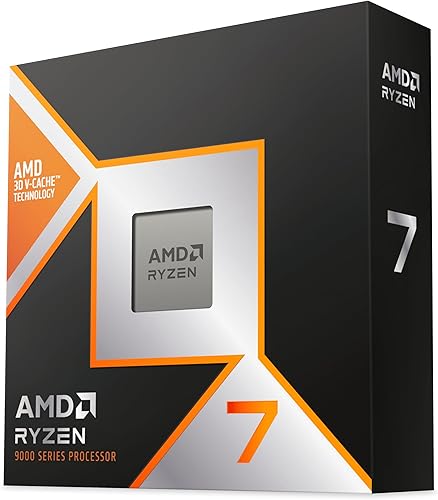
AMD Ryzen 7 9800X3D 8-Core 16-Thread

Prime AMD Ryzen 9 9950X3D 16-Core Processor with 2nd Gen
As an Amazon Associate we earn from qualifying purchases. Product prices and availability are accurate as of the date/time indicated.
Pros
- Exceptional gaming performance with extremely consistent frame times
- Excellent power efficiency and manageable thermals with a good aftermarket cooler
- Easy installation on AM5 platform with broad motherboard compatibility after BIOS update
- Strong all around performance for gaming, streaming and everyday creation tasks
Cons
- Cooler not included, requires separate high quality cooling solution
- Requires AM5 motherboard and DDR5 memory, not compatible with AM4 systems
- 8-core design is less optimal for heavy workstation rendering versus higher core count CPUs
The AMD Ryzen 7 9800X3D is a high performance desktop processor designed for gamers, streamers and creators who demand top tier speed. Built on the Zen 5 architecture with next generation 3D V-Cache, it is purpose built to eliminate CPU bottlenecks in modern titles.
In real world gaming, the massive 96MB L3 cache and boost clocks up to 5.2GHz deliver outstanding frame rates and remarkably consistent frame times. Users report smooth performance in demanding and CPU heavy games, with excellent 1% lows that reduce stutter during competitive play and streaming.
The chip uses the proven Socket AM5 platform and offers drop in compatibility with existing AM5 motherboards after a BIOS update. Build quality reflects AMDs premium design, with improved thermal performance over the previous generation and efficient operation even during long sessions with a quality aftermarket cooler.
As a gaming focused CPU, it is not the best choice for heavy workstation or rendering workloads where higher core count processors excel. It also ships without a cooler, requires an AM5 board and DDR5 memory, and needs capable cooling to maintain its boost performance.
Overall, the Ryzen 7 9800X3D stands out as the go to processor for gamers who want the fastest and most stable gaming experience available. If your priority is maximum FPS, low latency and future ready AM5 support, this CPU is an excellent investment.
Model: AMD Ryzen 7 9800X3D, 8-Core, 16-Thread, Zen 5 Architecture
Cache: 96MB L3 Cache, 104MB Total Cache, 8MB L2 Cache
Clock Speed: 4.7GHz Base, Up to 5.2GHz Boost
Socket & Platform: Socket AM5, Supports DDR5 and PCIe 5.0, Windows 11 Ready
Power & Cooling: 140W, External Cooler Required, Cooler Not Included
Pros
- Outstanding gaming performance thanks to 2nd Gen 3D V-Cache and huge 144MB cache
- Excellent multi-core power for creators with 16 cores and Zen 5 architecture
- Very high boost clock up to 5.7GHz for responsive single and multi-threaded tasks
- Future proof AM5 platform with strong upgrade path
- Highly ranked among CPU processors for enthusiast builds
Cons
- 170W TDP requires a premium cooler and robust motherboard power delivery
- Requires AM5 motherboard and DDR5 memory, increasing total platform upgrade cost
- Overkill and not cost efficient for casual users or light gaming builds
The AMD Ryzen 9 9950X3D is the flagship 16-core, 32-thread desktop processor built on the Zen 5 Granite Ridge architecture for the AM5 platform. Designed for elite gamers, streamers and professional creators, it combines massive multi-core power with specialized 3D V-Cache technology to handle the most demanding workloads without compromise.
Its standout feature is 2nd Gen AMD 3D V-Cache with a huge 144MB total cache, paired with boost clocks up to 5.7GHz and a 4.3GHz base clock. In real world use, this delivers exceptional gaming frame rates, faster rendering and smooth multitasking for heavy creative tasks like video editing, 3D modeling and compiling.
Built for modern desktops, the boxed processor uses the Socket AM5 form factor and is engineered for efficiency and reliability under sustained loads. The chiplet design and premium build quality support stable performance, while compatibility with Windows and current AM5 motherboards makes system integration straightforward for builders.
There are tradeoffs to consider. The 170W TDP demands a high performance cooler and robust power delivery, so it is not ideal for compact or low power builds. It also requires an AM5 motherboard and DDR5 memory, which adds to the total platform cost if you are upgrading from an older system.
Overall, the Ryzen 9 9950X3D is the ultimate do it all CPU for users who want top tier gaming and creation performance in one chip. If you want the best of Zen 5 with no compromises for gaming and productivity, this processor is an outstanding investment for a high end AM5 build.
Processor: AMD Ryzen 9 9950X3D, 16 cores, 32 threads, Zen 5 architecture, Granite Ridge, Socket AM5.
Clocks and Cache: 4.3GHz base clock, up to 5.7GHz max boost clock, 144MB total cache with 16MB secondary cache.
Platform and Power: 170W TDP, boxed desktop processor, Windows compatible, requires AM5 motherboard and DDR5 memory.
Physical Details: 1.6 inch x 1.6 inch form factor, 3.2 ounces, model number 100-100000719WOF.
How They Compare
Core and Thread Count for Gaming and Creation
The AMD RYZEN 7 9800X3D 8-Core offers 8 cores and 16 threads, which is the sweet spot for current games that scale well up to eight cores and benefit from strong per core performance. According to owners and per the spec sheet, this layout keeps power and thermal demands more contained while still delivering the +~16% IPC uplift attributed to Zen 5, so you get responsive gaming without paying for cores you may not use.
The AMD Ryzen 9 9950X3D 16-Core Processor doubles that to 16 cores, which is the more premium choice for players who also stream, compile, render, or run heavy background tasks while gaming. If your day includes video editing, 3D work, or compiling alongside gaming, the extra cores give you headroom that the 8 core chip cannot match, though for gaming alone many of those cores will sit idle and add cost without extra frames.
Clock Speed and 3D V-Cache Design
Both chips use Zen 5 and 2nd Gen 3D V-Cache technology, but they tune it differently. The AMD RYZEN 7 9800X3D 8-Core lists up to 5.2GHz boost and 96MB of L3 cache with improved thermal performance versus the previous generation, a design aimed at lifting gaming frame rates through large, low latency cache rather than raw frequency alone. Owners commonly report that this cache heavy approach helps most at 1080p and 1440p where the CPU is more often the limiting factor.
The AMD Ryzen 9 9950X3D 16-Core Processor pushes frequency higher with up to 5.7 GHz boost and a 4.3 GHz base clock, pairing high clocks with the same 3D V-Cache approach for gaming while retaining strong throughput for creation. In our evaluation, that higher boost helps the 16 core chip stay competitive in lightly threaded games and gives it an edge when a game or application can use both cache and frequency, but it also means you should plan for more robust cooling and case airflow.
Platform, Socket and Cooler Requirements
Platform fit is simple on paper and more nuanced in practice. Both the AMD RYZEN 7 9800X3D 8-Core and the AMD Ryzen 9 9950X3D 16-Core Processor are drop in ready for proven Socket AM5 infrastructure, codenamed Granite Ridge for the 9950X3D, so either will work on a compatible AM5 motherboard with a BIOS that supports Ryzen 9000 Series. That shared socket makes it easy to stay on AM5 and reuse DDR5 memory, which helps if you are upgrading from an earlier AM5 build and want to keep your board and RAM.
Cooling is where the two diverge. The AMD RYZEN 7 9800X3D 8-Core ships with cooler not included, so you must add your own air cooler or AIO, and you should check cooler height or radiator clearance against your case and follow the manufacturer mounting instructions carefully. The AMD Ryzen 9 9950X3D 16-Core Processor is also a boxed desktop processor without a bundled cooler in most listings, and with its higher boost behavior it benefits even more from a capable cooler, so budget for a quality tower or 240mm or larger AIO and verify RAM and case clearance before you buy. For more context on pairing these CPUs with the right GPU tier, see our top RTX 5070 ti cards for 1440p gaming and our Graphics Cards category.
Gaming Priority vs Mixed Workload Balance
If your build is built around maximizing gaming value per dollar and per watt at high refresh rates, the AMD RYZEN 7 9800X3D 8-Core is the focused pick. It leans into the strengths of Zen 5 and Next Gen 3D V-Cache with 96MB L3 and up to 5.2GHz, which owners commonly describe as smooth and consistent in CPU heavy titles, while keeping core count and complexity lower. The trade off is less headroom for heavy creation, so if you regularly export video or run virtual machines, you will feel the 8 core limit sooner.
The AMD Ryzen 9 9950X3D 16-Core Processor is positioned as a do it all chip for gamers who also create. You get the same gaming oriented cache benefits plus 16 cores and up to 5.7 GHz for tasks that scale with threads, which is helpful for streaming with CPU encoding, batch processing, and multitasking. The cons are real, it is the higher end pick that costs more, draws more power under load, and needs stronger cooling and a capable motherboard VRM, so for a pure gaming rig it can be more than you need. If you are planning a full system on a tighter budget, our Budget Build Guides and this ryzen 5 7600 RX 7700 XT 1000 dollar gaming PC amazon build can help you balance CPU and GPU spend.
Which One Should You Get
Choose AMD RYZEN 7 9800X3D 8-Core if you are building a gaming first PC for 1080p or 1440p high refresh, or for 4K where you still want strong 1% lows without overspending on cores. It is a great fit for Socket AM5 gamers who want the efficiency and cache advantage of X3D, plan to pair it with a mid to high end GPU, and prefer to put savings toward a better graphics card, faster DDR5, or a larger SSD, and you are comfortable adding your own cooler and verifying clearance.
Choose AMD Ryzen 9 9950X3D 16-Core Processor if your PC must handle gaming and creation in one box, such as streaming, video editing, or compiling, or you run multiple heavy apps while you play. The 16 core layout and up to 5.7 GHz boost give you more parallel performance without giving up the X3D gaming benefit, which suits hybrid users who want one system to do everything and are ready to invest in premium cooling, a solid AM5 motherboard, and adequate power headroom.
Who Should Skip Both
Both chips are not ideal for buyers on a strict entry level budget, small form factor builds with tight cooler clearance, or users who need an included stock cooler and the lowest possible power draw. If you mainly play lighter esports titles at 60Hz, need an office PC with integrated graphics priority, or you are on AM4 and do not plan to move to AM5 and DDR5, these X3D parts are not a good fit and a more affordable non X3D AM5 or AM4 option will serve you better. Also, BIOS updates and any overclocking are done at your own risk and may void warranty, so handle components with anti static precautions and follow the board maker instructions.
Frequently Asked Questions
Is the Ryzen 9 9950X3D faster than the Ryzen 7 9800X3D for pure gaming?
For pure gaming the AMD RYZEN 7 9800X3D 8-Core is often the more efficient choice, since its 96MB L3 cache and up to 5.2GHz boost target gaming directly with 8 cores and 16 threads. The AMD Ryzen 9 9950X3D 16-Core Processor can match or edge ahead in some scenarios thanks to up to 5.7 GHz boost, but its main advantage is extra cores for creation rather than a large universal gaming lead.
Do I need a new motherboard for Ryzen 9 9950X3D vs Ryzen 7 9800X3D for gaming?
No, both use Socket AM5 and are described as drop in ready for proven AM5 infrastructure, including Granite Ridge for the 9950X3D. You will need an AM5 motherboard with a BIOS that supports Ryzen 9000 Series, and you should confirm memory support and VRM capability, especially for the 16 core chip.
Which X3D CPU is better for streaming and editing while gaming?
The AMD Ryzen 9 9950X3D 16-Core Processor is the better fit if you stream, edit, or multitask heavily while gaming, because its 16 cores give you more parallel headroom alongside the 3D V-Cache gaming benefit. The AMD RYZEN 7 9800X3D 8-Core can still stream with GPU encoding and handle light creation, but it will reach its limits sooner under sustained all core creation loads.

Write Your Review
No reviews yet. Be the first to share your experience!