

Choosing between the AMD Ryzen 7 7800X3D 8-Core and the AMD RYZEN 7 9800X3D 8-Core is a familiar dilemma for AM5 gamers in 2026. Both chips offer 8 cores and 16 threads with large 3D V-Cache aimed at gaming, but they sit on different architectures and clock targets.
If you are deciding on Ryzen 7 9800X3D vs Ryzen 7 7800X3D for gaming, the real question is whether you want proven efficiency and value for high refresh 1440p or the higher clock ceiling and refined cache of the newer Zen 5 part. Your resolution, GPU pairing, and upgrade path will matter more than core count alone, so this guide evaluates both options side by side to match your build.
This article contains affiliate links. If you buy through one of our links, CustomPCGaming may earn a commission at no extra cost to you. Commissions never influence which products we recommend or how we rank them. Read our Affiliate Disclosure for details.
Quick Picks at a Glance

AMD Ryzen 7 7800X3D 8-Core 16-Thread
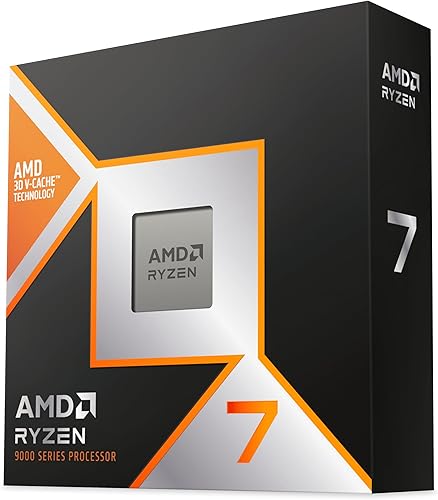
AMD Ryzen 7 9800X3D 8-Core 16-Thread
As an Amazon Associate we earn from qualifying purchases. Product prices and availability are accurate as of the date/time indicated.
Pros
- Best in class gaming performance and frametime consistency in CPU heavy and competitive titles
- Excellent power efficiency and cool operation without needing premium cooling
- Stable, easy drop in installation on AM5 with no complex tuning required
- Strong multitasking for gaming, streaming and everyday use
Cons
- Tuned for gaming, less ideal than non X3D chips for heavy rendering or productivity workloads
- Limited overclocking headroom due to 3D V-Cache design
- Requires AM5 motherboard and DDR5 memory, so not a drop in upgrade for AM4 systems
The AMD Ryzen 7 7800X3D is an 8-core, 16-thread desktop processor built on AMD's Zen 4 architecture for the Socket AM5 platform. It is purpose built for gamers who want maximum FPS and smoothness rather than a workstation chip for heavy creation tasks.
Its defining feature is AMD 3D V-Cache, which stacks a massive 96MB L3 cache plus 8MB L2 for 104MB total cache. In real world use this translates to exceptional high refresh rate gaming at 1440p, VR, and CPU intensive simulation and strategy games, with notably smooth 1% lows when paired with a powerful GPU.
Built on a 5nm process with a 4.2 GHz base clock and 120 watt design, it balances speed with efficiency. Users report cool, quiet operation and easy installation on any AM5 board, plus integrated Radeon Graphics for basic display duties and reliable everyday stability.
There are tradeoffs to consider. It is optimized for gaming, so creators focused on video encoding or 3D rendering may find better value in higher clocked non X3D processors. It also needs an AM5 motherboard and DDR5 RAM, and offers limited manual overclocking by design.
Verdict: For pure gaming the 7800X3D remains a top recommendation, combining elite gaming performance, efficiency and consistency. If your priority is smooth, high FPS gameplay that lets your GPU stretch its legs, it is an outstanding upgrade.
Processor: AMD Ryzen 7 7800X3D, 8 Cores, 16 Threads, Zen 4 Architecture, 5nm Process
Clock and Cache: 4.2 GHz Base Clock, 8MB L2 Cache plus 96MB L3 Cache, 104MB Total Cache
Socket and Platform: Socket AM5, Supports Windows 10 and Windows 11, Requires DDR5 Memory
Graphics and Power: Integrated AMD Radeon Graphics at 2200 MHz, 120 Watts, Tjmax 89C
Package: Desktop Processor, Model Number AMD Ryzen 7 7800X3D, Dimensions 1.57 x 1.57 inches
Pros
- Exceptional gaming performance with extremely consistent frame times
- Excellent power efficiency and manageable thermals with a good aftermarket cooler
- Easy installation on AM5 platform with broad motherboard compatibility after BIOS update
- Strong all around performance for gaming, streaming and everyday creation tasks
Cons
- Cooler not included, requires separate high quality cooling solution
- Requires AM5 motherboard and DDR5 memory, not compatible with AM4 systems
- 8-core design is less optimal for heavy workstation rendering versus higher core count CPUs
The AMD Ryzen 7 9800X3D is a high performance desktop processor designed for gamers, streamers and creators who demand top tier speed. Built on the Zen 5 architecture with next generation 3D V-Cache, it is purpose built to eliminate CPU bottlenecks in modern titles.
In real world gaming, the massive 96MB L3 cache and boost clocks up to 5.2GHz deliver outstanding frame rates and remarkably consistent frame times. Users report smooth performance in demanding and CPU heavy games, with excellent 1% lows that reduce stutter during competitive play and streaming.
The chip uses the proven Socket AM5 platform and offers drop in compatibility with existing AM5 motherboards after a BIOS update. Build quality reflects AMDs premium design, with improved thermal performance over the previous generation and efficient operation even during long sessions with a quality aftermarket cooler.
As a gaming focused CPU, it is not the best choice for heavy workstation or rendering workloads where higher core count processors excel. It also ships without a cooler, requires an AM5 board and DDR5 memory, and needs capable cooling to maintain its boost performance.
Overall, the Ryzen 7 9800X3D stands out as the go to processor for gamers who want the fastest and most stable gaming experience available. If your priority is maximum FPS, low latency and future ready AM5 support, this CPU is an excellent investment.
Model: AMD Ryzen 7 9800X3D, 8-Core, 16-Thread, Zen 5 Architecture
Cache: 96MB L3 Cache, 104MB Total Cache, 8MB L2 Cache
Clock Speed: 4.7GHz Base, Up to 5.2GHz Boost
Socket & Platform: Socket AM5, Supports DDR5 and PCIe 5.0, Windows 11 Ready
Power & Cooling: 140W, External Cooler Required, Cooler Not Included
How They Compare
Architecture, Process and Clock Speed
The AMD Ryzen 7 7800X3D 8-Core is built on the Zen 4 architecture with a 5 nm process and a base clock of 4.20 GHz per the spec sheet. It is positioned as a dependable, efficient gaming processor with integrated AMD Radeon Graphics at 2200 MHz for display output and troubleshooting.
The AMD RYZEN 7 9800X3D 8-Core moves to Zen 5 and Next Gen 3D V-Cache, with support for higher clock speeds up to 5.2GHz and a rated +~16% IPC uplift over the prior generation. Both processors share the same 8-core, 16-thread layout, so the difference comes from IPC and frequency headroom rather than thread count, and owners commonly report that the newer part sustains higher boost behavior in CPU limited scenes.
Cache Design and Gaming Focus
Cache is the defining feature for both chips. The AMD Ryzen 7 7800X3D 8-Core lists 8 MB of L2 plus 96 MB of L3 cache, which helps reduce memory latency and keeps gaming workloads fed with data. That large L3 pool is why this generation became a favorite for high refresh gaming at 1080p and 1440p.
The AMD RYZEN 7 9800X3D 8-Core also provides 96MB L3 cache, but AMD notes better thermal performance versus the previous generation that allows those higher clocks up to 5.2GHz. In practice, that combination of Zen 5 IPC, large L3, and improved thermals is intended to lift frame consistency in cache sensitive titles, while the AMD Ryzen 7 7800X3D 8-Core remains highly competitive when you are GPU bound at higher resolutions.
Platform, Socket and Integrated Graphics
Platform fit is straightforward for both. The AMD RYZEN 7 9800X3D 8-Core is described as drop-in ready for proven Socket AM5 infrastructure, which means you can use the same AM5 motherboards and DDR5 memory ecosystem as the earlier X3D. The AMD Ryzen 7 7800X3D 8-Core is also an AM5 part with integrated AMD Radeon Graphics at 2200 MHz, useful if you need display output without a discrete card during setup.
If you are building new, either CPU lets you stay on AM5 and keep your options open for future upgrades. If you already own an AM5 board, check the motherboard support page and be prepared to update the BIOS, which is done at your own risk and may affect warranty, before swapping chips. For context on complete builds around these platforms, our ryzen 5 7600 RX 7700 XT 1000 dollar gaming PC amazon build shows how AM5 component choices interact.
Cooling, Thermals and Power Considerations
Thermal guidance differs slightly. The AMD Ryzen 7 7800X3D 8-Core lists a Maximum Operating Temperature of 89 degrees C, so you will want a capable cooler that keeps you comfortably below that limit under sustained gaming loads. The AMD RYZEN 7 9800X3D 8-Core is listed as cooler not included and highlights better thermal performance for its 3D V-Cache design, which helps it reach up to 5.2GHz more reliably.
For either processor, choose a cooler that fits your case and follow the manufacturer mounting instructions closely. Check cooler height or radiator clearance against your case spec sheet, use anti-static handling, and ensure your power supply has headroom over the combined CPU and GPU draw while following the GPU maker recommended wattage. You can explore pairing ideas in our Graphics Cards section and remember that BIOS updates and any overclocking are done at your own risk.
Which One Should You Get
Choose AMD Ryzen 7 7800X3D 8-Core if you want proven gaming performance on AM5 with strong efficiency and you prefer to allocate more of your budget to your graphics card or monitor. It is a sensible match for 1440p high refresh and 4K builds where you are often GPU limited, and for upgrades where you want a reliable drop-in with integrated graphics at 2200 MHz for flexibility. You also get a mature platform with broad cooler compatibility, provided you verify clearance and keep temperatures below the 89 degrees C Tjmax.
Choose AMD RYZEN 7 9800X3D 8-Core if you are targeting the highest CPU limited frame rates and want the refinements of Zen 5, including the +~16% IPC uplift and higher boost up to 5.2GHz enabled by improved thermal behavior of the 96MB L3 cache. It is the more premium choice for competitive 1080p and 1440p high refresh gaming where the CPU is often the limiter, and for new AM5 builds where you plan to pair it with a top tier GPU. Just plan for an aftermarket cooler since a cooler is not included, and confirm case and motherboard compatibility before you buy.
Who Should Skip Both
Both of these X3D chips are not ideal for buyers who need heavy multi-threaded productivity on a tight budget or who are building a low cost system where platform costs outweigh gaming gains. If you primarily render, compile, or stream with CPU encoding for long sessions, a higher core count non-X3D part or a different platform may be a better value, and if you are shopping strictly within Budget Build Guides, neither X3D is the right choice when a more affordable CPU lets you invest in a stronger GPU and still hit your target resolution.
Frequently Asked Questions
Is the AMD RYZEN 7 9800X3D 8-Core noticeably faster than the AMD Ryzen 7 7800X3D 8-Core for gaming?
Per the spec sheet, the AMD RYZEN 7 9800X3D 8-Core offers Zen 5 with +~16% IPC uplift and boost up to 5.2GHz, plus refined 96MB L3 thermal behavior. Owners commonly report higher peak and more consistent frames in CPU limited scenarios, while the AMD Ryzen 7 7800X3D 8-Core remains very capable when you are GPU bound.
Do I need a new motherboard to move from the 7800X3D to the 9800X3D?
No, both use Socket AM5, and the AMD RYZEN 7 9800X3D 8-Core is listed as drop-in ready for proven AM5 infrastructure. You should still verify BIOS support for your specific board and update the BIOS at your own risk before swapping processors.
Do either of these processors come with a cooler in the box?
The AMD RYZEN 7 9800X3D 8-Core is listed as cooler not included, so you will need an aftermarket air cooler or AIO. For the AMD Ryzen 7 7800X3D 8-Core, plan for a capable cooler as well and check cooler height or radiator clearance against your case, then follow the manufacturer mounting instructions.

Write Your Review
No reviews yet. Be the first to share your experience!