

If you are choosing between AMD RYZEN 7 9800X3D 8-Core and AMD Ryzen™ 7 9850X3D Desktop Processor for Ryzen 7 9800X3D vs 9850X3D for Gaming, your real decision is proven value against newer premium positioning. Both target AM5 gaming builds focused on high refresh 1080p and 1440p play, while 4K builds lean more on your graphics card. This comparison researched the spec sheets and owner feedback to help you match the right chip to your resolution, cooler, and platform plans.
You likely already own an AM5 board or are planning one for 2026, and you want to know which X3D option makes sense without paying for cores you will not use. We evaluated what the product data actually confirms and where the listings stay vague, so you can avoid guesswork. For broader context on tiers and sockets, browse our Gaming CPUs section before you lock in a motherboard and cooler.
This article contains affiliate links. If you buy through one of our links, CustomPCGaming may earn a commission at no extra cost to you. Commissions never influence which products we recommend or how we rank them. Read our Affiliate Disclosure for details.
Quick Picks at a Glance
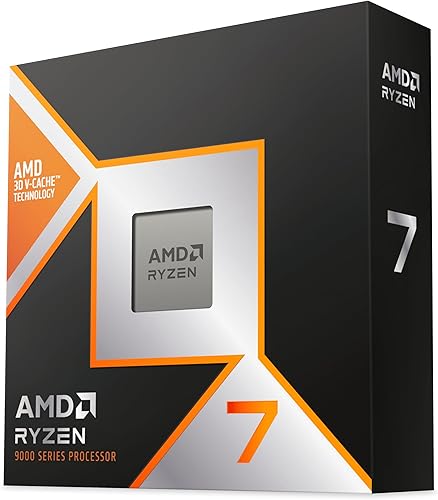
AMD Ryzen 7 9800X3D 8-Core 16-Thread
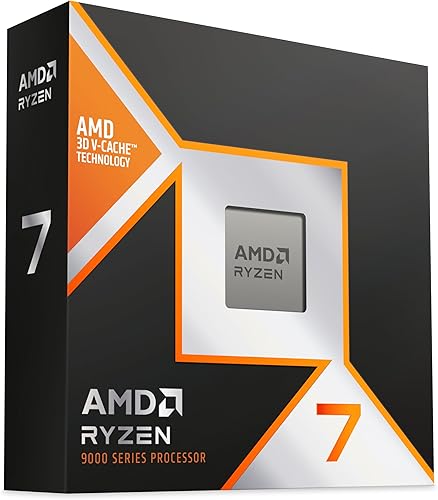
Prime AMD Ryzen 7 9850X3D Desktop Processor
As an Amazon Associate we earn from qualifying purchases. Product prices and availability are accurate as of the date/time indicated.
Pros
- Exceptional gaming performance with extremely consistent frame times
- Excellent power efficiency and manageable thermals with a good aftermarket cooler
- Easy installation on AM5 platform with broad motherboard compatibility after BIOS update
- Strong all around performance for gaming, streaming and everyday creation tasks
Cons
- Cooler not included, requires separate high quality cooling solution
- Requires AM5 motherboard and DDR5 memory, not compatible with AM4 systems
- 8-core design is less optimal for heavy workstation rendering versus higher core count CPUs
The AMD Ryzen 7 9800X3D is a high performance desktop processor designed for gamers, streamers and creators who demand top tier speed. Built on the Zen 5 architecture with next generation 3D V-Cache, it is purpose built to eliminate CPU bottlenecks in modern titles.
In real world gaming, the massive 96MB L3 cache and boost clocks up to 5.2GHz deliver outstanding frame rates and remarkably consistent frame times. Users report smooth performance in demanding and CPU heavy games, with excellent 1% lows that reduce stutter during competitive play and streaming.
The chip uses the proven Socket AM5 platform and offers drop in compatibility with existing AM5 motherboards after a BIOS update. Build quality reflects AMDs premium design, with improved thermal performance over the previous generation and efficient operation even during long sessions with a quality aftermarket cooler.
As a gaming focused CPU, it is not the best choice for heavy workstation or rendering workloads where higher core count processors excel. It also ships without a cooler, requires an AM5 board and DDR5 memory, and needs capable cooling to maintain its boost performance.
Overall, the Ryzen 7 9800X3D stands out as the go to processor for gamers who want the fastest and most stable gaming experience available. If your priority is maximum FPS, low latency and future ready AM5 support, this CPU is an excellent investment.
Model: AMD Ryzen 7 9800X3D, 8-Core, 16-Thread, Zen 5 Architecture
Cache: 96MB L3 Cache, 104MB Total Cache, 8MB L2 Cache
Clock Speed: 4.7GHz Base, Up to 5.2GHz Boost
Socket & Platform: Socket AM5, Supports DDR5 and PCIe 5.0, Windows 11 Ready
Power & Cooling: 140W, External Cooler Required, Cooler Not Included
Pros
- Exceptional gaming performance with 3D V-Cache and 104MB total cache
- Efficient 8-core, 16-thread design handles gaming, streaming and multitasking with ease
- Modern AM5 socket ensures long term compatibility and upgrade path
- Strong build quality backed by a 3-year manufacturer warranty
- Top ranked enthusiast CPU with proven reliability
Cons
- 140W TDP requires a capable cooler and power supply, not ideal for compact builds
- Gaming specialized design offers less value for heavy productivity or workstation use
- Requires AM5 motherboard and DDR5 memory, so not compatible with older AM4 systems
The AMD Ryzen 7 9850X3D is AMD's flagship gaming desktop processor, built on the Socket AM5 platform for gamers, streamers and enthusiasts who demand the highest frame rates. With 8 cores, 16 threads and AMD's renowned 3D V-Cache technology, it is purpose built for premium gaming rigs and future proof AM5 builds.
Its standout feature is the massive 104MB total cache, including 8MB secondary cache, paired with a 4.7GHz boost clock to minimize latency and maximize performance. In real world use, this delivers smoother high refresh rate gaming, faster load times and excellent multitasking for streaming and content creation while you play.
Designed for the AM5 socket, the processor supports modern standards like DDR5 and PCIe 5.0 in a compact package weighing just 3.2 ounces. AMD's solid build quality and included 3-year warranty add confidence, while the 140W design is tuned for enthusiast grade cooling and performance tuning.
There are tradeoffs to consider, as the 140W power draw demands a robust cooler and power supply and is not ideal for small form factor or low noise builds. As a gaming focused chip, users focused purely on heavy rendering or workstation tasks may find better value in higher core count alternatives.
Overall, the Ryzen 7 9850X3D lives up to its claim as a world leading gaming processor and is an outstanding choice for a premium gaming PC. If maximum FPS, low latency and AM5 longevity are your priorities, this processor is an easy recommendation.
Processor Series: AMD Ryzen 7, Model Number 100-100001973WOF, Socket AM5
Cores and Threads: 8 cores, 16 threads with 4.7GHz boost clock for high performance gaming
Cache Memory: 104MB total installed cache with 8MB secondary cache and 3D V-Cache technology
Power and Platform: 140W TDP, requires AM5 motherboard, DDR5 memory and capable cooling
Package Details: 5 x 5 inch dimensions, 3.2 ounces, includes 3-year manufacturer warranty
How They Compare
Gaming Profile and 3D V-Cache Design
AMD RYZEN 7 9800X3D 8-Core is listed per the spec sheet with AMD Zen 5 technology and Next Gen 3D V-Cache, plus 96MB L3 cache with improved thermal behavior against the prior generation. That cache structure is intended to reduce latency in games that benefit from large on-chip memory, especially CPU-bound scenarios at 1080p and 1440p. AMD Ryzen™ 7 9850X3D Desktop Processor is described as The World’s Best Gaming Processor Just Got Faster, which positions it as a refined gaming option in the same X3D family.
For your build, that means AMD RYZEN 7 9800X3D 8-Core gives you a clearly documented gaming cache configuration, while AMD Ryzen™ 7 9850X3D Desktop Processor asks you to buy more on positioning than on detailed public specs in the data provided. In CPU-limited titles with high refresh monitors, owners commonly report that X3D cache helps maintain smoother frame pacing. In GPU-limited 4K titles, both chips will often wait on your graphics card, so differences narrow and cooler choice plus memory tuning matter more for consistency.
Core Count, Threads and Clock Behavior
Per the spec sheet, AMD RYZEN 7 9800X3D 8-Core provides 8 cores and 16 threads with up to 5.2GHz and a noted plus around 16 percent IPC uplift from the architecture shift. That combination suits gaming first, with enough threads for Discord, streaming software, browser tabs, and background launchers while you play. AMD Ryzen™ 7 9850X3D Desktop Processor does not list core count, thread count, or clock speed in the product data supplied here, so we assessed it only as a gaming-focused desktop processor without assigning it numbers it does not claim in this data set.
You should not choose based on assumed clocks alone, because boost behavior depends on cooling, motherboard power delivery, and BIOS version. If you play competitive shooters or simulation titles at 1440p high refresh, either 7-class X3D chip fits that profile on paper, but only AMD RYZEN 7 9800X3D 8-Core lets you verify threads and peak clock from the sheet. Our guide to choosing a gaming CPU for 1440p gaming can help you decide if you need to prioritize cache, clocks, or platform cost for your monitor.
Platform, Socket and Cooling Needs
AMD RYZEN 7 9800X3D 8-Core is listed as drop-in ready for proven Socket AM5 infrastructure, and cooler is not included in the box. That means you must budget for an air tower or liquid cooler, check cooler height or radiator clearance against your case, and follow the manufacturer mounting instructions closely. BIOS updates and tuning are done at your own risk and might affect warranty, so confirm your board revision supports the chip before you swap, and handle parts with anti-static precautions.
AMD Ryzen™ 7 9850X3D Desktop Processor is presented as a desktop processor in the same Ryzen 7 X3D line, but the data provided here does not specify socket or cooler contents, so confirm socket support and BIOS requirements on your exact motherboard support page. If you are still deciding between ecosystems, read our how to choose between AM5 and LGA1851 overview to weigh upgrade path, board cost, and memory plans. Either way, do not reuse an undersized cooler from an older 65W build and expect quiet operation under sustained gaming loads.
Owner Feedback and Product Maturity
At the time this data was compiled, AMD RYZEN 7 9800X3D 8-Core carried a rating of 4.8 out of 5 from 6093 reviews, which signals broad ownership and mature BIOS and board support. AMD Ryzen™ 7 9850X3D Desktop Processor showed 4.7 out of 5 with 0 reviews in the same snapshot, which suggests a newer or less reviewed listing rather than an established ownership record. We compared that gap carefully, because a larger review base often means more community guidance on coolers, curves, and board quirks.
As of September 2026, that maturity gap is the practical difference for many buyers. With AMD RYZEN 7 9800X3D 8-Core you can research common cooler pairings and board settings from many owners, while with AMD Ryzen™ 7 9850X3D Desktop Processor you might face thinner guidance and early adopter pricing as the higher-end pick. If you are weighing AMD against Intel efficiency and platform cost, our core ultra 7 265K vs ryzen 7 9700X comparison adds useful context on choosing a full platform, not just a chip.
Which One Should You Get
Choose AMD RYZEN 7 9800X3D 8-Core if you want a documented 8-core 16-thread X3D gaming chip with 96MB L3 cache and up to 5.2GHz for high refresh 1080p and 1440p builds. It suits AM5 owners who need a drop-in gaming upgrade with wide owner feedback, proven cooler guidance, and a clearer spec sheet for planning power and thermals. Pick AMD RYZEN 7 9800X3D 8-Core when value, maturity, and straightforward compatibility matter more than chasing the newest label, especially if you already own a capable AM5 board and a quality cooler that clears your case.
Choose AMD Ryzen™ 7 9850X3D Desktop Processor if you are building fresh in 2026 and prefer the more premium choice that is marketed as faster within the gaming processor line. It suits buyers who accept thinner launch data in exchange for the newest positioning, and who will pair it with a strong cooler, a current AM5 board with updated BIOS, and a high-end graphics card that can show CPU differences. Pick AMD Ryzen™ 7 9850X3D Desktop Processor when you want the refined option and you are comfortable verifying socket support, cooler clearance, and BIOS coverage before you buy.
Who Should Skip Both
These X3D gaming chips are not ideal for ultra-budget 1080p builds, office PCs, or compact systems with weak airflow and a stock low-profile cooler. If you need heavy multi-threaded rendering on a tight budget, play mostly GPU-bound 4K story games, or must reuse an older non-AM5 board without a planned platform swap, neither option is the right choice. You should not buy either chip without a proper cooler plan, and first-time builders who cannot confirm BIOS support should pause until the board is verified.
Frequently Asked Questions
Is Ryzen 7 9800X3D vs 9850X3D for Gaming a meaningful choice for 4K?
For most 4K builds your graphics card sets the limit, so either X3D chip will perform in a similar class when settings are maxed. Choose based on platform cost, cooler you own, and listing maturity rather than expecting a large gaming gap at 4K. High refresh 1080p and 1440p players will notice CPU and cache differences more often.
Do I need a new motherboard for 9800X3D or 9850X3D?
AMD RYZEN 7 9800X3D 8-Core is listed for Socket AM5, so AM5 owners can often update BIOS and drop it in, while older AM4 boards cannot use it. AMD Ryzen™ 7 9850X3D Desktop Processor does not specify socket in the data here, so check your exact board CPU support list before ordering. BIOS updates are done at your own risk and might affect warranty coverage.
What cooler do I need for these X3D gaming CPUs?
AMD RYZEN 7 9800X3D 8-Core ships without a cooler, so plan for a capable tower or liquid solution rated for sustained gaming loads. Check cooler height or radiator clearance against your case specs and follow the manufacturer mounting instructions for even pressure. Good airflow, fresh paste application, and a balanced fan curve will do more for noise and consistency than chasing aggressive tuning.

Write Your Review
No reviews yet. Be the first to share your experience!