

Choosing between the AMD Ryzen™ 5 9600X 6-Core and the AMD Ryzen 7 7800X3D 8-Core comes down to how you prioritize raw gaming smoothness versus newer architecture and platform value on Socket AM5. Both target gamers who want strong frame rates without stepping up to a larger workstation class chip.
If you are deciding on Ryzen 7 7800X3D vs Ryzen 5 9600X for gaming in 2026, the real question is whether you want the proven 3D V-Cache gaming specialist or the newer Zen 5 efficiency and clock speed advantage for high refresh 1080p and 1440p builds. This comparison evaluates each CPU on gaming performance tier, core and cache layout, platform features, and cooling needs so you can match the right chip to your GPU and monitor.
This article contains affiliate links. If you buy through one of our links, CustomPCGaming may earn a commission at no extra cost to you. Commissions never influence which products we recommend or how we rank them. Read our Affiliate Disclosure for details.
Quick Picks at a Glance
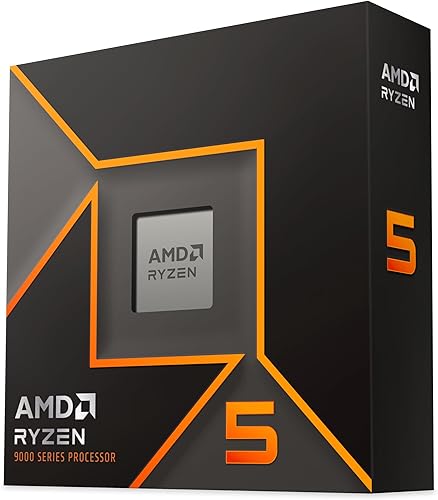
Prime AMD Ryzen 5 9600X 6-Core 12-Thread Unlocked

AMD Ryzen 7 7800X3D 8-Core 16-Thread
As an Amazon Associate we earn from qualifying purchases. Product prices and availability are accurate as of the date/time indicated.
Pros
- Excellent gaming performance with efficient Zen 5 architecture
- High 5.4 GHz boost clock and unlocked multiplier for overclocking
- Future ready AM5 platform with DDR5 and PCIe 5.0 support
- Energy efficient 65W TDP for cooler and quieter operation
- Large 38MB cache improves responsiveness in games and productivity
Cons
- CPU cooler not included, requires separate purchase
- Requires AM5 motherboard and DDR5 memory, not compatible with AM4 or DDR4 systems
- 6-core configuration may be limiting for heavy workstation or rendering tasks
The AMD Ryzen 5 9600X is a 6-core, 12-thread unlocked desktop processor built on the Zen 5 architecture for the AM5 platform. It is designed for gamers, PC builders and creators who want strong single and multi-threaded performance without stepping up to higher core counts.
In real world use, it targets smooth 100+ FPS gaming in popular titles while handling streaming, editing and multitasking comfortably. The 5.4 GHz max boost, 38MB cache and DDR5-5600 support help reduce stutter and improve responsiveness, and the unlocked design lets enthusiasts overclock on compatible motherboards.
Built for Socket AM5, the chip supports PCIe 5.0 on select motherboards for next generation graphics and storage. Despite its performance, it maintains a 65 watt TDP that balances power and thermals, and its compact design fits standard AM5 builds with air cooling.
The main trade off is that no cooler is included, so you will need to budget for an AM5 compatible air or liquid cooler. It also requires a newer AM5 motherboard and DDR5 memory, which adds cost if you are upgrading from an AM4 system.
Overall, the Ryzen 5 9600X is a compelling mid-range CPU that brings next gen Zen 5 speed and efficiency to a proven 6-core formula. For gamers and creators building a new AM5 system, it offers excellent value, future ready connectivity and headroom for overclocking.
Processor Series: Ryzen 5 9600X, 6 Cores, 12 Threads, Zen 5 Architecture
Clock Speed: 3.9 GHz base, up to 5.4 GHz max boost, unlocked for overclocking
Cache: 38MB total cache with 6MB secondary cache
Socket and Memory: Socket AM5, supports DDR5-5600 and PCIe 5.0 on select motherboards
Power and Cooling: 65 watts TDP, air cooling method, cooler not included
Compatibility: Windows 11 platform, 3 year manufacturer warranty
Pros
- Best in class gaming performance and frametime consistency in CPU heavy and competitive titles
- Excellent power efficiency and cool operation without needing premium cooling
- Stable, easy drop in installation on AM5 with no complex tuning required
- Strong multitasking for gaming, streaming and everyday use
Cons
- Tuned for gaming, less ideal than non X3D chips for heavy rendering or productivity workloads
- Limited overclocking headroom due to 3D V-Cache design
- Requires AM5 motherboard and DDR5 memory, so not a drop in upgrade for AM4 systems
The AMD Ryzen 7 7800X3D is an 8-core, 16-thread desktop processor built on AMD's Zen 4 architecture for the Socket AM5 platform. It is purpose built for gamers who want maximum FPS and smoothness rather than a workstation chip for heavy creation tasks.
Its defining feature is AMD 3D V-Cache, which stacks a massive 96MB L3 cache plus 8MB L2 for 104MB total cache. In real world use this translates to exceptional high refresh rate gaming at 1440p, VR, and CPU intensive simulation and strategy games, with notably smooth 1% lows when paired with a powerful GPU.
Built on a 5nm process with a 4.2 GHz base clock and 120 watt design, it balances speed with efficiency. Users report cool, quiet operation and easy installation on any AM5 board, plus integrated Radeon Graphics for basic display duties and reliable everyday stability.
There are tradeoffs to consider. It is optimized for gaming, so creators focused on video encoding or 3D rendering may find better value in higher clocked non X3D processors. It also needs an AM5 motherboard and DDR5 RAM, and offers limited manual overclocking by design.
Verdict: For pure gaming the 7800X3D remains a top recommendation, combining elite gaming performance, efficiency and consistency. If your priority is smooth, high FPS gameplay that lets your GPU stretch its legs, it is an outstanding upgrade.
Processor: AMD Ryzen 7 7800X3D, 8 Cores, 16 Threads, Zen 4 Architecture, 5nm Process
Clock and Cache: 4.2 GHz Base Clock, 8MB L2 Cache plus 96MB L3 Cache, 104MB Total Cache
Socket and Platform: Socket AM5, Supports Windows 10 and Windows 11, Requires DDR5 Memory
Graphics and Power: Integrated AMD Radeon Graphics at 2200 MHz, 120 Watts, Tjmax 89C
Package: Desktop Processor, Model Number AMD Ryzen 7 7800X3D, Dimensions 1.57 x 1.57 inches
How They Compare
Architecture and Gaming Performance Tier
The AMD Ryzen™ 5 9600X 6-Core is built on AMD Zen 5 architecture and lists a 5.4 GHz Max Boost with support for overclocking when paired with a capable motherboard and cooling. Per the spec sheet it is positioned for pure gaming performance with smooth 100+ FPS in the world’s most popular games, which makes it a strong match for high refresh monitors when paired with a mid to high end graphics card.
The AMD Ryzen 7 7800X3D 8-Core uses Zen 4 architecture with 3D V-Cache technology and a listed 4.20 GHz clock speed, plus integrated AMD Radeon Graphics at 2200 MHz for display output without a discrete GPU. According to owners, it is commonly reported to deliver very consistent frame pacing in CPU limited titles at 1080p and 1440p, which is why many gamers research it specifically for competitive shooters and simulation games. If you are building around a powerful GPU from our top RTX 5070 ti cards for 1440p gaming guide, either CPU can keep up, but the way they achieve it differs.
Core Count, Threads and Cache Structure
Core count is the clearest separation between these two. The AMD Ryzen™ 5 9600X 6-Core provides 6 cores and 12 processing threads, which is plenty for gaming and light creation while keeping power and thermal demands more modest. The AMD Ryzen 7 7800X3D 8-Core steps up to 8 cores and 16 threads, giving you extra headroom for background tasks like streaming, voice chat, and browser tabs while gaming.
Cache is where the design philosophies diverge. The AMD Ryzen™ 5 9600X 6-Core lists 38 MB cache total, which supports fast access for gaming workloads on Zen 5. The AMD Ryzen 7 7800X3D 8-Core lists 8 MB L2 plus 96 MB L3 cache memory, a large L3 pool that helps reduce memory latency in games that benefit from cached data. For titles that are sensitive to cache, owners commonly report the larger L3 on the 7800X3D helps maintain steadier minimum frame rates, while Zen 5 IPC improvements help the 9600X stay competitive in a broader mix of games.
Platform, Memory and PCIe Support
Both processors use the state-of-the-art Socket AM5 platform, so you will be shopping DDR5 memory and AM5 motherboards for either build. The AMD Ryzen™ 5 9600X 6-Core specifically lists DDR5-5600 support, which aligns with the sweet spot for many AM5 boards and gives you a clear baseline when selecting a kit. The AMD Ryzen 7 7800X3D 8-Core also runs on AM5, so you retain the same upgrade path to future AM5 CPUs and modern I/O.
On expansion, the AMD Ryzen™ 5 9600X 6-Core notes it can support PCIe 5.0 on select motherboards, which matters if you plan to use a PCIe 5.0 graphics card or NVMe drive. For either CPU, check your motherboard QVL for memory and confirm BIOS version support before purchase, as BIOS updates are done at your own risk and may void warranty if not followed per manufacturer instructions. If you are weighing a complete parts list, our ryzen 5 7600 RX 7700 XT 1000 dollar gaming PC amazon build breakdown shows how AM5 board choice affects total cost.
Cooling, Thermals and Practical Build Needs
Cooling requirements are an important practical difference. The AMD Ryzen™ 5 9600X 6-Core lists cooler not included, so you will need to budget for an aftermarket air cooler or AIO. Check cooler height or radiator clearance against your case specs and follow the manufacturer mounting instructions, using anti-static handling during installation. Because it is unlocked for overclocking, any tuning should be approached with caution and an adequate cooler, noting that overclocking is done at your own risk and may void warranty.
The AMD Ryzen 7 7800X3D 8-Core lists a Maximum Operating Temperature of 89°C and includes AMD Radeon Graphics at 2200 MHz, which is useful for troubleshooting or running the system without a discrete card. It also benefits from a quality cooler to keep boost behavior steady, even though it is not marketed as an overclocking focused part. For either chip, choose a case with good airflow and verify your power supply has the right connectors and headroom for your GPU, following the graphics card maker recommended wattage rather than assuming any PSU will handle any card, and explore more options in our Graphics Cards section to balance CPU and GPU.
Which One Should You Get
Choose AMD Ryzen™ 5 9600X 6-Core if you are building a new AM5 system where value, newer Zen 5 architecture, and a high 5.4 GHz Max Boost matter most. It is a smart fit for 1080p and 1440p high refresh builds paired with a mid range to upper mid range GPU, especially if you prefer to allocate more of your budget to the graphics card, DDR5-5600 memory, or a PCIe 5.0 capable motherboard. You should be comfortable buying an aftermarket cooler and you do not need the extra two cores for heavy multitasking while gaming.
Choose AMD Ryzen 7 7800X3D 8-Core if your priority is maximum gaming consistency and you want the extra cores and large cache pool for CPU heavy titles. With 8 cores, 16 threads, and 8 MB L2 plus 96 MB L3 cache, it suits gamers who stream, run background apps, or play simulation and competitive games where owners commonly report smoother lows. It is the more premium choice and makes sense when you already own a high end GPU for 1440p or 4K and want the CPU to stay out of the way, and you appreciate having integrated Radeon Graphics at 2200 MHz for setup and diagnostics. For budget focused builders, also browse our Budget Build Guides to see where the higher-end pick fits.
Who Should Skip Both
These two are not ideal for buyers who need a compact office PC with a bundled cooler and no extra cooler purchase, or for creators who need significantly more cores for heavy video editing and 3D rendering. They are also not a good fit if you are on an older AM4 or Intel platform and do not plan to move to AM5, DDR5, and a compatible motherboard, since both require Socket AM5. If you need lots of threads for workstation tasks or want the lowest cost entry point without buying a separate cooler, consider a different class of CPU or a bundle that includes cooling.
Frequently Asked Questions
Is the AMD Ryzen 7 7800X3D better than the AMD Ryzen 5 9600X for 1440p gaming?
It depends on the game and your GPU pairing. The AMD Ryzen 7 7800X3D 8-Core with its 8 MB L2 plus 96 MB L3 cache is often researched for CPU limited titles where owners commonly report steadier frame pacing, while the AMD Ryzen™ 5 9600X 6-Core with Zen 5 and 5.4 GHz Max Boost is rated for smooth 100+ FPS in popular games. At 1440p with a powerful GPU, both are strong, so match the CPU to your budget and whether you value extra cores and cache or newer architecture.
Do I need to buy a cooler for the Ryzen 5 9600X or Ryzen 7 7800X3D?
The AMD Ryzen™ 5 9600X 6-Core lists cooler not included, so you will need an aftermarket cooler. For the AMD Ryzen 7 7800X3D 8-Core, plan on a capable air cooler or 240mm or larger AIO for consistent boost, and always check cooler height or radiator clearance against your case and follow the manufacturer instructions.
Are both CPUs compatible with the same motherboards and RAM?
Yes, both use Socket AM5, so they share the same motherboard platform and DDR5 memory ecosystem. The AMD Ryzen™ 5 9600X 6-Core specifically lists DDR5-5600 support and PCIe 5.0 on select motherboards, so verify your board model, memory QVL, and BIOS revision, and update BIOS only per the board maker guidance as of September 2026.

Write Your Review
No reviews yet. Be the first to share your experience!