

If you are weighing the ASUS Prime Radeon RX 9070 XT 16GB GDDR6 OC Edition against the GIGABYTE GeForce RTX 5070 Ti Gaming OC 16G for RTX 5070 Ti vs RX 9070 XT for 1440p gaming, you are really choosing between efficient raster value and a more premium Blackwell feature stack. Both cards offer 16GB of VRAM and a PCIe 5.0 interface aimed squarely at 1440p high refresh gaming, yet they diverge on memory generation, cooling philosophy and software ecosystem in ways that affect your case, PSU and monitor pairing.
This comparison was researched and evaluated from spec sheets and owner feedback to help you match a card to your actual build in 2026, not just a spec table. You will see how each model handles 1440p textures, case fit and driver features, plus who should skip each option, so you can decide with confidence before you buy. For broader context on the category, browse our Graphics Cards archive.
This article contains affiliate links. If you buy through one of our links, CustomPCGaming may earn a commission at no extra cost to you. Commissions never influence which products we recommend or how we rank them. Read our Affiliate Disclosure for details.
Quick Picks at a Glance

ASUS Prime Radeon RX 9070 XT OC Edition 16GB GDDR6

GIGABYTE GeForce RTX 5070 Ti Gaming OC 16GB GDDR7
As an Amazon Associate we earn from qualifying purchases. Product prices and availability are accurate as of the date/time indicated.
Pros
- Excellent cost to performance for 1440p and 4K gaming
- Very cool and quiet operation even under load
- Premium ASUS build quality with easy installation
- Future proof features including PCIe 5.0 and DisplayPort 2.1a
- Dual BIOS and 0dB tech offer flexible noise and performance control
Cons
- Large 12.3 inch length may not fit compact or small form factor cases
- Shroud feels more plasticky compared to higher end ROG and TUF models
- Ray tracing and upscaling performance still trails competing Nvidia DLSS solutions
The ASUS Prime Radeon RX 9070 XT OC Edition is a high performance 16GB GDDR6 graphics card designed for gamers, creators and PC builders who want strong 1440p and solid 4K performance without stepping up to ultra flagship pricing.
In real world testing it handles demanding AAA titles at high and ultra settings with high frame rates, thanks to boost clocks up to 3030 MHz and fast GDDR6 memory. Users report smooth gameplay, low temperatures around 55 to 59C under load, and surprisingly quiet fans even at 75 percent speed.
Design and build focus on practical cooling and reliability, with a 2.5 slot layout for wider case compatibility, triple Axial-tech fans with dual ball bearings, and a phase change thermal pad for efficient heat transfer. Auto-Extreme manufacturing and ASUS GPU Guard add durability and a clean, professional look without RGB.
There are some trade offs to consider. The card is quite long at 12.3 inches, so compact cases should be measured carefully, and the shroud feels more plasticky than premium ROG models. Ray tracing and AI upscaling also remain a step behind Nvidia alternatives for users who prioritize those features.
Overall, this Prime OC Edition is a compelling value pick that balances power, thermals and acoustics exceptionally well. For gamers seeking reliable high refresh performance, quiet operation and modern connectivity, it is one of the smartest upgrades in its class.
Model: ASUS PRIME-RX9070XT-O16G, AMD Radeon RX 9070 XT OC Edition
Memory: 16GB GDDR6, OC Mode Boost Clock up to 3030 MHz, Game Clock up to 2480 MHz
Interface: PCIe 5.0 x16, 3x Native DisplayPort 2.1a, 1x Native HDMI 2.1b, Max Resolution 7680 x 4320
Cooling: Triple Axial-tech fans, dual ball bearings, 0dB technology, phase-change GPU thermal pad, dual BIOS
Design: 2.5-slot, 12.3 x 5.1 inches, 1500g, ASUS GPU Guard, Auto-Extreme manufacturing
Compatibility: Desktop, includes GPU Tweak III software, 3 year warranty
Pros
- Excellent native 1440p and 4K performance, even with ray tracing enabled
- Quiet and cool operation thanks to the WINDFORCE triple fan cooler
- High power efficiency compared to previous generation cards
- DLSS 4 Frame Generation delivers a large perceived fps boost with minimal visual artifacts
- 16GB GDDR7 provides plenty of headroom for future games and creative applications
Cons
- Extra large triple fan design requires a spacious case with modern clearances
- RGB lighting on the fans turns off when fans stop in 0 RPM idle mode
- Gaming OC factory overclocked model costs more than base reference designs
The GIGABYTE GeForce RTX 5070 Ti Gaming OC 16G is a high performance graphics card built on NVIDIA Blackwell architecture for gamers and creators who demand smooth 1440p and 4K experiences. It is designed for users upgrading from RTX 20 or 30 series cards who want a major leap in ray tracing, AI and creative workloads.
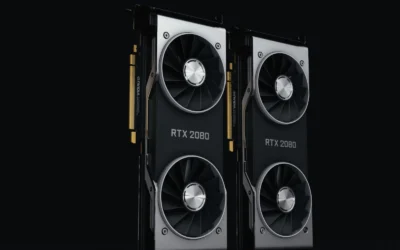
In real world testing, users report roughly double the performance of an RTX 2080 with similar power draw and much lower noise. With 16GB of GDDR7 memory, enhanced RT and Tensor Cores and DLSS 4 with Frame Generation, it handles maxed out settings and ray tracing at 60 to 100 fps native, and well above 120 fps with DLSS quality mode.
Build quality is premium and gamer focused, featuring GIGABYTEs WINDFORCE triple fan cooling system for efficient thermal control and quiet operation. The card supports PCIe 5.0, offers DisplayPort and HDMI outputs, and delivers up to 8K resolution support in a sturdy, factory overclocked design clocked at 2600 MHz.
The main trade off is physical size, as the triple fan cooler makes this a large card that barely fits in some mid tower cases. Some users also note that RGB lighting on the fans turns off when the fans stop at idle, which may disappoint those who want constant illumination.
Overall, the RTX 5070 Ti Gaming OC strikes an excellent balance between performance and efficiency in the RTX 50 series lineup. If you want flagship level visuals and AI acceleration without the highest tier cost or power demands, this is one of the most compelling choices available.
Graphics Processor: NVIDIA GeForce RTX 5070 Ti, Blackwell architecture, NVIDIA RTX 50 Series
Memory: 16GB GDDR7, 256-bit interface, 2600 MHz memory clock
Clock Speed: 2600 MHz boost clock, factory overclocked Gaming OC edition
Interface: PCI-Express x16, PCIe 5.0 support
Cooling: WINDFORCE cooling system with 3 fans and 0 RPM fan stop
Outputs: DisplayPort and HDMI, maximum resolution 7680 x 4320
Dimensions and Weight: 13.46 x 5.59 inches, 3.9 pounds, triple slot design
Model: GV-N507TGAMING OC-16GD, 3 year manufacturer warranty
Choose this card if you game at 1440p or 4K, use ray tracing, or create content that benefits from large VRAM and AI acceleration. It is a strong upgrade from RTX 2080, 3070 and 3080 class cards and pairs well with modern Ryzen 7, Ryzen 9 or Intel Core i7 and i9 systems.
Make sure your case has enough clearance for a large triple fan card and that your power supply meets the recommended wattage with proper PCIe power connectors. Good airflow will help you get the quietest operation and best boost clocks.
For the best experience, enable DLSS 4 in supported games to boost frame rates while keeping image quality high. Keep drivers updated through NVIDIA GeForce Experience and use GIGABYTE Control Center to customize fan curves and RGB if desired.
How They Compare
Memory, Architecture and Gaming Features
Both the ASUS Prime Radeon RX 9070 XT 16GB GDDR6 OC Edition and the GIGABYTE GeForce RTX 5070 Ti Gaming OC 16G give you 16GB of video memory, which is the sweet spot for maxed textures at 1440p and provides headroom if you occasionally push to 4K. Both also use PCIe 5.0, so platform bandwidth is not a differentiator. The split is memory tech and ecosystem, the GIGABYTE card integrates 16GB of GDDR7 on a 256-bit interface and is powered by NVIDIA Blackwell architecture with DLSS 4, while the ASUS card pairs 16GB of GDDR6 with AMD’s driver suite.
In practical terms, the GIGABYTE GeForce RTX 5070 Ti Gaming OC 16G gives you access to DLSS 4 upscaling and frame generation, Reflex low latency and stronger acceleration in many creator apps where NVIDIA’s AI pipeline is widely adopted, which owners commonly report as helpful in ray traced games and streaming. The ASUS Prime Radeon RX 9070 XT 16GB GDDR6 OC Edition focuses on strong raster throughput and driver level features like Anti-Lag and Fluid Motion Frames, and owners commonly report competitive 1440p performance without needing the more premium Blackwell tier if your library leans toward competitive or traditionally rasterized titles.
Cooling Design and Case Fit
The ASUS Prime Radeon RX 9070 XT 16GB GDDR6 OC Edition is built around a 2.5-slot design that balances compatibility and thermal headroom, with axial-tech fans that use a smaller hub, longer blades and a barrier ring to increase downward air pressure. It adds dual-ball fan bearings rated to last up to twice as long as conventional sleeve bearings, a phase-change GPU thermal pad for heat transfer, 0dB technology for quiet light gaming, a dual BIOS switch for Quiet versus Performance profiles, ASUS GPU Guard and Auto-Extreme manufacturing, all tunable in GPU Tweak III.
The GIGABYTE GeForce RTX 5070 Ti Gaming OC 16G counters with the WINDFORCE cooling system, which owners commonly report keeps boost clocks steady under sustained load while keeping acoustics controlled for a triple fan cooler. Both cards are large, so you should measure GPU length, slot thickness and front radiator clearance before you order and follow the manufacturer mounting instructions. If you are comparing cooler options in detail, see our top RTX 5070 ti cards for 1440p gaming guide for case fit notes that also apply to this head-to-head.
Power, PSU and Platform Pairing
Neither listing in our data set publishes a specific board power or recommended PSU wattage, so you should follow the GPU maker recommended wattage on the official spec sheet and keep headroom above your combined CPU and GPU draw. For this class of 16GB PCIe 5.0 cards, builders in November 2026 commonly plan for a quality 750W to 850W unit with native PCIe 5.0 connectors, and you should verify connector type and rail layout rather than assuming any PSU will handle any card. Good airflow and anti-static handling during install also help protect the hardware.
Platform pairing matters just as much at 1440p, where a modern CPU lets either card stretch its legs. Both the ASUS Prime Radeon RX 9070 XT 16GB GDDR6 OC Edition and the GIGABYTE GeForce RTX 5070 Ti Gaming OC 16G benefit from a current AM5 or Intel LGA1700/1851 processor with fast DDR5 to avoid CPU limits in high refresh titles. If you are trying to balance cost and CPU choice, the logic in our ryzen 5 7600 RX 7700 XT 1000 dollar gaming PC amazon build breakdown translates well, and our Budget Build Guides can help you size the rest of the system around either GPU.
Software, Drivers and Ownership Experience
Software is where your daily experience diverges. The GIGABYTE GeForce RTX 5070 Ti Gaming OC 16G taps NVIDIA’s ecosystem with DLSS 4, Reflex, Broadcast and frequent Studio drivers that many creators and streamers prefer for app support and recording features. The ASUS Prime Radeon RX 9070 XT 16GB GDDR6 OC Edition leans on AMD Software with HYPR-RX profiles, Anti-Lag and Fluid Motion Frames plus GPU Tweak III for fine control of fan curves, power limits and monitoring.
Ownership nuances also count. The ASUS Prime Radeon RX 9070 XT 16GB GDDR6 OC Edition emphasizes quiet idle operation through 0dB technology and long term durability via dual-ball bearings and GPU Guard, which owners commonly report as reassuring for multi-year use. The GIGABYTE GeForce RTX 5070 Ti Gaming OC 16G is positioned as the more premium choice with Blackwell efficiency and DLSS 4 leverage, but that also means you are paying for features you may not use if you rarely enable ray tracing or AI upscaling. Consider which software stack you will actually use week to week.
Which One Should You Get
Choose ASUS Prime Radeon RX 9070 XT 16GB GDDR6 OC Edition if you want strong 1440p raster performance with a slightly more case friendly 2.5-slot cooler, quiet 0dB idle operation and dual BIOS flexibility for a living room or shared space build. It is a good fit for high refresh 1440p monitors where you prioritize frame rates in competitive shooters and traditionally rasterized games, and you prefer AMD Software tuning through GPU Tweak III without stepping up to the more premium Blackwell tier.
Choose GIGABYTE GeForce RTX 5070 Ti Gaming OC 16G if you value DLSS 4, broader creator app acceleration and NVIDIA’s streaming and Reflex ecosystem for ray traced titles at 1440p. It suits builders who already own a 1440p 165Hz or 240Hz display and want the newest GDDR7 memory interface on a 256-bit bus with WINDFORCE cooling for sustained loads, and who are comfortable with the higher-end pick in this pairing to get those platform features.
Who Should Skip Both
Both of these 16GB cards are not ideal for small form factor or low wattage builds where case length, 2.5-slot thickness or PSU headroom is already tight, and they are not a good fit if you game mainly at 1080p where a lighter GPU would be more cost effective. They are also not recommended for buyers who need a compact single fan solution or who plan to keep a very old platform without PCIe 5.0 power connectors and updated drivers, in those cases a smaller, lower power option or a platform upgrade should come first.
Frequently Asked Questions
Is RTX 5070 Ti vs RX 9070 XT for 1440p gaming better with DLSS 4 or AMD Fluid Motion Frames?
It depends on the games you play. The GIGABYTE GeForce RTX 5070 Ti Gaming OC 16G offers DLSS 4 upscaling and frame generation that owners commonly report as beneficial in ray traced titles, while the ASUS Prime Radeon RX 9070 XT 16GB GDDR6 OC Edition relies on AMD Fluid Motion Frames and HYPR-RX profiles for smoother motion without vendor lock in.
Do both cards have enough VRAM for ultra textures at 1440p?
Yes, both ship with 16GB, which is ample for ultra textures at 1440p in 2026 and gives you headroom for texture packs and light 4K use. The difference is memory generation, with the GIGABYTE card using 16GB GDDR7 on a 256-bit interface and the ASUS card using 16GB GDDR6.
Which card is easier to fit in a mid tower case?
The ASUS Prime Radeon RX 9070 XT 16GB GDDR6 OC Edition lists a 2.5-slot design that many builders find a bit more forgiving, plus a dual BIOS switch to favor quiet operation. The GIGABYTE GeForce RTX 5070 Ti Gaming OC 16G uses a larger WINDFORCE triple fan cooler, so you should double check length and slot clearance against your case manual before you buy.




Write Your Review
No reviews yet. Be the first to share your experience!