

If you are asking is the Lian Li Lancool 216 a good airflow case for a hot GPU, you are really asking how to keep a high power graphics card cool without turning your system into a loud, cramped oven. The right case does more than look good, it determines how much fresh air reaches your GPU, how easily hot air leaves, and how much room you have for future upgrades.
This guide teaches you how to evaluate any airflow case for a hot GPU, using a few Lian Li examples to show the range. You will weigh your resolution and refresh target, your platform and socket, your case size and clearance needs, your power budget, and whether you are building for what you own today or what you plan to buy next. For a broader view of case options, browse the Cases & Airflow category as you compare.
What Actually Matters
Front Panel and Intake Path
The front panel is the first filter for airflow. A solid glass front looks clean but it forces air to sneak in from narrow side vents, which can starve a hot GPU that needs a direct stream of cool air. A fine mesh front or a precision cut intake pattern lets the front fans push air straight across the GPU and motherboard, which owners commonly report as cooler and more consistent temperatures.
When you compare cases, look at how open the front is and how the intake is filtered. The Graphics Cards you pair with the case matter here, because a card with a large heatsink and multiple fans benefits most from unobstructed front to back airflow. Also check whether the front filter is easy to remove and clean, since dust buildup will slowly choke airflow if you ignore it.
Fan Size, Count and Placement
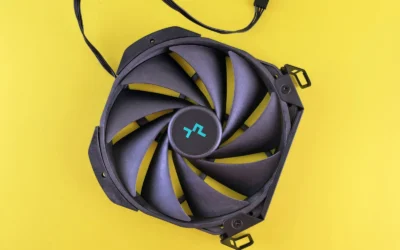
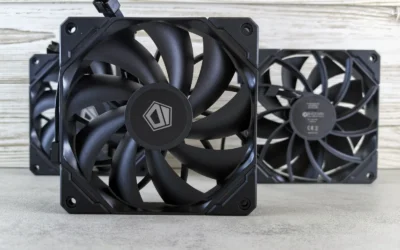
Fan size and placement shape both airflow and noise. Larger fans can move the same amount of air at lower speed, which often means less noise for you. Per the spec sheet, some cases use two 160mm PWM fans up front, others use two 170mm ARGB fans with a 140mm rear fan, and larger chassis use four 140mm PWM fans. Those differences affect how air is distributed across your GPU and CPU area.
Count matters less than coverage. Two large front intakes that cover the full height of the GPU zone often outperform three smaller fans that leave gaps. Look for a clear path from front intake to GPU to rear and top exhaust, and check whether the case includes a rear exhaust fan or expects you to add one. If you plan to add an AIO, verify radiator clearance against the case spec sheet and follow the manufacturer mounting instructions, and handle components with anti-static precautions.
GPU Length, Thickness and Internal Volume
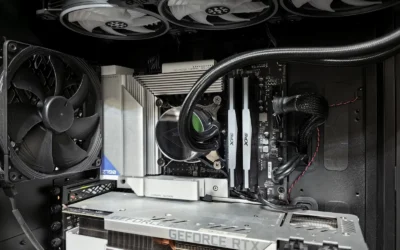
Hot GPUs are often long and thick, with coolers that extend well beyond the PCB. You need to check maximum GPU length, GPU thickness clearance, and whether a front radiator or front fans will eat into that space. A mid-tower with good depth gives you breathing room between the GPU fans and the front intake, and between the GPU backplate and the side panel, which helps hot air escape instead of recirculating.
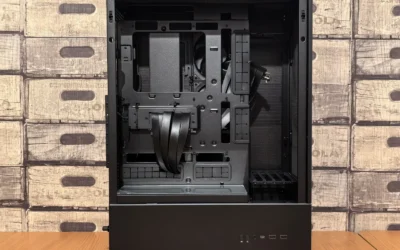
Internal volume also affects cable management and PSU placement. Some cases offer two PSU mounting orientations and support units up to 220mm in length, which can free up space for cables behind the motherboard tray. If you are considering a large card like those highlighted in our top RTX 5070 ti cards for 1440p gaming guide, make sure the case you choose leaves room for both the card and clean cable routing without pressing cables against the GPU.
Build Ease, Dust Control and Noise Tradeoffs
Airflow is not just about temperatures, it is about living with the case. Hinged tempered glass doors, such as 4.0mm tempered glass with aluminum handles, make it easier to open the system for cleaning. Swinging cable covers and well placed routing channels help you keep cables out of the airflow path, which keeps intake air moving where it should. Fine mesh panels can improve airflow while still filtering dust, but they need regular cleaning.
Noise is the other tradeoff. A very open mesh case with high speed fans will cool well but may be louder at load. Cases with larger fans and PWM control let you tune a quieter curve at idle and ramp up only when the GPU is under load. Before you buy, check cooler height and radiator support against your chosen CPU cooler, and confirm that your motherboard size is supported, whether that is ATX, Micro-ATX, Mini-ITX, or E-ATX with width under 280mm.
To see how the specs translate into real choices, here are a few options that show the range from compact airflow mid-tower to spacious high airflow chassis:
This article contains affiliate links. If you buy through one of our links, CustomPCGaming may earn a commission at no extra cost to you. Commissions never influence which products we recommend or how we rank them. Read our Affiliate Disclosure for details.
Quick Picks at a Glance

Prime Lian Li LANCOOL 216X Mid Tower ATX Case

Lian Li LANCOOL 217 INF Mid-Tower ATX Case

Prime Lian Li Lancool III RGB E-ATX Mid-Tower Gaming PC
As an Amazon Associate we earn from qualifying purchases. Product prices and availability are accurate as of the date/time indicated.
Pros
- Outstanding airflow and thermal performance praised by reviewers
- Very spacious interior with excellent cable management
- High build quality with tempered glass and solid construction
- Powerful dual 160mm fans included, no extra cooling needed for most builds
- Thoughtful builder friendly features like removable top bracket
Cons
- Front 160mm fans can be loud at high speeds and benefit from a custom fan curve
- Power supply mounting only supports inverted orientation for some large PSUs
- Rear PCIe slot covers feel flimsy and require screws to stay secure
The Lian Li LANCOOL 216X is a mid-tower ATX case designed for builders who prioritize airflow, space and clean aesthetics. It is ideal for gamers and enthusiasts who want to house large GPUs and efficient cooling without moving to a full tower.
Its dual 160mm PWM front fans deliver exceptional intake airflow, keeping high power components cool under load. Reviewers consistently praise its thermal performance and note that the included fans are more than enough for most systems, especially when paired with a top mounted AIO.
Built with a 4.0mm tempered glass side panel and a sturdy steel frame, the case balances premium looks with practicality. Cable management is a clear strength, with generous routing space and a removable top bracket that makes installation and wiring much easier.
There are a few quirks to note. The large front fans can become loud at higher RPMs, so tuning a custom fan curve is recommended. Some builders also report that the power supply must be installed upside down and that the rear PCIe covers feel a bit loose without screws.
Overall, the LANCOOL 216X stands out as one of the best airflow focused cases in its class. If you want excellent cooling, room for large hardware and thoughtful builder friendly features, this case is a smart and reliable choice.
Model: Lian Li LANCOOL 216X (PC-LAN216X) - Black Mid Tower with Tempered Glass
Compatibility: Micro ATX motherboards, 7 expansion slots, supports large GPUs and top mounted AIO coolers
Cooling: Air cooling optimized with 2x 160mm PWM front fans included, supports up to 10 fans, modular rear panel for air or water cooling
Connectivity and Storage: 2x USB 3.0 and 2x USB 2.0 front ports, 3.5 inch drive bays, RGB lighting
Materials and Weight: Tempered glass and steel construction, 28.7 pounds, rear mounted power supply design
Pros
- Excellent airflow and thermal performance, noted for significantly lowering GPU temperatures
- Eye catching infinity mirror design with vibrant, customizable ARGB lighting
- Very easy to build in with spacious interior and excellent cable management
- Flexible configuration with relocatable I/O and dual PSU mounting options
- Premium Lian Li build quality with tempered glass, dust filters and sturdy construction
Cons
- Infinity mirror and oversized fan design is polarizing and not ideal for minimalist builds
- Large 170mm fans can be loud when running at full speed
- Side PSU orientation limits access to PSU power switch and may require sacrificing a drive bay
The Lian Li LANCOOL 217 INF is a mid-tower ATX case designed for gamers, enthusiasts and custom PC builders who want high airflow and bold aesthetics. It blends Lian Li’s renowned build quality with a showstopping infinity mirror front panel, making it perfect for showcase gaming rigs.
In real world use, the case excels at cooling thanks to two massive 170mm ARGB front fans and a 140mm rear fan that move serious air while lighting up your build. Reviewers consistently report lower GPU and CPU temperatures under heavy loads, with quiet operation when fan speeds are tuned and easy installation for AIO coolers via the removable top panel.
Build quality is a clear strength, with tempered glass, precision cut intake openings, dust filters and thoughtful touches like a relocatable I/O module and dual PSU mounting options. Cable management is effortless with ample rear space, and the included GPU anti-sag bracket adds stability for large graphics cards.
There are a few tradeoffs to consider. The infinity mirror and oversized front fans create a bold, futuristic look that will not appeal to fans of understated cases, and the large fans can get loud at maximum RPM. Choosing the side PSU orientation also hides the PSU switch and may require sacrificing a drive bay.
Overall, the LANCOOL 217 INF delivers phenomenal value for its airflow, ease of building and head turning design. If you want a spacious, cool running case that is both functional and visually striking, this is one of the best mid-tower options available from Lian Li.
Model: Lian Li LANCOOL 217 INF (LAN217INFX) Black, Mid-Tower ATX Case. Materials: Tempered glass with steel chassis. Dimensions: 19.8 inches D x 9.37 inches W x 18.98 inches H, Weight: 10 kg.
Compatibility: Supports ATX motherboards, bottom mount PSU up to 220mm with two mounting orientations, 2 internal drive bays. Cooling: Air cooling with 2x 170mm ARGB front fans and 1x 140mm ARGB rear fan included, dust filters included. I/O: 2x USB 3.0 ports, relocatable I/O module with M1 and M2 lighting control buttons.
Pros
- Excellent thermal performance with high airflow mesh and four included 140mm PWM fans
- Premium build quality with heavy-duty steel frame and 4.0mm tempered glass
- Extremely spacious interior supports E-ATX motherboards and oversized graphics cards
- Thoughtful tool-free design simplifies installation and cable management
- Versatile cooling and storage options for future upgrades
Cons
- Large and heavy at 14.1kg, requires ample desk or floor space
- Limited front I/O with only three total USB ports
- Spacious mid-tower footprint may be too big for compact setups
The Lian Li Lancool III RGB is a premium E-ATX mid-tower case designed for gamers and PC enthusiasts building high performance systems. It is built to accommodate the largest components, including E-ATX motherboards and NVIDIA RTX 4000 series GPUs, while keeping thermals and cable management under control.
In real world use, the case excels at cooling thanks to its fine mesh panels and four pre-installed 140mm PWM fans that deliver strong airflow out of the box. It supports air cooling, AIO and custom water cooling, with a multi-way bracket and flexible mounting slots that make it easy to optimize temperatures for demanding gaming or creative workloads.
Build quality is a clear highlight, featuring a heavy-duty steel frame, 4.0mm tempered glass with hinged doors, and aluminum handles that feel solid and refined. The dual drop-down PSU doors and magnetic swinging cable covers make building and maintenance surprisingly easy, hiding cables neatly for a clean, professional look.
The main drawback is its size and weight, as the spacious 526 x 238 x 523mm chassis and 14.1kg weight demand plenty of space. Connectivity is also modest with limited USB ports, and builders seeking a compact or minimalist case may find it larger than necessary.
Overall, the Lancool III is an outstanding choice for enthusiasts who want room to grow, excellent cooling and a premium building experience. If you are planning a flagship gaming rig with top tier hardware and want easy access plus elegant cable management, this case delivers exceptional value and versatility.
Model: Lian Li Lancool III RGB (PC-LAN3RX) - Black
Case Type: Mid-Tower, Dimensions 526mm x 238mm x 523mm, Weight 14.1kg
Motherboard Support: E-ATX (up to 280mm wide), ATX, Micro-ATX, Mini-ITX
Materials: Heavy-duty steel frame, aluminum handles, 4.0mm tempered glass, fine mesh panels
Cooling: 4x 140mm PWM fans pre-installed, supports air, AIO and custom water cooling
Storage: Up to 12 x 2.5 inch SSDs or 4 x 3.5 inch HDDs and 8 x 2.5 inch SSDs
Expansion: 8 expansion slots, bottom mount PSU, 2x USB 2.0 and 2x USB 3.0 ports
Special Features: Hinged tempered glass doors, drop-down PSU doors, swinging magnetic cable covers
Matching a Part to Your Build
If you are cooling a current hot GPU in a mid-size room and you value direct airflow, focus on a mid-tower with a wide open front and large intake fans. The Lian-Li Lian-Li Case LANCOOL 216X Mid Tower 4.0mm is a clear example of this approach, with two 160mm PWM fans behind a mesh style front and a 4.0mm tempered glass side panel. Owners commonly report that this layout feeds fresh air straight to the GPU, which is exactly what you want if your card runs warm during long gaming sessions at 1440p or 4K.
If you want more visual flair without giving up airflow, consider a case that pairs large fans with a more stylized front. The Lian Li LANCOOL 217 INF Mid-Tower ATX PC Case uses two 170mm ARGB front fans and a 140mm rear fan, plus an infinity mirror front panel with precision cut intake openings. It also offers a relocatable I/O module and two PSU mounting orientations, which helps if you need to optimize cable space for a longer PSU up to 220mm. This type of case suits builders who want strong front to back airflow and flexible layout options.
If you are planning for the largest next generation cards, extra drives, or custom cooling, a more spacious chassis makes sense. The LIAN LI LANCOOL III E-ATX PC Case is the higher-end pick in this set, with dimensions of 526mm deep by 238mm wide by 523mm tall, fine mesh panels, and four 140mm PWM fans pre-installed. It supports E-ATX motherboards with width under 280mm and offers extensive storage options for up to 12 x 2.5 inch SSDs or a mix of 4 x 3.5 inch HDDs and 8 x 2.5 inch SSDs. That extra volume and fan capacity is useful if you expect to upgrade to a bigger GPU or add a thick radiator, as discussed in our ryzen 5 7600 RX 7700 XT 1000 dollar gaming PC amazon build breakdown where case airflow and component balance go hand in hand.
Common Mistakes
Choosing a case that is too small for your GPU and cooler. It is easy to fall in love with a compact mid-tower and then discover your card presses against the front fans or your air cooler does not clear the side panel. Always compare your GPU length and thickness and your CPU cooler height or radiator length against the case spec sheet before you order, and leave a little margin for cables.
Ignoring PSU headroom and exhaust. A hot GPU plus a high end CPU can draw serious power, and a cramped case with poor exhaust makes the PSU work harder and hotter. Follow the GPU maker recommended wattage and add headroom for peaks, choose a PSU that fits the supported length, and make sure you have a clear exhaust path through the rear and top so hot air does not linger around the GPU.
Blocking airflow with poor cable management or the wrong fan direction. Even a case with excellent mesh and large fans will run warm if cables block the front intake or if fans are set to fight each other. Route cables behind the motherboard tray using the provided covers and brackets, set front and bottom as intake and rear and top as exhaust, and update fan curves in BIOS at your own risk, noting that changes may affect warranty and stability.
Who Should Wait or Buy Differently
An airflow focused mid-tower like the Lancool 216 style case is not ideal for you if you need the absolute smallest footprint, plan to move the PC frequently, or want a near silent system in a noise sensitive room with no fan tuning. It is also not the right choice if you know you will need E-ATX support, a large number of drives, or space for a thick custom loop, in which case a larger chassis like the LIAN LI LANCOOL III E-ATX PC Case will save you from a tight rebuild later. If your current GPU is modest and you are waiting for a next generation platform, you may be better off saving your budget and revisiting cases when your final GPU and motherboard are decided, so you can match clearance and cooling once rather than twice.
Frequently Asked Questions
Is the Lian Li Lancool 216 a good airflow case for a hot GPU?
Per the spec sheet and according to owners, the Lancool 216 family is designed for direct GPU airflow with a mesh front and large front fans, such as two 160mm PWM fans, which helps feed cool air to a hot card. It is a strong fit for most high power GPUs in a mid-tower, provided your card length and thickness fit with room to spare and you keep filters clean and fans tuned.
Do I need extra fans if the case already includes large front fans?
Not always, but you should evaluate exhaust. Many airflow cases include strong front intake but rely on you to confirm rear and top exhaust. Check whether a rear fan is included, like the 140mm rear fan in some configurations, and add exhaust if needed to create a balanced front to back path without negative pressure that pulls in dust.
How do I know if my hot GPU will fit and stay cool?
Compare your GPU length and slot thickness to the case maximums, and confirm that front fans or a front radiator will not reduce that clearance. Also check PSU length support, motherboard size, and CPU cooler or radiator clearance, and plan your fan orientation so fresh air reaches the GPU first. If you are close to the limit, step up to a deeper or wider chassis for easier building and better long term temperatures.

Write Your Review
No reviews yet. Be the first to share your experience!