

Choosing between the Core i5 13400F and the AMD Ryzen 5 7600X 6-Core for gaming is less about raw core count and more about the platform you want to live with for the next few years. Both target smooth 1080p and 1440p gaming with modern graphics cards, but they take very different paths to get there. If you are deciding between Intel LGA1700 flexibility and AMD AM5 longevity, this head to head will help you pick the right fit.
You already know these two are popular mid range gaming picks in 2026, so we will not waste time with basics. Instead we evaluated how they differ where it matters for your build, including core layout, socket and memory support, clock speed and cache, and power and cooling needs. For a broader view of current options, browse our Gaming CPUs category before you lock in a motherboard.
This article contains affiliate links. If you buy through one of our links, CustomPCGaming may earn a commission at no extra cost to you. Commissions never influence which products we recommend or how we rank them. Read our Affiliate Disclosure for details.
Quick Picks at a Glance

AMD Ryzen 5 7600X 6-Core 12-Thread Unlocked
As an Amazon Associate we earn from qualifying purchases. Product prices and availability are accurate as of the date/time indicated.
Pros
- Excellent single-core and gaming performance for its class
- Strong multitasking with 12 threads for productivity and streaming
- Future-proof AM5 socket with wide motherboard compatibility
- Built-in Radeon Graphics provides reliable backup display output
- Unlocked for overclocking and power tuning
Cons
- Runs hot at 105W and requires a capable aftermarket cooler, no cooler included
- Requires new AM5 motherboard and DDR5 memory, adding to platform cost
- Can need BIOS updates on some motherboards for optimal stability
The AMD Ryzen 5 7600X is a 6-core, 12-thread unlocked desktop processor built on AMD Zen 4 architecture for the AM5 platform. It is ideal for gamers, everyday users and midrange PC builders who want fast single-core speed with capable multitasking.
In real world use it boosts up to 5.3GHz and delivers smooth, responsive performance for gaming, applications and light creation tasks. The 38MB of combined L2 and L3 cache reduces latency and keeps gameplay and multitasking fluid when paired with a dedicated GPU.
Built on a 5nm process, the chip installs easily in the AM5 socket without soldering and supports modern DDR5 memory. Build quality is solid and compatibility with B650 and B850 motherboards offers flexible, affordable build options with a clear upgrade path.
The main drawbacks are thermals and platform cost. With a 105W TDP it runs hot under load and needs a quality aftermarket cooler, as no cooler is included. Users upgrading from AM4 will also need a new motherboard and DDR5 RAM.
Overall, the Ryzen 5 7600X is a top value choice for a high-performance budget to midrange gaming PC. If you want excellent gaming speed, integrated graphics as a backup, and long-term AM5 support, it is a smart and reliable investment.
Processor Series: AMD Ryzen 5 7000 Series, Model 7600X
Cores / Threads: 6 Cores, 12 Threads, Unlocked
Clock Speed: 4.7GHz Base, Up to 5.3GHz Boost
Cache: 6MB L2 + 32MB L3, 38MB Total
Socket & Process: Socket AM5, 5nm Technology, 105W
Graphics: Integrated AMD Radeon Graphics
Platform Support: Windows and Linux, DDR5 Memory, B650 and B850 Motherboards
How They Compare
Core Layout and Gaming Focus
The AMD Ryzen 5 7600X 6-Core is built around six full performance cores and 12 threads on a 5 nm process, which gives you a clean, consistent layout for games that favor strong single thread performance. Per the spec sheet it runs at 4.70 GHz base and up to 5.30 GHz overclocking speed, with 6 MB of L2 cache plus 32 MB of L3 cache to keep gaming data close to the cores. Owners commonly report that this straightforward six core design feels very responsive in competitive shooters and open world titles where clock speed and cache matter more than thread count.
The Core i5 13400F takes a hybrid approach that mixes performance cores with efficiency cores to handle background tasks while you game. That design can be helpful if you often have Discord, a browser, or streaming software open alongside your game, since the extra threads help keep things smooth when multitasking. For pure gaming at 1080p and 1440p, both CPUs are strong, but the AMD Ryzen 5 7600X 6-Core tends to appeal if you want an unlocked processor with a simple core structure, while the Core i5 13400F appeals if you prefer Intel platform flexibility and you do not need integrated graphics.
Platform, Socket and Memory Support
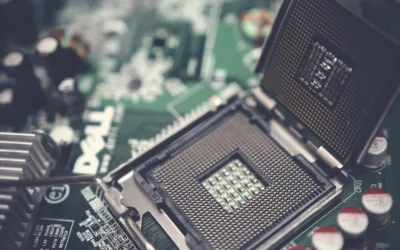
Platform choice is where these two diverge the most. The AMD Ryzen 5 7600X 6-Core uses Socket AM5, which is designed for DDR5 memory and modern PCIe standards and is positioned as a longer lived platform for future CPU upgrades without soldering the processor to the board. That makes it attractive if you are building new in 2026 and want a clear upgrade path on the same motherboard with a BIOS update done at your own risk. You can see how this platform pairs with current GPUs in our ryzen 5 7600 RX 7700 XT 1000 dollar gaming PC amazon build breakdown, which shows the value of an AM5 based budget build.
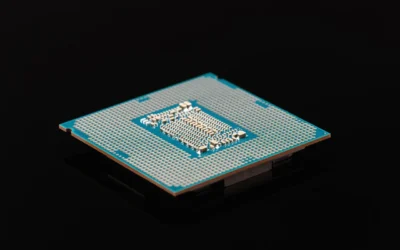
The Core i5 13400F uses the Intel LGA1700 socket, which supports both DDR4 and DDR5 depending on the motherboard you choose. That flexibility can lower your total build cost if you want to reuse DDR4 memory, and it gives you more motherboard options across budget and mid range chipsets. The trade off is that LGA1700 is at the end of its generation, so your next major CPU upgrade will likely require a new motherboard, whereas AM5 is expected to support future Ryzen generations for longer. If you value reuse of older RAM, Intel has an edge, if you value forward compatibility, the AMD Ryzen 5 7600X 6-Core has the clearer path.
Clock Speed, Cache and Responsiveness
On paper the AMD Ryzen 5 7600X 6-Core lists a 4.70 GHz base clock and 5.30 GHz overclocking speed, which helps explain why owners commonly report snappy frame times and quick load handling in CPU heavy scenes. The combination of 6 MB L2 plus 32 MB L3 cache provides a large pool for game assets and instructions, which can reduce stutter when games stream in new areas. Because the processor is unlocked, you have the option to tune performance in BIOS, though overclocking is done at your own risk and may void warranty, so follow the manufacturer instructions carefully.
The Core i5 13400F does not publish the same unlocked headroom and relies on Intel boost behavior and its hybrid core arrangement to maintain responsiveness. In practice, both CPUs deliver high refresh rate gaming when paired with a capable graphics card, and your GPU choice will often matter more than the CPU difference at 1440p. If you play at 1080p high refresh where the CPU is more often the limiting factor, the higher boost clock and large L3 cache of the AMD Ryzen 5 7600X 6-Core can feel a bit more direct, while the Core i5 13400F still provides smooth performance with excellent multitasking composure when you have many apps open.
Power Draw, Thermals and Cooler Requirements
Power and cooling are practical differences you will feel during the build. The AMD Ryzen 5 7600X 6-Core is rated at 105 W and, per the spec sheet, uses the 5 nm process to balance performance and efficiency, but owners commonly report it runs warm under sustained gaming loads and benefits from a capable cooler. You should check cooler height or radiator clearance against your case specs before you buy, and follow the cooler manufacturer mounting instructions with proper anti static handling. A good tower air cooler or 240 mm AIO is often recommended by owners to keep noise down, and you can explore affordable cooling friendly builds in our Budget Build Guides.
The Core i5 13400F is generally regarded as the more power friendly option for similar gaming performance, and it ships without the same thermal density concerns that the 105 W AMD part can show. That can make it easier to cool quietly with a mid range air cooler, which helps if you have a compact case or want lower fan noise. Neither CPU includes extreme power demands that would require an oversized power supply on its own, but you should still size your PSU with headroom over the combined GPU and CPU draw and follow the graphics card maker recommended wattage. If low noise and simple cooling are priorities, Intel has a practical advantage, if you do not mind investing in better cooling for higher boost behavior, the AMD Ryzen 5 7600X 6-Core rewards you with that unlocked ceiling.
Which One Should You Get
Choose the AMD Ryzen 5 7600X 6-Core if you are building a new DDR5 system on AM5 and you want the longest upgrade runway and an unlocked processor with integrated Radeon Graphics as a backup. It is a strong fit for 1080p high refresh and 1440p gaming where you want high boost clocks, large cache, and a platform that will support future Ryzen CPUs. Pair it with a capable cooler and a modern GPU from our top RTX 5070 ti cards for 1440p gaming guide if you target 1440p high refresh, and you will have a balanced system that stays relevant longer.
Choose the Core i5 13400F if you want platform flexibility, the option to reuse DDR4, and efficient gaming performance without needing integrated graphics. It fits well for builders who already own DDR4 memory or who want a lower cost motherboard while still getting smooth 1080p and 1440p gaming. You give up the AM5 upgrade path and the unlocked tuning of the AMD Ryzen 5 7600X 6-Core, but you gain easier cooling, often lower overall platform cost, and a very capable hybrid layout for gaming plus light content creation and multitasking.
Who Should Skip Both
Both of these mid range six core class CPUs are not ideal for buyers who need heavy workstation performance, such as frequent 4K video editing, 3D rendering, or streaming with CPU encoding at high quality. They are also not a good fit if you want a truly compact, low power small form factor build where a 65 W or lower processor would be quieter and cooler. If you need many more cores, or you want maximum integrated graphics for gaming without a discrete GPU, you should look at higher core count chips or APUs and check our Graphics Cards section to balance your CPU and GPU budget properly.
Frequently Asked Questions
Is the Ryzen 5 7600 better than the Core i5 13400F for 1440p gaming?
At 1440p your graphics card usually influences frame rates more than either CPU, so both can deliver smooth high refresh gaming with a modern GPU. The AMD Ryzen 5 7600X 6-Core has an edge in boost clock and cache that can show up more at 1080p, while at 1440p the difference is often smaller and platform cost and upgrade path matter more.
Do I need to buy a new cooler for the Ryzen 5 7600X 6-Core?
Per the spec sheet the AMD Ryzen 5 7600X 6-Core is a 105 W part and owners commonly report it benefits from a better than stock cooler for quiet operation. Check your case cooler height or radiator clearance and follow the manufacturer mounting instructions, and plan for a capable tower cooler or 240 mm AIO if you value low noise.
Can I reuse DDR4 RAM with either CPU?
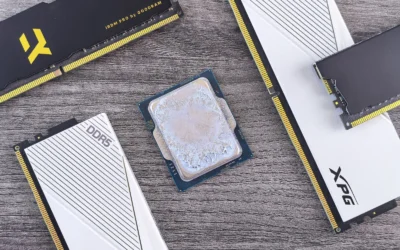
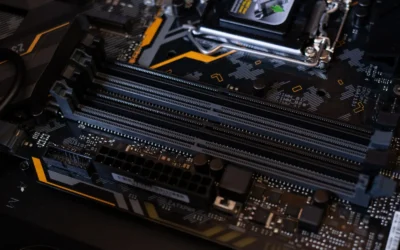
You can reuse DDR4 with the Core i5 13400F if you choose a DDR4 compatible LGA1700 motherboard, which can save on total build cost. The AMD Ryzen 5 7600X 6-Core uses Socket AM5 and requires DDR5, so you will need new memory but you gain a more future proof platform for upcoming upgrades.
Write Your Review
No reviews yet. Be the first to share your experience!