

You want sharp 4K visuals without stepping up to an enthusiast flagship, and Intel’s Battlemage generation makes that goal feel closer than ever. The Arc B580 pairs a generous 12GB of GDDR6 with Xe2-HPG efficiency and XeSS 2 upscaling, so you can push a 4K monitor with more finesse than raw native rendering would allow.
In this guide we sort through the most relevant Intel Arc B580 cards for 4K gaming in 2026 and explain where each model shines. Whether you prioritize quiet dual-fan cooling, higher boost clocks, or compact sizing, you will find clear guidance below. Explore our broader graphics cards lineup to see how Battlemage fits into the current market.
This article contains affiliate links. If you buy through one of our links, CustomPCGaming may earn a commission at no extra cost to you. Commissions never influence which products we recommend or how we rank them. Read our Affiliate Disclosure for details.
Quick Picks at a Glance

Prime ASRock Phantom Gaming D Radeon RX 580 4GB OC

ASRock Intel Arc Pro B70 Creator 32GB Workstation

Prime ASRock Challenger SE Intel Arc A770 OC 16GB GDDR6

Sparkle Intel Arc B570 Guardian OC 10GB GDDR6

SPARKLE Intel Arc B580 Titan OC 12GB GDDR6
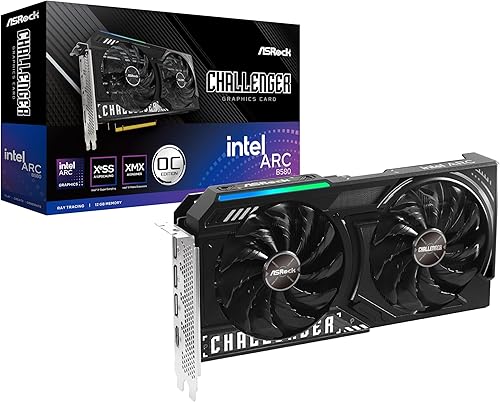
ASRock Intel Arc B580 Challenger 12GB OC Graphics

Prime ASRock Challenger Intel Arc A770 OC 16GB GDDR6

Prime Sparkle Intel Arc A770 ROC OC Edition 16GB GDDR6

Prime WEELIAO GUNNIR Intel Arc B580 Index 12GB GDDR6

Prime ASRock Intel Arc B580 Challenger 12GB OC GPU
As an Amazon Associate we earn from qualifying purchases. Product prices and availability are accurate as of the date/time indicated.
Pros
- Strong value for reliable 1080p gaming on proven Polaris architecture
- Three preset performance modes make optimization simple for gaming or quiet operation
- Efficient dual-fan cooling with durable double ball bearing fans
- Excellent connectivity with support for five simultaneous displays and 8K output
- Intuitive Phantom Gaming Tweak software for monitoring and overclocking
Cons
- Older Polaris architecture is less power efficient than newer RDNA cards
- 4GB VRAM and PCIe 3.0 interface limit future proofing for demanding modern titles
- 90 day refurbished warranty is shorter than typical new card coverage
The ASRock Phantom Gaming D Radeon RX580 4G OC is a budget focused 1080p graphics card built on AMDs proven Polaris architecture. It is designed for budget conscious gamers, esports players and system builders who want solid Full HD performance without a high end investment.
With 2304 stream processors and three preset modes including OC Mode up to 1424MHz, it offers flexible tuning for different needs. In real world use it handles 1080p gaming smoothly, supports up to five displays at once and even offers 8K output for high resolution media and future displays.
The dual fan design with double ball bearings and composite heatpipes keeps temperatures low while extending fan lifespan and reducing noise. A reinforced metal backplate adds rigidity and protects the PCB, while the compact 2 slot design with a single 6 pin connector fits most cases with a 550W PSU.
As a Polaris based card it lacks the efficiency and modern features of newer RDNA architectures and is limited to PCIe 3.0. The 4GB GDDR5 frame buffer is fine for 1080p today but may struggle with demanding new titles at ultra textures or higher resolutions.
For its segment the Phantom Gaming D RX580 4G OC delivers dependable performance, quiet cooling and outstanding connectivity. It remains a smart, practical choice for affordable 1080p gaming rigs and multi monitor setups.
Graphics Processor: AMD Radeon RX 580, 2304 Stream Processors, Polaris Architecture
Memory: 4GB GDDR5, 256-bit Bus, 256 GB/s Bandwidth
Clock Speeds: OC Mode 1424MHz / 8032MHz, Default 1370MHz / 8000MHz, Silent 1315MHz / 7968MHz
Interface: PCI Express 3.0 x16, Single 6-pin Power, 550W PSU Recommended
Cooling: Dual Fan with Double Ball Bearings, Composite Heatpipes, Metal Backplate
Connectivity: 3x DisplayPort 1.4, 1x HDMI 2.0, 1x Dual-link DVI-D, Up to 5 Displays, 7680 x 4320 Max Resolution
Dimensions: 236.2 x 127.5 x 41.91mm, 2-Slot Design
Software: Phantom Gaming Tweak Utility for Monitoring and Tuning
Pros
- Huge 32GB VRAM ideal for AI, LLM and large scene rendering
- High 2540 MHz clock with 256 XMX engines for strong compute performance
- Efficient blower and vapor chamber cooling designed for workstation and multi-GPU chassis
- Future ready connectivity with PCIe 5.0 and four DisplayPort 2.1 ports
Cons
- Blower style fan can be louder than consumer axial fan designs
- Requires 12V-2x6 power connector and 271mm clearance, so check PSU and chassis compatibility
- Intel Arc Pro software ecosystem is still maturing compared to long established workstation rivals
The ASRock Intel Arc Pro B70 Creator is a professional workstation graphics card built on Intel's Xe2-HPG architecture. With 32 Xe cores, 256 XMX engines and 32GB of GDDR6, it is purpose built for AI researchers, 3D creators and visualization professionals who need local memory for large models.
In real world use, the 32GB VRAM on a 256-bit bus at 19 Gbps shines for LLM inference, generative AI and heavy rendering tasks. The 2540 MHz engine clock and PCIe 5.0 x16 interface keep data moving quickly, while quad DisplayPort 2.1 outputs make it easy to drive multiple high resolution color accurate displays.
Build quality is clearly workstation grade, with a die-cast metal shroud, full metal backplate and Super Alloy components. The 2-slot blower design with vapor chamber and Honeywell PTM7950 material is engineered for sustained thermal performance and is especially effective in multi-GPU or rack style workstations.
There are tradeoffs to consider. The blower cooler prioritizes consistent airflow over acoustics and will be louder than consumer cards. At 271 x 112 x 39 mm with a 12V-2x6 connector, you must verify case and PSU compatibility, and some professional apps are still better optimized for competing platforms.
Overall, the B70 Creator is a compelling choice for Linux based AI and creator workflows that demand large local memory and scalable multi-GPU power. If you need 32GB of VRAM, strong AI acceleration and workstation reliability in a compact blower form factor, it delivers excellent value.
GPU: Intel Arc Pro B70, Xe2-HPG architecture, 32 Xe cores, 256 XMX engines, 2540 MHz engine clock
Memory: 32GB GDDR6, 256-bit bus, 19 Gbps speed
Interface and Outputs: PCIe 5.0 x16, 4x DisplayPort 2.1, single 12V-2x6 power connector
Design and Cooling: 2-slot, 271 x 112 x 39 mm, blower fan, vapor chamber, Honeywell PTM7950, metal shroud and backplate, Super Alloy components, multi-GPU Linux support
Pros
- Large 16GB VRAM future proofs for 1440p and memory heavy titles
- Strong feature set with Xe HPG architecture, XeSS and DirectX 12 Ultimate
- Efficient and quiet thermal design with 0dB Silent Cooling mode
- Stable power delivery via dual 8-pin connectors and Super Alloy components
- Durable build with metal backplate and dual fan cooling
Cons
- Requires dual 8-pin power connectors and a capable power supply and case space
- HDMI 2.0b instead of HDMI 2.1 limits 4K 120Hz over HDMI, use DisplayPort for higher refresh
- Limited 90 day warranty and not compatible with all compact or OEM prebuilt systems
The ASRock Challenger SE Intel Arc A770 OC is a mid to high range graphics card built for gamers and creators who need lots of VRAM without paying flagship prices. With 16GB of GDDR6 and a 2150MHz boost clock, it is well suited for smooth 1440p gaming, streaming and GPU accelerated creative work.
In real world use, the card handles demanding titles at 1440p with high settings and benefits greatly from Intel Xe Super Sampling. XeSS uses AI upscaling to lift frame rates while keeping visuals sharp, and DirectX 12 Ultimate enables ray tracing for more immersive lighting. The 256-bit memory bus and 16 Gbps memory speed provide strong bandwidth for complex textures.
ASRock keeps the design practical and durable with a dual fan layout, Striped Axial Fans and Ultra-fit Heatpipes for efficient heat transfer. The metal backplate adds structural support and helps with heat management, while premium Super Alloy components and dual 8-pin power delivery promote stable performance. During light loads, 0dB Silent Cooling turns fans off for near silent operation.
There are a few trade offs to consider before buying. The HDMI port is version 2.0b, so users wanting 4K 120Hz over HDMI will need to use DisplayPort 2.0 instead. The card also requires two 8-pin connectors and adequate case space, so it is not compatible with all small form factor or OEM prebuilt systems.
Overall, the Challenger SE A770 OC offers compelling value for gamers who prioritize high VRAM, quiet cooling and modern Intel features. If you game at 1440p, create content or want a card that handles future texture heavy titles well, this is a strong and well balanced choice.
GPU: Intel Arc A770, Xe HPG microarchitecture, 2150MHz boost clock
Memory: 16GB GDDR6, 256-bit bus, 16 Gbps memory speed
Interface: PCI-Express x16, dual 8-pin power connectors
Cooling: Dual Striped Axial Fans, Ultra-fit Heatpipes, 0dB Silent Cooling, metal backplate
Outputs: 3x DisplayPort 2.0, 1x HDMI 2.0b, maximum resolution 7680 x 4320
Features: Intel Xe Super Sampling (XeSS), DirectX 12 Ultimate, ray tracing support
Pros
- Excellent value with 10GB VRAM for 1080p and 1440p gaming
- Overclockable performance that users compare favorably to higher tier cards
- Effective and quiet TORN Cooling 2.0 thermal design
- Sturdy build with metal backplate and secure PCIe fit
- Single 8-pin power connector for easy compatibility
Cons
- Intel drivers can be difficult to find and install for beginners
- Not designed for demanding 4K gaming or heavy professional rendering
- Multi-GPU setups may have compatibility issues
The Sparkle Intel Arc B570 Guardian OC is a 10GB GDDR6 graphics card aimed at budget to mid-range gamers, casual creators and everyday users who want modern features without overspending. It is best suited for smooth 1080p and capable 1440p gaming, light video editing and entry level Unreal Engine work.
With a 2660MHz OC boost clock and 19Gbps memory, it delivers fluid frame rates on high settings and manages demanding textures well. Real world users praise its color accuracy, low latency options and headroom for tuning, with modest overclocking pushing performance noticeably higher.
Design and build quality stand out thanks to TORN Cooling 2.0 with dual axial fans, a rigid metal backplate and a subtle blue breathing light. The card stays relatively quiet in daily use, cools efficiently under load and installs easily with a single 8-pin connector.
There are some drawbacks to note. Intel driver installation can be confusing for first time builders, and multi GPU configurations may cause issues. It is also not the right choice for intensive 4K gaming or heavy professional workloads.
Overall, the B570 Guardian OC offers impressive value, solid thermal performance and a durable, stylish design. If you need an affordable and reliable GPU for 1080p to 1440p gaming and creative tasks, it is a smart, future ready pick.
GPU: Intel Arc B570, OC Edition Boost Clock 2660MHz
Memory: 10GB GDDR6, 19Gbps Memory Speed
Cooling: TORN Cooling 2.0, Dual Axial Fans
Interface: PCI-Express x8, 1x 8-pin Power Connector
Outputs: 1x HDMI 2.1, 3x DisplayPort 2.1
Max Resolution: 3840 x 2160
Build: Metal Backplate with Blue Breathing Light
Weight: 796g
Warranty: 3 Year Limited
Pros
- Strong 1080p Ultra and solid 1440p performance with 12GB VRAM
- Stays cool and quiet even during extended gaming sessions
- Excellent for video transcoding and content creation tasks
- High quality, thinner build with metal backplate and sag bracket included
- Benefits from frequent Intel driver and firmware updates
Cons
- Drivers still maturing, occasional performance dips in demanding titles
- Does not support VR gaming
- Can run warm in compact cases with limited airflow
The SPARKLE Intel Arc B580 Titan OC is a factory overclocked graphics card built on Intel's Arc B580 platform with 12GB of GDDR6 memory. It is designed for gamers targeting high refresh 1080p Ultra and smooth 1440p gaming, as well as creators needing strong video transcoding on a mid range budget.
In real world use, the 2760MHz boost clock and 19 Gbps memory deliver excellent performance for modern titles and media workloads. Users report cool and quiet operation under load, with strong value compared to older mainstream cards, and Intel's frequent driver updates continue to refine gaming stability.
Build quality is a clear highlight, with SPARKLE's TORN Cooling 2.0 and three axial fans providing efficient airflow in a slimmer profile than many competitors. The card includes a sturdy metal backplate, a blue breathing light accent, and a sag bracket for added support and a cleaner look inside your case.
There are a few caveats to consider before buying. Intel's Arc drivers are still maturing, so performance under heavy or niche workloads can vary, and VR gaming is currently not supported. The card can also run warm in compact builds, so good case airflow is recommended.
Overall, the B580 Titan OC is a compelling choice for budget conscious gamers and creators who want 12GB VRAM, modern DisplayPort 2.1 and HDMI 2.1 connectivity, and quiet cooling. If you do not need VR and can benefit from ongoing driver improvements, it offers outstanding versatility and long term value.
GPU: Intel Arc B580, OC Edition Boost Clock up to 2760MHz
Memory: 12GB GDDR6, 19 Gbps Memory Clock
Cooling: TORN Cooling 2.0 with Triple Axial Fans
Outputs: 1x HDMI 2.1, 3x DisplayPort 2.1, Max Resolution 3840x2160
Interface: PCI Express x8, Dimensions 12.4 x 4.61 inches, Weight 954g
Extras: Metal Backplate, Blue Breathing Light, Sag Bracket Included, 3 Year Limited Warranty
Pros
- Excellent 1440p performance with generous 12GB VRAM for modern games
- Very quiet and cool operation with 0dB fan stop technology
- Strong value compared to high priced flagship GPUs
- XeSS 2 upscaling and AV1 encode support for gaming and content creation
- Solid build quality with metal backplate and compact 2-slot design
Cons
- Intel Arc drivers still maturing, occasional game compatibility or shading quirks reported
- Requires 650W power supply and 249mm case clearance, check fit before purchase
- HDMI 2.1 support limited on Linux and no CEC support
The ASRock Intel Arc B580 Challenger 12GB OC is a mid-range graphics card built on Intel's Xe2-HPG architecture, designed for gamers targeting smooth 1080p and 1440p performance. It is ideal for budget conscious builders, casual creators, and anyone wanting modern features without paying flagship prices.
In real world use, the factory overclock to 2740 MHz and 19 Gbps memory delivers consistently high frame rates in demanding titles, with users reporting stable, stutter free gameplay at 1440p ultra settings. Support for Xe Super Sampling 2 and 160 XMX AI engines boosts performance further, while 12GB of GDDR6 on a 192-bit bus handles high resolution textures and AV1 encoding with ease.
ASRock's dual fan design with striped axial fans and 0dB Silent technology keeps the card cool and virtually silent under light loads, and the metal backplate with thermal pads adds rigidity and heat dissipation. At 249mm long with a 2-slot footprint and single 8-pin power connector, it fits most mid-tower cases and installs easily.
There are a few caveats to consider. Intel's Arc drivers have improved greatly but can still show occasional shading quirks or compatibility issues with less common games, and Linux users may find HDMI 2.1 support incomplete. You will also need a 650W power supply and to verify case clearance before buying.
Overall, the B580 Challenger offers outstanding value, combining strong 1440p performance, generous VRAM, and creator friendly features in a quiet, well built package. If you want reliable high refresh gaming and future ready connectivity at a sensible price, this is one of the smartest mid-range choices available.
GPU: Intel Arc B580, Xe2-HPG Architecture, 160 XMX Engines, 2740 MHz Boost Clock
Memory: 12GB GDDR6, 192-Bit Bus, 19 Gbps Memory Speed
Interface: PCI Express 4.0 x8, 1x 8-pin Power Connector, 650W PSU Recommended
Cooling: Dual Fan with Striped Axial Design, 0dB Silent Operation, Metal Backplate with Thermal Pad
Connectivity: 3x DisplayPort 2.1, 1x HDMI 2.1a, Supports 4 Displays up to 7680 x 4320
Dimensions: 2-Slot Design, 249mm Length, 999g Weight
Features: XeSS 2 Support, AV1 Encode, LED Indicator, Super Alloy Construction
Pros
- Huge 16GB VRAM ideal for 1440p gaming, heavy textures and creative workloads
- Excellent modern feature set with XeSS, ray tracing and DirectX 12 Ultimate support
- Quiet and efficient cooling with 0dB mode for silent operation under light loads
- Strong build quality with metal backplate and reliable Super Alloy components
- Versatile connectivity with three DisplayPort 2.0 and one HDMI 2.1 for 4K and 8K setups
Cons
- Not compatible with all prebuilt systems, requires checking case size, PSU and BIOS support
- Intel Arc driver ecosystem is still maturing compared to more established competitors
- Dual 8-pin power connectors require a capable power supply
The ASRock Challenger Intel Arc A770 OC 16GB is a performance focused graphics card designed for 1440p gamers, streamers and creators who need large VRAM and modern features. It is ideal for users building or upgrading a desktop gaming rig who want strong visuals without moving to the most expensive tier.
In real world use, the 2150 MHz factory overclock and 17.5 Gbps GDDR6 memory on a 256-bit bus deliver smooth frame rates at high settings. Intel Xe HPG architecture, XeSS AI upscaling and DirectX 12 Ultimate with ray tracing help boost performance while enabling more immersive lighting and effects.
Build quality is a clear strength, with a sturdy metal backplate that adds rigidity and protection. The dual Striped Axial Fans, Ultra-fit Heatpipes and 0dB Silent Cooling keep temperatures low while staying nearly silent during light loads, and Super Alloy components with dual 8-pin connectors ensure stable power delivery.
There are a few considerations to keep in mind. Compatibility is not universal for all prebuilt systems, so buyers should verify case clearance, power supply capacity and motherboard BIOS support. As with other Arc GPUs, driver optimization continues to improve but may still trail the maturity of competing ecosystems in some titles.
Overall, the Challenger A770 OC 16GB stands out for its huge VRAM buffer, efficient cooling and forward looking connectivity with three DisplayPort 2.0 and one HDMI 2.1. For gamers and creators seeking excellent 1440p performance and future ready features in a well built package, it is a compelling and smart choice.
Graphics Processor: Intel Arc A770, 2150 MHz OC Clock, Intel Xe HPG Architecture
Memory: 16GB GDDR6, 17.5 Gbps, 256-bit Bus
Interface: PCI-Express x16, Dual 8-pin Power Connectors
Cooling: Dual Striped Axial Fans, Ultra-fit Heatpipes, 0dB Silent Cooling
Outputs: 3x DisplayPort 2.0, 1x HDMI 2.1, Max Resolution 7680x4320
Build: Metal Backplate, Super Alloy Components, Dual Fan Design
Model: ASRock Challenger A770CL16GO, 90-GA4VZZ-00UANF
Pros
- Generous 16GB VRAM is excellent for 4K textures, video editing and future proofing
- Strong 1440p and capable 4K performance with XeSS, plus improved driver stability over time
- Modern connectivity including DisplayPort 2.0 ready for high resolution, high refresh displays
- Compact ROC dual fan design fits smaller builds while keeping thermals under control
Cons
- Intel Arc drivers can still need manual tuning, especially on Linux systems
- Requires a capable modern CPU to avoid bottlenecks and is not the fastest for heavy ray tracing
- Fan noise can be slightly higher than premium triple fan models under load
The Sparkle Intel Arc A770 ROC OC Edition is a 16GB GDDR6 graphics card built on Intel Xe HPG architecture. It is designed for gamers and creators who need large VRAM for 1440p and 4K gaming, video editing and multitasking without moving to flagship pricing.
In real world use it delivers smooth high frame rates at 1080p and solid 1440p performance, with playable 4K when using Intel XeSS upscaling. Real time ray tracing, DirectX 12 Ultimate and Vulkan 1.3 support keep it competitive in modern titles, and mature drivers have resolved many early stability issues.
The ROC design uses dual 100mm double ball bearing fans and a 2.5 slot heatsink that shortens overall length for better fit in compact desktops. A sturdy metal backplate adds rigidity and helps with heat dissipation, while the intelligent fan stop keeps the card silent during light loads.
There are trade offs to consider. Linux users may need extra steps for driver setup, and the card performs best when paired with a modern mid range or higher CPU to avoid bottlenecks. It also trails top tier Nvidia and AMD cards in demanding ray tracing and can be slightly louder than premium triple fan designs.
Overall the Sparkle A770 ROC OC offers exceptional VRAM value, modern connectivity with DisplayPort 2.0 and HDMI for up to 8K at 60Hz, and well rounded performance for gaming and creation. It is a smart choice for users who want future ready memory and features at a more accessible level.
Graphics Coprocessor: Intel Arc A770 with Xe HPG architecture, 16GB GDDR6, 256-bit, 17.5 Gbps memory speed. Interface: PCI Express, compatible with desktop systems.
Outputs: 3x DisplayPort 2.0 and 1x HDMI 2.0, maximum resolution 7680 x 4320, supports up to 8K at 60Hz. APIs: DirectX 12 Ultimate, Vulkan 1.3, with real time ray tracing and Intel XeSS upscaling.
Cooling and Build: Dual 100mm double ball bearing fans, 2.5 slot heatsink, metal backplate. Dimensions: 11.06 x 5.15 inches, weight 880g, 2 fan design with fan stop for quiet operation.
Pros
- Generous 12GB GDDR6 memory for future proof gaming and creative work
- Competitive performance in its class with ongoing Intel driver improvements
- Efficient and quiet dual fan thermal design
- Excellent connectivity for up to four high resolution displays
- Modern feature set with improved power efficiency
Cons
- Requires Resizable BAR compatible CPU and motherboard for optimal performance
- Intel driver ecosystem is still maturing compared to established competitors
- Limited to a 1-year warranty and less established brand support
The WEELIAO GUNNIR Intel Arc B580 Index is a mid-range desktop graphics card built on Intel's latest Arc architecture. Designed for gamers and content creators, it targets smooth 1440p gaming with headroom for 4K displays and creative workloads.
With 12GB of GDDR6 memory clocked at 2670MHz, it delivers performance that trades blows with the RTX 4060 in modern titles. Intel's ongoing driver updates continue to improve frame rates and stability, making it more competitive over time.
The dual fan cooler maintains steady temperatures under load without excessive noise, while the compact dual slot design fits most mid tower cases. Build quality feels solid for the segment, with three DisplayPort outputs and one HDMI port offering flexible 4K multi monitor setups.
Compatibility is important, as the card performs best with systems that support Resizable BAR, so checking CPU and motherboard support is recommended. As a newer player from Intel and GUNNIR, driver maturity and brand support are still catching up to more established competitors.
Overall, the Arc B580 Index is a compelling choice for value conscious builders who want generous VRAM and modern features without stepping into high end territory. If your system is compatible and you are open to Intel's growing ecosystem, it offers excellent versatility for gaming and creation.
GPU: Intel Arc B580, 2675MHz GPU clock, 2670MHz memory clock
Memory: 12GB GDDR6, 192-bit interface
Interface: PCI-Express 4.0 x8, 1x 8-pin power connector, 190W TBP
Cooling: Dual fan cooling solution, dual slot design
Outputs: 3x DisplayPort, 1x HDMI, max resolution 3840 x 2160
Compatibility: Desktop systems, Resizable BAR recommended, GUNNIR B580 Index model
Pros
- Excellent 1440p performance with large 12GB GDDR6 VRAM buffer
- Advanced XeSS 2 upscaling and XMX AI features for extra performance
- Gold rated, ATX 3.1 ready PSU delivers efficient and stable power
- Quiet dual fan cooling with silent mode and durable metal backplate
Cons
- PSU is non-modular, so cable management requires extra case space
- Intel Arc platform can have more variable game optimization than established competitors
- Bundle is less useful if you already own a reliable power supply
This bundle combines the ASRock Intel Arc B580 Challenger 12GB OC graphics card with the PRO-650G 650W 80 PLUS Gold PSU to give new builders a balanced foundation for 1440p gaming. It is designed for value conscious gamers and creators who want modern features without buying components separately.
The B580 runs on Intel Xe2-HPG architecture with a 2740 MHz boost clock and 12GB of GDDR6 on a 192-bit bus, handling high resolution textures and multitasking with ease. With XeSS 2 and XMX AI acceleration, you get smoother frame rates and cleaner image quality in supported titles.
ASRock equips the card with dual Striped Axial Fans, 0dB Silent Cooling at idle, and a sleek metal backplate for durability and quiet operation. The PRO-650G delivers stable, efficient power with ATX 3.1 readiness and Gold rated efficiency to keep energy costs and system noise low.
The main compromise is the non-modular PSU design, which means extra cables need to be managed inside your case and requires a chassis with good storage space. As a newer Intel Arc platform, game optimization can also vary compared to more established GPU ecosystems.
Overall, this is a smart, efficient pairing that covers both performance and power in one purchase. If you are building from scratch and want capable 1440p gaming, AI upscaling, and reliable power delivery without overspending, this bundle is an excellent starting point.
GPU Model: ASRock Intel Arc B580 Challenger 12GB OC, Xe2-HPG Architecture, 2740 MHz Boost Clock
Memory: 12GB GDDR6, 192-bit Bus
Technology: Intel XeSS 2 Super Sampling, Xe Matrix Extensions (XMX) AI Acceleration
Cooling: Dual Striped Axial Fan Design, 0dB Silent Cooling, Metal Backplate
PSU: ASRock PRO-650G, 650W, 80 PLUS Gold Certified, ATX 3.1 Ready, Non-Modular
Bundle Use Case: Optimized for efficient 1440p gaming, content creation and AI workloads
Buying Guide: How to Choose the Right B580 for 4K Gaming
We evaluated each card for real-world 4K usability, not just spec sheets. Our focus is on memory headroom, upscaling support, thermal behavior under long sessions, and practical fit inside modern cases. Use these criteria to match a card to your display, case, and performance expectations.
12GB VRAM and XeSS 2 Are Essential for 4K
At 4K, texture pools and frame buffers grow quickly, so the 12GB GDDR6 on every B580 in this roundup is a genuine advantage. Cards like the ASRock Intel Arc B580 Challenger 12GB OC Graphics and the WEELIAO GUNNIR Intel Arc B580 Index 12GB GDDR6 run that memory at 19 Gbps on a 192-bit bus, which keeps high-resolution assets streaming smoothly. You should treat XeSS 2 and its XMX acceleration as part of your 4K strategy, not an optional extra.
Intel’s XeSS 2 frame generation and super sampling let you render internally at a lower resolution and reconstruct a clean 4K image with noticeably higher frame rates. If you compare this approach to native 4K on heavier GPUs, you will see why Battlemage is positioned as an efficient mid-range 4K entry point. For context on how higher-tier cards handle native resolution, check our analysis of RTX 5070 Ti cards for 1440p gaming and scale your expectations accordingly.
Cooling Design and Acoustics Under Sustained Load
4K gaming keeps the GPU at high utilization for hours, so cooler design matters as much as clock speed. The Sparkle Intel Arc B580 Titan OC, 12GB GDDR6 uses TORN Cooling 2.0 with an axial fan array, metal backplate, and breathing light accent to sustain its 2760MHz boost without thermal throttling. The ASRock Intel Arc B580 Challenger 12GB OC Graphics counters with a striped axial dual-fan layout and 0dB Silent operation that stops fans at low temperatures for quiet desktop use.
You should consider case airflow, card length, and fan behavior together. A 2-slot, 249mm design like the ASRock Challenger fits easily in compact mid-towers, while the Titan OC adds a sag bracket for stability in larger builds. If you are planning a small-form-factor or value-oriented system, our budget build guides offer case and airflow tips that translate directly to quieter 4K sessions.
Power, Size, and Display Connectivity
Every B580 here is efficient for its class, but power and physical dimensions still dictate compatibility. The WEELIAO GUNNIR Intel Arc B580 Index 12GB GDDR6 and the ASRock Challenger both use a single 8-pin connector and recommend a 650W supply, with PCIe 4.0 x8 or x16 interfaces that install cleanly on modern boards. Verify your PSU headroom and chassis clearance, especially if you choose the bundled ASRock Intel Arc B580 Challenger 12GB OC which pairs the card with a Gold-rated ATX 3.1 unit.
For 4K you also want modern outputs. Look for DisplayPort 2.1 and HDMI 2.1a as found on the ASRock Challenger series, which support high refresh 4K panels and multi-monitor setups without compression compromises. The GUNNIR Index offers triple DisplayPort plus HDMI for flexible monitor arrangements. Our Ryzen 5 7600 and RX 7700 XT build breakdown illustrates how PSU choice and display wiring affect overall system balance at higher resolutions.
Clock Speeds, Factory OC, and Real-World Headroom
Factory overclocks differentiate otherwise similar B580 models. The Sparkle Intel Arc B580 Titan OC, 12GB GDDR6 leads with a 2760MHz boost, followed closely by the ASRock Intel Arc B580 Challenger 12GB OC Graphics at 2740MHz, while the GUNNIR Index is tuned to 2670MHz for a balance of efficiency and stability. Those differences translate to a few extra frames at 4K when combined with XeSS 2, particularly in titles that favor higher clocks over memory bandwidth.
You should not expect any B580 to match workstation or flagship gaming cards at native 4K ultra settings. The ASRock Intel Arc Pro B70 Creator 32GB Workstation, with its 32GB buffer and blower plus vapor chamber design, is built for AI and visualization rather than gaming value. Likewise, A770 options like the ASRock Challenger SE Intel Arc A770 OC 16GB GDDR6 and Sparkle Intel Arc A770 ROC OC Edition, 16GB GDDR6 offer more VRAM but older Xe HPG architecture. For pure 4K gaming value in 2026, a tuned B580 with XeSS 2 remains the more balanced pick.
Final Thoughts
If you want the highest sustained boost and robust cooling for long 4K sessions, choose the Sparkle Intel Arc B580 Titan OC, 12GB GDDR6, while the ASRock Intel Arc B580 Challenger 12GB OC Graphics gives you excellent efficiency, quiet 0dB operation, and DisplayPort 2.1 in a compact footprint.
Frequently Asked Questions
Can the Intel Arc B580 handle native 4K gaming in 2026?
The B580 can run many titles at 4K, but native ultra settings will often require compromises to maintain smooth frame rates. You will get the best experience by enabling XeSS 2 super sampling and frame generation, which reconstructs a sharp 4K image from a lower internal resolution. This approach keeps the 12GB buffer from becoming a bottleneck while delivering fluid gameplay.
How much VRAM do you need for 4K gaming with a B580?
For 2026 titles, 12GB is the sweet spot for 4K with high textures, and all B580 cards in this guide meet that threshold. The extra capacity helps with texture streaming, creative workloads, and future titles that use larger asset packs. Cards with 16GB like the A770 models provide more headroom but do not automatically outperform a well-cooled B580 with Xe2-HPG and XeSS 2.
Which B580 model runs quietest during long 4K sessions?
Dual-fan designs with 0dB modes, such as the ASRock Challenger series, are notably quiet at idle and remain controlled under load thanks to striped axial fans and tuned heatpipes. The Sparkle Titan OC counters with TORN Cooling 2.0 and a larger heatsink that keeps fan speeds lower at its higher 2760MHz boost. Your case airflow and fan curve will influence the final noise level as much as the cooler itself.
Do I need to upgrade my power supply for an Arc B580?
Most B580 cards use a single 8-pin connector and are validated for a 650W supply, which covers the majority of modern mid-range builds. If you are assembling a new system, consider a Gold-rated ATX 3.1 unit for cleaner power delivery and future headroom. See our budget build guides for PSU sizing examples that pair well with 12GB GPUs at 4K.
This roundup is not a good fit if you game only at 1080p on a 60Hz display or on a tight budget; these picks are aimed at higher resolutions and refresh rates where the extra GPU power is actually used.


Write Your Review
No reviews yet. Be the first to share your experience!