

Video credit: 小蔡电脑服务. Original video: https://www.youtube.com/watch?v=97kKUw0k2ag. This is our own independent breakdown and is not affiliated with the video creator. As an Amazon Associate, CustomPCGaming earns from qualifying purchases. Product prices shown in the video may have changed.
Watch the build
Parts in this build
- Intel Core Ultra 7 265K
- NVIDIA GeForce RTX 5070 Ti
- MSI PRO B860-P WiFi
- Corsair Vengeance 32GB DDR5 6000
- Samsung 990 Pro 4TB
- Corsair RM1000e
- Fractal Design Terra
- Thermalright AXP90-X47
Parts list is our summary of the video for reference. Confirm current specs and price on the retailer page before buying.
Watch: The Build Video
This is our independent parts analysis and is not affiliated with the video creator. As an Amazon Associate, CustomPCGaming earns from qualifying purchases. Product prices shown in the video may have changed.
The video embedded here shows a build in this class, not this exact parts list. It is a useful reference for how a small form factor system at this budget level is assembled, where cooler height and graphics card length decide what fits.
If you are planning a compact system for 1440p high refresh and entry 4K, this class gives you a strong CPU and GPU pairing while keeping the case and board practical.
What This Build Is
This is an upper class small form factor gaming pc build in the upper class breakdown that targets 1440p high refresh and entry 4K. It is centered on the Intel Core Ultra 7 265K and NVIDIA GeForce RTX 5070 Ti, a pairing chosen so the processor does not hold the card back at the target resolution.
You get a current Intel platform with headroom for modern games, plus a graphics card tier that defines the experience. Builds at this level usually keep the motherboard and cooler practical and put the budget into the CPU and graphics card, and that is exactly what this parts list does.
The platform is Intel LGA1851 for Core Ultra Series 2. That matters for your motherboard choice, your memory support, and your cooler mounting. You are not paying for an overbuilt board or an oversized cooler you cannot fit, you are paying for parts that work together in a compact footprint.
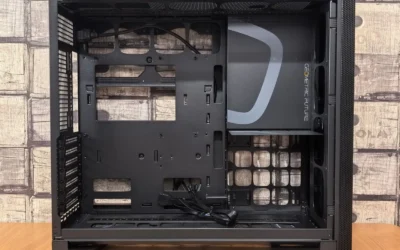
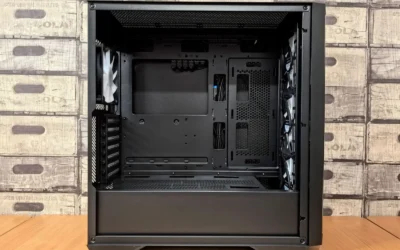
In a small form factor case, every millimeter counts. The Fractal Design Terra used here is a 10.4 L case that supports a GPU up to 322 mm in length and offers 30 mm of internal flexibility through a slidable central wall. That flexibility helps you balance CPU cooler space and graphics card thickness, but you still need to verify clearance before you buy.
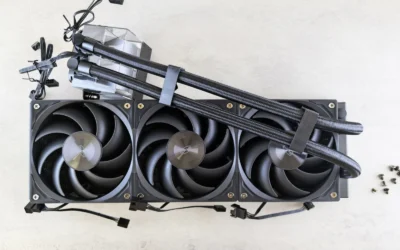
This build makes a clear tradeoff. You get a compact, living room friendly chassis with anodized aluminum panels and a solid walnut front, but you give up the easy radiator support and airflow volume of a larger mid tower. If you want a 360mm AIO or a very tall air cooler, a larger case from our Cases & Airflow section will be a better fit.
You also trade some expansion for simplicity. A compact board and case mean fewer M.2 slots and less room for extra fans, but you keep the I/O you actually need, including modern connectivity for gaming and everyday use. For many gamers, that is the right call in 2026.
Who should not build this? If you need maximum sustained all core rendering performance, heavy overclocking headroom, or you plan to move up to a much larger graphics card next year, you should consider a larger case with more cooling options. If you want the smallest possible budget entry point, the lower cost version below will suit you better.
For most gamers who want a tidy, powerful system that fits on a desk or in a media unit, this balanced approach makes sense. You get a current CPU and GPU tier, proven storage and memory choices, and a power supply with modern connectors and headroom.
Parts Breakdown
This is the core of our small form factor gaming pc build in the upper class breakdown. Below are the common expectations at this level and our current 2026 picks, followed by why each pick was chosen.
This article contains affiliate links. If you buy through one of our links, CustomPCGaming may earn a commission at no extra cost to you. Commissions never influence which products we recommend or how we rank them. Read our Affiliate Disclosure for details.
Quick Picks at a Glance
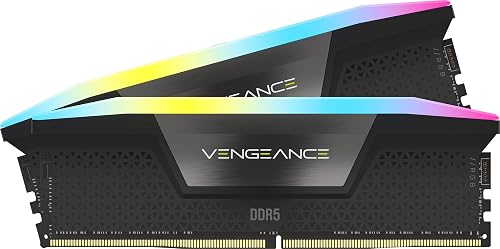
CORSAIR Vengeance RGB DDR5 32GB (2x16GB)
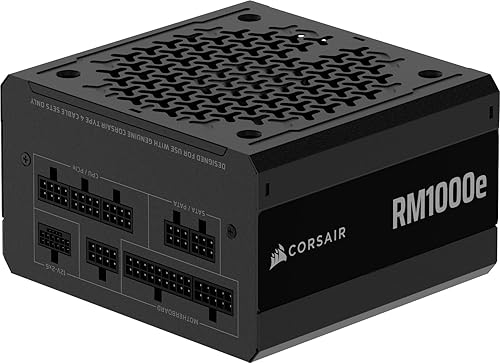
CORSAIR RM1000e 1000W ATX 3.1 Power Supply

Samsung 990 PRO 4TB PCIe 4.0 NVMe M.2 SSD

MSI PRO B860M-A WiFi mATX Motherboard for Intel

Fractal Design Terra Jade Mini ITX Case

GIGABYTE GeForce RTX 5070 Ti Gaming OC 16GB GDDR7

Prime Thermalright AXP90-X47 Full Copper Low Profile CPU

Intel Core Ultra 7 265K Tray Processor 5.5 GHz LGA
As an Amazon Associate we earn from qualifying purchases. Product prices and availability are accurate as of the date/time indicated.
Pros
- High frequency 6000MHz performance with low CL30 latency for responsive multitasking
- Brilliant individually addressable RGB lighting visible from any angle
- Dual compatibility with AMD EXPO and Intel XMP 3.0 for easy setup
- Stable overclocking with onboard voltage regulation and custom PCB design
- Backed by Corsair build quality and a limited lifetime warranty
Cons
- Maximum 6000MHz speed requires manual BIOS tuning and compatible motherboard and CPU
- Premium price for RGB and high speed bin compared to standard DDR5 kits
- Some systems may need to run below full speed for stability, especially on certain AMD boards
The CORSAIR Vengeance RGB DDR5 32GB kit (2x16GB, 6000MHz, CL30) is a high performance memory kit designed for modern gaming and workstation desktops. It is built for enthusiasts, gamers and creators who want top tier DDR5 bandwidth, low latency and striking aesthetics on both AMD and Intel platforms.
In real world use, the 6000MHz speed and CL30 timings provide noticeably smoother gaming, faster rendering and lag free multitasking. Enabling AMD EXPO or Intel XMP 3.0 in BIOS unlocks the full speed instantly, while CORSAIR iCUE allows real time monitoring and voltage tuning for stable overclocking.
Design and build quality are excellent, with a sleek gray aluminum heat spreader and a panoramic light bar housing ten ultra bright, individually addressable RGB LEDs per module. The custom PCB ensures clean signal integrity, while onboard voltage regulation gives more precise control than traditional motherboard based overclocking.
There are a few drawbacks to consider. You must enable EXPO or XMP in BIOS to reach the advertised speed, and some motherboard and CPU combinations may default to lower speeds like 5200MHz for stability. The 1.40V operating voltage and RGB premium also mean it costs more than basic DDR5 options.
Overall, Vengeance RGB DDR5 is one of the best DDR5 kits for users who want both elite performance and standout lighting. If you want fast, reliable memory that looks as good as it performs and you have a compatible DDR5 system, it is an outstanding upgrade.
Capacity: 32GB (2x16GB) Dual Channel Kit, DDR5, 288-Pin DIMM, Model CMH32GX5M2B6000Z30K
Performance: 6000MHz, Timings CL30-36-36-76, Voltage 1.40V, Intel XMP 3.0 and AMD EXPO Support
Features: Ten-zone RGB LEDs per module, panoramic light bar, onboard voltage regulation, custom high performance PCB
Compatibility: Desktop DDR5 systems, optimized for latest Intel and AMD motherboards, iCUE software control
Choose this 6000MHz CL30 kit if you want the sweet spot for DDR5 gaming and creation, balancing high frequency with low latency. Lower latency kits offer better responsiveness than higher speed CL36 or CL40 alternatives in many games.
Make sure your motherboard and CPU support DDR5 and 6000MHz EXPO or XMP profiles, and that your case has clearance for RGB DIMMs. Update your BIOS before installation for best compatibility.
If you prioritize budget over lighting, consider a non RGB Vengeance kit with similar specs. If you want maximum aesthetics and easy tuning with iCUE, this RGB model is worth the premium.
Pros
- Fully modular cables simplify building and improve airflow
- ATX 3.1 and PCIe 5.1 ready with included native 12V-2x6 cable and adapter
- Very quiet operation even under heavy gaming loads
- High quality 105C rated capacitors and Gold efficiency for stable power
Cons
- Rifle bearing fan is durable but not as premium as fluid dynamic bearing designs
- 1000W is more than needed for mid range builds, adding unnecessary cost for some users
- No RGB lighting or premium sleeved cables for showcase builds
The CORSAIR RM1000e (2025) is a 1000W fully modular ATX power supply built for high end gaming rigs, creator workstations and future upgrades. It is ideal for users pairing powerful CPUs with RTX 40 series or newer GPUs who want reliable headroom and modern connectivity.
With ATX 3.1 and PCIe 5.1 certification, it handles up to 2x transient GPU excursions and includes a native 600W 12V-2x6 cable plus an adapter. Real world feedback highlights stable power delivery and impressively low noise, even when driving systems like an i9 with RTX 3080 or 3090 under load.
Build quality is solid with a clean matte black finish, compact 140mm depth and fully modular flat black cables that are easy to route. Industrial grade 105C rated capacitors and Cybenetics Gold efficiency ensure steady electrical performance and improved energy use.
There are a few tradeoffs to consider. The 120mm rifle bearing fan is quiet but not as advanced as fluid dynamic options, and the unit lacks RGB or premium braided cables. Builders with mid range systems may also find 1000W is more capacity than they need.
Overall, the RM1000e is a quiet, efficient and builder friendly PSU that offers excellent future proofing for demanding hardware. If you want dependable, low noise power with modern GPU support and a strong warranty, it is a smart long term investment.
Model: CORSAIR RM1000e (2025) CP-9020297-NA, ATX Form Factor, Fully Modular Design
Power and Efficiency: 1000W output, Cybenetics Gold efficiency, 100 to 240V input, Modern Standby compatible
Compliance and Connectors: ATX 3.1 and PCIe 5.1 ready, 1x 24-pin ATX, 2x 8-pin EPS12V, 1x 600W 12V-2x6, 1x PCIe 8-pin, 6x SATA, 2x PATA
Cooling and Build: 120mm rifle bearing fan, air cooling, 105C rated capacitors, 140mm compact casing
Dimensions and Warranty: 5.91 x 5.51 x 3.35 inches, 3.6 pounds, 7 year manufacturer warranty
Pros
- Exceptional sequential and random speeds near the PCIe 4.0 limit
- Excellent power efficiency and smart thermal control
- Huge 4TB capacity in a compact M.2 form factor
- Strong reliability with Samsung controller and 5-year warranty
- Easy installation and wide compatibility with desktops, laptops and PS5
Cons
- Requires PCIe 4.0 system to reach advertised maximum speeds
- This model does not include a heatsink, may need separate cooler for some builds
- Premium pricing compared to entry-level Gen4 SSDs
The Samsung 990 PRO 4TB is a flagship PCIe 4.0 NVMe M.2 2280 internal SSD built for gamers, content creators and professionals who need both speed and capacity. It is designed to push PCIe 4.0 to its practical limits while offering room for large game libraries, 4K footage and demanding workloads.
In real world use it delivers up to 7450 MB/s read and 6900 MB/s write speeds, with more than 55 percent better random performance than the 980 PRO. That translates to faster boot times, near instant game level loads and smoother video editing and data analysis. Intelligent Turbo Write and the in-house controller help maintain consistent performance under sustained transfers.
Built on Samsung V-NAND and a proprietary controller, the drive is compact, lightweight and highly power efficient with up to 50 percent better performance per watt. The M.2 2280 form factor installs easily in desktops, laptops and PS5 consoles, and smart thermal control helps prevent throttling during long sessions. AES 256-bit hardware encryption adds security for sensitive data.
To get full speed you will need a system that supports PCIe 4.0, otherwise performance will be limited by the interface. This specific model does not include a heatsink, so users with tight builds or consoles may want to add one separately. Like most high end 4TB drives, it sits at a premium compared to budget Gen4 options.
Overall the 990 PRO 4TB is one of the fastest and most efficient PCIe 4.0 drives available, combining elite speed, large capacity and proven Samsung reliability. If you want a single drive that can handle gaming, creative work and future proofing without compromise, it is an outstanding choice.
Capacity: 4TB
Interface: PCIe 4.0 x4, NVMe 2.0
Form Factor: M.2 2280
Sequential Read Speed: Up to 7450 MB/s
Sequential Write Speed: Up to 6900 MB/s
Controller: Samsung in-house controller with Intelligent Turbo Write
Encryption: AES 256-bit hardware encryption
Compatibility: Desktop, Laptop, PlayStation 5
Warranty: 5 Year Limited Warranty
For maximum performance, install the 990 PRO in a PCIe 4.0 x4 M.2 slot. Check your motherboard or laptop specifications on the Intel or AMD website to confirm support. The drive is backward compatible with PCIe 3.0 but speeds will be limited.
The M.2 2280 size fits most modern desktops and laptops with an available NVMe slot. Installation is straightforward with a single screw, and Samsung Magician software can help with data migration and drive health monitoring.
It is also compatible with PlayStation 5 as an expanded storage drive. For PS5 and compact builds without good airflow, consider adding a compatible heatsink to maintain optimal thermal performance.
Pros
- Proven rock solid stability even with high speed DDR5 at 8000MHz and heavy 24/7 use
- Premium next gen connectivity including WiFi 7, 5G LAN, Bluetooth 5.4 and Thunderbolt 4 with 8K display support
- Strong thermal design with extended heatsink, chipset heatsink and 7W/mK MOSFET pads
- PCIe 5.0 and M.2 Gen5 support provides excellent future upgrade headroom
- User friendly features like BIOS flash without CPU and easy Windows 11 installation
Cons
- mATX form factor offers fewer PCIe slots and expansion options than full ATX boards
- Front panel power switch headers are not clearly labeled, making setup tricky
- Only 4 SATA ports which may limit large NAS or storage heavy builds
The MSI PRO B860M-A WiFi is a micro ATX motherboard built for Intel Core Ultra Series 2 processors on the LGA 1851 socket and B860 chipset. It is designed for professionals, creators and compact gamers who want efficient, stable performance without sacrificing next generation features.
Real world performance stands out for stability and memory handling, with users reporting rock solid operation even with DDR5 at 8000MHz and 6400MHz. You get a PCIe 5.0 x16 slot for top tier GPUs and triple M.2 slots including a Gen5 x4 slot with EZ M.2 Shield Frozr II to keep SSDs cool under load.
Build quality reflects MSI business elegance with a durable server grade PCB, improved SMT soldering and Steel Armor on the PCIe slot. Cooling is comprehensive with a 12 Duet Rail P-PAK VRM, dual 8 pin CPU power, extended heatsink, chipset heatsink and 7W/mK MOSFET thermal pads for reliable power delivery.
The compact mATX layout does mean fewer PCIe slots and only four SATA ports, which may limit heavy expansion or large storage arrays. Some users also noted the front panel power switch headers are not clearly labeled, which can make the initial build a bit fiddly.
Overall, the PRO B860M-A WiFi offers exceptional value by combining future ready specs like WiFi 7, Bluetooth 5.4, 5G LAN and Thunderbolt 4 in a compact, reliable package. It is an excellent choice for anyone building a modern Intel system that needs strong connectivity, fast storage and proven everyday stability.
Socket: LGA 1851 for Intel Core Ultra Series 2, Chipset: Intel B860, Memory: 4x DDR5 DIMM up to 256GB and 8600+ MT/s OC, Storage: 1x M.2 Gen5 x4 128Gbps, 1x M.2 Gen4 x4 64Gbps, 1x M.2 Gen4 x2 32Gbps plus 4x SATA ports.
Expansion: 1x PCIe 5.0 x16 with Steel Armor, Connectivity: WiFi 7, Bluetooth 5.4, Realtek 5G LAN, Thunderbolt 4 Type-C 40Gbps with display output, 7.1 HD Audio with Audio Boost, Form Factor: mATX, Warranty: 3 Year Manufacturer.
Pros
- Exceptional build quality with anodized aluminum and real walnut wood
- Supports large GPUs up to 322mm despite ultra compact 10.4L size
- Slidable central wall allows flexible balancing of CPU and GPU space
- Quiet operation and solid thermals when paired with compatible components
- Removable panels make building surprisingly easy for an SFF case
Cons
- Compact interior requires careful component measurement and cable management
- Limited CPU cooler height restricts use with higher wattage processors
- Higher cost than standard Mini ITX cases due to premium materials
The Fractal Design Terra Jade is a 10.4 liter Mini ITX case built for small form factor gaming without sacrificing style or power. It is ideal for enthusiasts, minimalists and design conscious gamers who want a compact system that looks like furniture.
In real world use it supports GPUs up to 322mm long and uses a stepless slidable central wall to balance space between GPU and CPU chambers. Reviewers praise its surprisingly quiet operation and solid airflow when paired with compatible low profile coolers like the Noctua NH-L12S and 120mm fans.
Design is where the Terra truly stands out, with an 8mm thick anodized aluminum front, CNC milled details and an FSC certified solid walnut panel. The all metal enclosure feels boutique and premium, while removable sides and top make building far easier than expected for this size.
The compact layout does demand careful planning, as cable management is tight and CPU cooler clearance is limited. High wattage CPUs over 120W can be thermally constrained, and component choices must be measured down to the millimeter to ensure a good fit.
Overall the Terra Jade delivers a rare combination of luxury materials, clever engineering and true SFF portability. If you value craftsmanship and are willing to plan your build carefully, it is one of the best looking and most rewarding Mini ITX cases available.
Case Type: Mini-Tower, 10.4L volume. Dimensions 13.5 x 8.5 x 6 inches, weight 4 kg. Material: Anodized aluminum with solid walnut front panel, color Jade.
Compatibility: Mini ITX motherboards, GPUs up to 322mm, SFX power supply bottom mount, 120mm fan support, 2 internal bays for 3.5 inch drives. Includes PCIe 4.0 riser cable and dust filter.
Front I/O: 1x USB Type-C 20Gbps, 1x USB 3.0, aluminum power button. Cooling method: Air, expansion slots: 3. Model Number FD-C-TER1N-03.
Pros
- Excellent native 1440p and 4K performance, even with ray tracing enabled
- Quiet and cool operation thanks to the WINDFORCE triple fan cooler
- High power efficiency compared to previous generation cards
- DLSS 4 Frame Generation delivers a large perceived fps boost with minimal visual artifacts
- 16GB GDDR7 provides plenty of headroom for future games and creative applications
Cons
- Extra large triple fan design requires a spacious case with modern clearances
- RGB lighting on the fans turns off when fans stop in 0 RPM idle mode
- Gaming OC factory overclocked model costs more than base reference designs
The GIGABYTE GeForce RTX 5070 Ti Gaming OC 16G is a high performance graphics card built on NVIDIA Blackwell architecture for gamers and creators who demand smooth 1440p and 4K experiences. It is designed for users upgrading from RTX 20 or 30 series cards who want a major leap in ray tracing, AI and creative workloads.
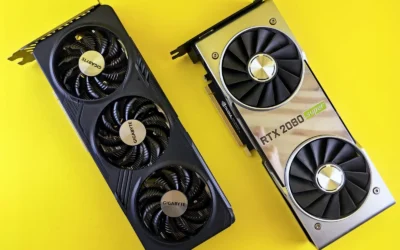
In real world testing, users report roughly double the performance of an RTX 2080 with similar power draw and much lower noise. With 16GB of GDDR7 memory, enhanced RT and Tensor Cores and DLSS 4 with Frame Generation, it handles maxed out settings and ray tracing at 60 to 100 fps native, and well above 120 fps with DLSS quality mode.
Build quality is premium and gamer focused, featuring GIGABYTEs WINDFORCE triple fan cooling system for efficient thermal control and quiet operation. The card supports PCIe 5.0, offers DisplayPort and HDMI outputs, and delivers up to 8K resolution support in a sturdy, factory overclocked design clocked at 2600 MHz.
The main trade off is physical size, as the triple fan cooler makes this a large card that barely fits in some mid tower cases. Some users also note that RGB lighting on the fans turns off when the fans stop at idle, which may disappoint those who want constant illumination.
Overall, the RTX 5070 Ti Gaming OC strikes an excellent balance between performance and efficiency in the RTX 50 series lineup. If you want flagship level visuals and AI acceleration without the highest tier cost or power demands, this is one of the most compelling choices available.
Graphics Processor: NVIDIA GeForce RTX 5070 Ti, Blackwell architecture, NVIDIA RTX 50 Series
Memory: 16GB GDDR7, 256-bit interface, 2600 MHz memory clock
Clock Speed: 2600 MHz boost clock, factory overclocked Gaming OC edition
Interface: PCI-Express x16, PCIe 5.0 support
Cooling: WINDFORCE cooling system with 3 fans and 0 RPM fan stop
Outputs: DisplayPort and HDMI, maximum resolution 7680 x 4320
Dimensions and Weight: 13.46 x 5.59 inches, 3.9 pounds, triple slot design
Model: GV-N507TGAMING OC-16GD, 3 year manufacturer warranty
Choose this card if you game at 1440p or 4K, use ray tracing, or create content that benefits from large VRAM and AI acceleration. It is a strong upgrade from RTX 2080, 3070 and 3080 class cards and pairs well with modern Ryzen 7, Ryzen 9 or Intel Core i7 and i9 systems.
Make sure your case has enough clearance for a large triple fan card and that your power supply meets the recommended wattage with proper PCIe power connectors. Good airflow will help you get the quietest operation and best boost clocks.
For the best experience, enable DLSS 4 in supported games to boost frame rates while keeping image quality high. Keep drivers updated through NVIDIA GeForce Experience and use GIGABYTE Control Center to customize fan curves and RGB if desired.
Pros
- Excellent cooling performance for a 47mm low-profile cooler
- Very quiet operation even under gaming and heavy loads
- Full copper build improves conductivity and offers a distinctive premium look
- Broad compatibility with modern Intel and AMD sockets
- Compact size fits popular SFF cases like Dan A4-H2O and Fractal Terra
Cons
- Instruction manual can be confusing, especially for AM5 backplate installation
- Slim 92mm fan may require tuning for the best noise to performance balance
- Limited headroom for heavily overclocked or very high TDP CPUs
The Thermalright AXP90-X47 Full Copper is a 47mm tall low-profile air cooler built for compact ITX and SFF desktops. It is ideal for builders using slim cases where clearance is limited but reliable cooling is still essential.
With four 6mm copper heatpipes, AGHP technology and a 92mm TL-9015R slim PWM fan, it moves up to 42.58 CFM while staying under 22.4 dBA. Users report it quietly handles chips like the Ryzen 7 7800X3D and Intel i5-12500T, keeping gaming temps around 75C in tight cases.
The full copper construction sets it apart from aluminum alternatives, offering better thermal conductivity and a striking premium look. It uses an all-metal mounting platform with a secure backplate and secondary reflow soldering for long-term durability and stable contact.
Installation is not always straightforward, as the manual can be confusing regarding backplate use on certain AM5 motherboards like ASRock B650I models. As a low-profile cooler, it also has thermal limits and is not intended for heavily overclocked high TDP processors.
For SFF enthusiasts who need maximum cooling in minimum space, the AXP90-X47 Full Copper is one of the best value options available. It combines compact dimensions, quiet operation and premium materials in a cooler that punches well above its size.
Model: Thermalright AXP90-X47 Full Copper, 47mm Low Profile Design
Fan: 92mm TL-9015R Slim PWM Fan, 2700 RPM Max, 42.58 CFM, 22.4 dBA, 4-Pin Connector
Heatpipes: 4 x 6mm Copper Heatpipes with AGHP Technology
Compatibility: Intel LGA 1150/1151/1200/1700/1851 and AMD AM4/AM5
Dimensions & Material: 3.74 x 1.85 x 3.72 inches, Full Copper with Metal, Plastic and Silicone Components
Pros
- High 5.5 GHz boost clock for excellent single and multi threaded performance
- Modern LGA 1851 platform supports DDR5 and PCIe 5.0
- Efficient hybrid core design great for gaming and demanding multitasking
- Tray option offers flexibility for custom builders who already have cooling
Cons
- Tray version does not include a stock cooler or retail boxed warranty in some regions
- Requires a new LGA 1851 motherboard, not compatible with LGA 1700 or LGA 1200
- Needs a capable aftermarket cooler to manage heat at full boost
The Intel Core Ultra 7 265K Tray is a high performance desktop CPU built on Intel's Arrow Lake architecture with the new LGA 1851 socket. It is aimed at gamers, creators and enthusiasts building a new Windows PC who want flagship level speed without moving to a Core Ultra 9.
In real world use, the 5.5 GHz turbo frequency provides snappy responsiveness for gaming, video editing and heavy multitasking. The hybrid core design efficiently handles background tasks while prioritizing performance cores for demanding apps, and the new platform enables faster DDR5 memory and PCIe 5.0 storage.
As a tray processor it ships as the CPU only without retail box or included cooler, which suits custom builds. Build quality reflects Intel's latest process with improved power management and thermal control compared to previous generations.
Drawbacks center on platform cost and cooling. You will need a compatible LGA 1851 motherboard and a quality aftermarket cooler, and tray CPUs can have different warranty terms than boxed retail models. It also cannot be used with older Intel sockets.
Overall, the Core Ultra 7 265K is a compelling choice for anyone starting a new build and wanting strong, future ready performance. If you value high frame rates, smooth creation workflows and a modern upgrade path, it hits a sweet spot between power and value.
Processor Series: Intel Core Ultra 7, Model: 265K, Model Number: AT8076806412, Manufacturer Part: AT8076806412
Socket: FCLGA1851 / LGA 1851, Architecture: 64-Bit, Platform: Windows, CPU Manufacturer: Intel
Max Turbo Frequency: 5.5 GHz, Package: Tray (CPU only, no cooler or retail box included), GTIN: 08592978576486
Compatibility: Requires LGA 1851 motherboard with DDR5 and PCIe 5.0 support, cooler sold separately.
| Part | Common at this level | Our 2026 pick | Why |
|---|---|---|---|
| CPU | a cpu in the same class | Intel Core Ultra 7 265K | a current platform match for this GPU tier so the processor does not hold it back |
| GPU | a gpu in the same class | NVIDIA GeForce RTX 5070 Ti | the class of card this build is planned around |
| Motherboard | a motherboard in the same class | MSI PRO B860-P WiFi | a board with a proven VRM and the I/O this build needs, without paying for features it will not use |
| Memory | a memory in the same class | Corsair Vengeance 32GB DDR5 6000 | the tuned capacity and speed sweet spot for this platform |
| SSD | a ssd in the same class | Samsung 990 Pro 4TB | responsive storage sized for a modern game library |
| Power Supply | a power supply in the same class | Corsair RM1000e | a modern ATX 3.1 unit with headroom above the combined draw of the CPU and GPU |
| Case | a case in the same class | Fractal Design Terra | good stock airflow and clearance for the cooler and graphics card in this build |
| CPU Cooler | a cpu cooler in the same class | Thermalright AXP90-X47 | quiet, capable cooling that keeps this CPU in its normal boost range |
The graphics card defines this build. The GIGABYTE GeForce RTX 5070 Ti Gaming OC 16G brings 16GB of GDDR7 on a 256-bit interface, PCIe 5.0 support, and a WINDFORCE cooling system. It is built on NVIDIA Blackwell architecture with DLSS 4, which is the feature set you want at this tier for high refresh 1440p and entry 4K.
The processor is the Intel Core Ultra 7 265K at up to 5.5 GHz on FCLGA1851. It is a current platform match for this GPU tier, so you avoid a CPU bottleneck at your target resolution. Owners commonly report smooth pairing with this class of card, and per the spec sheet you get 64-bit support on a modern socket.
Memory and storage are chosen for balance. The CORSAIR Vengeance RGB DDR5 RAM 32GB (2x16GB) kit runs up to 6000MHz at CL30-36-36-76 and 1.40V, which is the sweet spot many builders use on this platform. The Samsung SSD 990 PRO 4TB on PCIe 4.0 M.2 2280 reaches up to 7,450 MB/s and gives you room for a large library without juggling installs. If you want more context on compact GPU fit, see our guide to small form factor cases for RTX 5070 builds.
Compatibility Check
Will all of these parts fit and work together in this small case without surprises? That is the question every small form factor builder asks first, and it is the right place to start.
This build is Intel LGA1851 (Core Ultra Series 2). Use a 32GB DDR5 6000 kit on the memory QVL, confirm cooler support for the socket, and size the supply above the combined CPU and GPU draw with a native 12V-2×6 cable for an RTX 50 card. That guidance keeps you inside the platform requirements and avoids last minute returns.
Socket and chipset come first. The MSI PRO B860M-A WiFi Motherboard, mATX, supports Intel Core Ultra Processors Series 2 on LGA 1851 and uses a 12 Duet Rail Power System with Core Boost architecture. It also includes FROZR GUARD cooling with 7W/mK MOSFET thermal pads and an extended heatsink, which helps keep the VRM comfortable in a compact chassis.
BIOS updates are part of the reality on a new platform. Even though B860 is designed for Core Ultra Series 2, a board that has been on the shelf may need a BIOS update to recognize a newer stepping. Updates are done at your own risk and may affect warranty, so follow the manufacturer instructions carefully, use a stable power source, and do not interrupt the process. Check the board support page for the minimum BIOS that adds your CPU.
Memory support is straightforward if you stay on the QVL. This board advertises DDR5 Memory Boost with 8600+ MT/s OC, but our pick is a tuned 32GB DDR5 6000 kit that hits the capacity and speed sweet spot for gaming. Place the two 16GB modules in the recommended slots per the manual, enable the EXPO or XMP profile in BIOS, and verify stability. If you change kits, stay on the QVL for best results.
GPU length and slot clearance need attention in the Terra. The case supports a GPU up to 322 mm in length in a 10.4 L volume, with a PCIe 4.0 riser cable included. The GIGABYTE RTX 5070 Ti Gaming OC uses PCIe 5.0 and will run in the board PCIe 5.0 x16 slot with Steel Armor, but you should confirm card length, thickness, and power connector position against the case central wall setting. Use the 30 mm of slidable wall adjustment to favor GPU thickness or CPU cooler height as needed. For more on measuring for radiators and long cards, see how to choose a case for GPU clearance and radiator support.
CPU cooler clearance is the tight constraint here. The Thermalright AXP90-X47 Full Cooper Low Profile CPU cooler is 47mm total height with a 92mm TL-9015R Slim PWM fan, four 6mm heatpipes, and a rated noise level of 22.4 DBA at 12V and 0.2A max. That low profile is intentional for small form factor cases like the Terra. You must confirm cooler support for LGA1851 and follow the mounting instructions, including the backplate fastener. The product description lists support for Intel 115X and 1200 and AMD AM4 and AM5, so verify the included hardware or adapter for LGA1851 before you build. Also check RAM height and motherboard heatsink clearance around the socket.
Power supply headroom and connectors are next. The CORSAIR RM1000e (2025) ATX 3.1 PCIe 5.1 Ready unit is a 1000W fully modular supply with a 120mm rifle bearing fan and 105°C rated capacitors. It is Intel ATX 3.1 certified and includes a native 12V-2×6 connector for RTX 50 cards. Size the supply above the combined CPU and GPU draw and follow the GPU maker recommended wattage, rather than assuming any wattage will handle any card. A 1000W unit gives you comfortable headroom for this CPU and GPU class and leaves room for transient spikes.
Storage and I/O round out compatibility. The board provides triple M.2 connectors, including one M.2 Gen5 x4 at 128Gbps with EZ M.2 Shield Frozr II, plus one M.2 Gen4 x4 at 64Gbps and one M.2 Gen4 x2 at 32Gbps. The Samsung 990 PRO 4TB uses PCIe 4.0 M.2 2280, so it fits any of those slots and benefits from the heatsink on the primary slot. Rear I/O includes Thunderbolt 4 Type-C with display output, Wi-Fi 7 with Bluetooth 5.4, and 5Gbps LAN.
Build safety matters in a compact case. Work on a non conductive surface, use anti static handling, and keep cables clear of fans. Route the 12V-2×6 cable with a gentle bend and fully seat the connector until it clicks, per the GPU and PSU manuals. Check cooler height or radiator clearance against the case before you mount the board, and do not force panels closed if cables press against them.
Performance: What To Expect
No verified frame rate numbers are available for this build, so we will keep this section qualitative and will not invent figures. That approach avoids misleading expectations and keeps the focus on how the parts work together in real use.
In practice, this CPU and GPU class is aimed at 1440p high refresh and entry 4K. You should expect responsive gameplay at high settings in modern titles, with headroom to enable features like DLSS 4 where supported. The 32GB DDR5 6000 kit keeps the platform in its sweet spot, and the 4TB PCIe 4.0 drive with up to 7450 MB/s reads helps with fast loads and large libraries.
Thermal and noise behavior in a small form factor case depends on your fan curves and panel setup. The Terra offers good stock airflow for its size, and the low profile Thermalright cooler is designed to keep the CPU in its normal boost range without excess noise. If you prioritize silence, you can tune fan curves in BIOS and keep the central wall balanced for cooler breathing room. For background on panel choice and airflow, you may find mesh front case vs tempered glass front case helpful.
Upgrading from this baseline is straightforward. Moving up a GPU tier will improve high refresh and 4K headroom more than any other single change, while moving to a larger case and a 360mm AIO would give you more thermal headroom for sustained loads. Moving down a GPU tier and to a smaller drive will lower cost with a noticeable step down in headroom.
Three Ways to Build This
Lower Cost Version
Choose one GPU tier down with a cheaper CPU, a budget air cooler, a 1TB drive and an entry board. You keep the small form factor idea but trim capacity and headroom to hit a tighter budget.
Key parts: a lower tier GPU than the RTX 5070 Ti, a more affordable CPU than the Core Ultra 7 265K, a basic tower or low profile air cooler, a 1TB PCIe 4.0 SSD, and an entry B860 or similar board. This suits a first build on a tight budget where you want to get gaming now and upgrade storage or GPU later.
Balanced Version, Our Recommended Build
This is the parts list in the table above, and it is the one we recommend for most gamers who want headroom to upgrade later. You get the Intel Core Ultra 7 265K with the NVIDIA GeForce RTX 5070 Ti, 32GB DDR5 6000, a 4TB Samsung 990 Pro, the MSI PRO B860-P WiFi platform, the Fractal Design Terra, the Thermalright AXP90-X47 low profile cooler, and the Corsair RM1000e ATX 3.1 supply.
It balances compact size, modern connectivity, and component quality without paying for features you will not use. You have storage for a large library, memory in the sweet spot, and power headroom for transient spikes. If you build one system in November 2026 and want it to stay relevant, this is the sensible middle ground.
Higher End Version
Move up a GPU tier and to a Ryzen 7 9800X3D or Ryzen 9 9950X3D with a 360mm AIO and a 1000W supply. This is for high refresh play and years of headroom, and it usually means moving to a larger case that supports a 360mm radiator.
Key parts: a GPU above the RTX 5070 Ti class, a Ryzen 7 9800X3D or Ryzen 9 9950X3D, a 360mm AIO, a 1000W ATX 3.1 supply with native 12V-2×6, and a case with verified radiator and GPU clearance. Choose this if you chase the highest refresh rates, stream while gaming, or want the longest runway before your next major upgrade.
FAQ
Is the Thermalright AXP90-X47 enough to cool an Intel Core Ultra 7 265K in a small form factor case?
It is a 47mm low profile cooler designed for compact cases, with four 6mm heatpipes and a 92mm slim PWM fan. In a case like the Terra, it is intended to keep the CPU in its normal boost range when you set a sensible fan curve and keep cables clear of airflow. If you plan heavy sustained all core work, a larger case with more cooler height or radiator support will give you more headroom.
Will an RTX 5070 Ti fit in the Fractal Design Terra?
The Terra supports a GPU up to 322 mm in length and provides 30 mm of internal flexibility via the slidable central wall. That covers many RTX 5070 Ti models, but you should still verify your specific card length, thickness, and power connector routing against the case manual. Check the riser cable seating and that the card does not press against the side panel.
Do I need DDR5 6000 or can I use a faster kit on B860?
DDR5 6000 at 32GB is the tuned sweet spot for this platform and is widely used for gaming. The MSI PRO B860M-A WiFi advertises DDR5 Memory Boost up to 8600+ MT/s OC, so faster kits may work, but you should stay on the memory QVL and enable the correct profile in BIOS. Faster is not always better if it requires manual tuning or sacrifices stability.
Final Verdict
This upper class small form factor build gives you a current Intel platform, a balanced memory and storage setup, and a graphics card tier that matches 1440p high refresh and entry 4K. It stays practical on board and cooler choice so you can invest where it matters most, while still fitting into a compact, well built case.
Our pick: the balanced version we recommend, with the Intel Core Ultra 7 265K and NVIDIA GeForce RTX 5070 Ti in the Fractal Design Terra, for most gamers who want a tidy 2026 system with headroom to upgrade later. If you need maximum headroom or the smallest possible cost, choose the higher end or lower cost versions described above.
This roundup is not a good fit if you need a compact small-form-factor build or a silent-focused case; these picks prioritize airflow and standard ATX layouts.


Write Your Review
No reviews yet. Be the first to share your experience!