

Video credit: TecnoArt. Original video: https://www.youtube.com/watch?v=r-Pi1V4hX6g. This is our own independent breakdown and is not affiliated with the video creator. As an Amazon Associate, CustomPCGaming earns from qualifying purchases. Product prices shown in the video may have changed.
Watch the build
Parts in this build
- AMD Ryzen 7 9700X
- GeForce RTX 5070
- MSI PRO B650M-A WiFi
- Corsair Vengeance 32GB DDR5 6000
- Crucial P3 Plus 2TB
- Corsair RM750e
- Lian Li Lancool 216
- Thermalright Peerless Assassin 120
Parts list is our summary of the video for reference. Confirm current specs and price on the retailer page before buying.
Watch: The Build Video
This is our independent parts analysis and is not affiliated with the video creator. As an Amazon Associate, CustomPCGaming earns from qualifying purchases. Product prices shown in the video may have changed.
A build in this class is aimed at smooth 1440p gaming with headroom for background apps and future upgrades. The video above shows a build in this class so you can see airflow, cable routing and overall scale, while the parts below reflect our current 2026 picks for this budget tier.
What This Build Is
This is a balanced AM5 gaming build centered on the AMD Ryzen™ 7 9700X 8-Core and the GIGABYTE AORUS GeForce RTX 5070 Infinity 12G. You get eight current Zen 5 cores and 16 threads with a 5.5 GHz Max Boost and 40 MB cache, paired with a mainstream Blackwell GPU that carries 12GB of GDDR7 on a 192-bit interface and support for DLSS 4.
At 1440p, that pairing is chosen so the CPU does not hold the GPU back while still leaving you room for streaming, Discord, browser tabs and light productivity. If you play competitive shooters you will appreciate the CPU headroom, and if you play story driven titles you will appreciate the GPU memory and feature set.
The platform is AM5, which means DDR5 only and a clear upgrade path. We keep the motherboard and cooler practical and put the budget where it matters most for gaming, into the graphics card and CPU. That is the typical approach for this tier in 2026, and it keeps the system efficient and easy to cool.
Builds at this level usually make two tradeoffs. First, many ship with a 1TB SSD to save cost, which fills quickly when modern games need 100GB or more each. Second, many use a basic single tower cooler or the stock cooler where included, which works but can be louder under sustained loads.
Our recommended configuration addresses both without a rebuild. We spec a 2TB Gen4 drive so you are not reinstalling games constantly, and a proven dual tower air cooler that is far quieter than a stock unit. The case choice also matters, and a mesh airflow design helps the GPU and CPU breathe without needing an expensive liquid cooler on day one. For more on airflow priorities, see our guide to mesh front case vs tempered glass front case.
Who should not build this? If you primarily play at 1080p on a 60Hz display, this GPU and CPU combination is more than you need and a lower tier would be better value. If you need heavy workstation rendering or you want silent operation in a tiny room, you should plan for a larger cooler or a different case and power strategy from the start.
Parts Breakdown
This is the core of our analysis for September 2026. The table shows what is common at this level and what we would pick now, then we explain the key choices in more detail.
This article contains affiliate links. If you buy through one of our links, CustomPCGaming may earn a commission at no extra cost to you. Commissions never influence which products we recommend or how we rank them. Read our Affiliate Disclosure for details.
Quick Picks at a Glance

AMD Ryzen 7 9700X 8-Core 16-Thread Unlocked

Prime Crucial P3 Plus 2TB PCIe Gen4 NVMe M.2 SSD
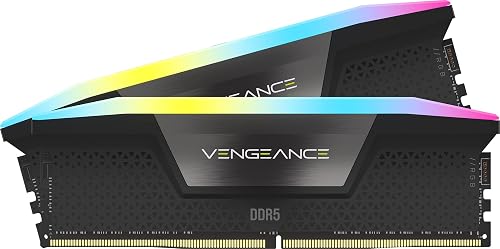
CORSAIR Vengeance RGB DDR5 32GB (2x16GB)

Prime Thermalright Peerless Assassin 120 SE CPU Cooler
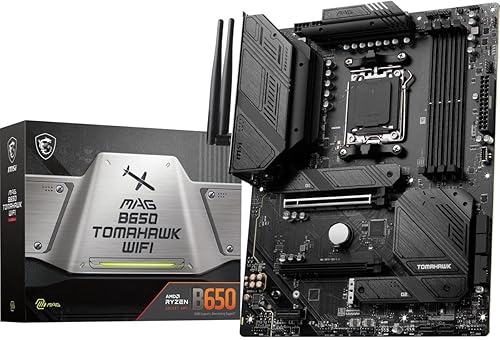
MSI MAG B650 Tomahawk WiFi ATX Motherboard for AMD

GIGABYTE AORUS GeForce RTX 5070 Infinity 12GB
As an Amazon Associate we earn from qualifying purchases. Product prices and availability are accurate as of the date/time indicated.
Pros
- Outstanding gaming performance with 5.5 GHz boost and large cache
- Excellent multitasking with 8 cores and 16 threads
- Unlocked for overclocking to push performance further
- Future ready AM5 platform with DDR5 and PCIe 5.0 support
Cons
- CPU cooler not included and must be purchased separately
- Requires AM5 motherboard and DDR5 memory, no compatibility with older AM4 systems
- Needs capable cooling to sustain peak boost performance
The AMD Ryzen 7 9700X is an 8-core, 16-thread unlocked desktop processor built on the Zen 5 architecture for Socket AM5. It is designed for serious gamers, streamers and creators who want top tier performance without stepping up to a 12 or 16 core chip.
In real world use, it delivers consistent 100+ FPS in popular games thanks to its 5.5 GHz max boost and large 40 MB cache. The 16 threads and DDR5-5600 support also keep multitasking smooth, whether you are gaming while streaming or handling heavy creative workloads.
Built for the modern AM5 platform, the chip supports PCIe 5.0 on compatible motherboards for faster GPUs and SSDs. As an unlocked processor, it gives enthusiasts full control for overclocking, while Zen 5 brings improved efficiency and IPC over previous generations.
The main drawback is that no cooler is included, so you will need to budget for a capable aftermarket cooler. It also requires an AM5 motherboard and DDR5 memory, which means users on older AM4 systems cannot reuse their existing board or RAM.
Overall, the Ryzen 7 9700X is a powerful and well balanced choice for a high performance gaming rig with room to grow. If you want elite gaming speed, strong productivity and a future proof platform, it is an excellent investment.
Key Specifications
Brand: AMD
Model: Ryzen 7 9700X
Cores / Threads: 8 Cores, 16 Threads
Architecture: Zen 5
Base Clock: 3.8 GHz
Max Boost Clock: Up to 5.5 GHz
Total Cache: 40 MB
Memory Support: DDR5-5600
Socket: AM5
PCIe Support: PCIe 5.0 on select motherboards
Unlocked for Overclocking: Yes
Cooler Included: No
Pros
- Fast Gen4 performance for boot times, multitasking and everyday productivity
- Large 2TB capacity for extensive media and application libraries
- Wide compatibility with PCIe Gen4 and Gen3 systems for easy installation
- Trusted Micron 3D NAND quality with strong endurance and 5-year warranty
- Includes useful software bundle for cloning and creative work
Cons
- Not the fastest Gen4 drive available, slower than premium 7000MB/s models for heavy gaming or pro workloads
- DRAM-less QLC design can show reduced sustained write speeds under prolonged heavy transfers
- No integrated heatsink, thermal performance relies on system cooling
The Crucial P3 Plus 2TB is a PCIe Gen4 NVMe M.2 SSD designed for home users, students and office multitaskers who want a noticeable everyday speed boost. It is ideal for upgrading an aging laptop or desktop to faster boot times, quicker app loads and smoother file handling without complex installation.
In real world use, sequential speeds up to 5000MB/s read and 4200MB/s write deliver snappy responsiveness for browsing, office apps, light content creation and casual gaming. The 2TB capacity offers generous room for essential programs, documents and media, while PCIe Gen4 efficiency keeps everyday computing fluid.
Built with Micron 3D NAND and rated for over 1.5 million hours MTTF, the drive feels reliable and well engineered in its compact M.2 form factor. It supports hardware encryption, works across Linux, Mac and PC platforms, and is backed by a limited 5-year warranty for added confidence.
Drawbacks are modest but worth noting. It does not match the peak speeds of enthusiast Gen4 drives, and its DRAM-less architecture may dip during very long, heavy write sessions. It also ships without a heatsink, so users in compact or warm systems should ensure adequate airflow.
Overall, the Crucial P3 Plus 2TB offers excellent value for everyday upgrades, combining strong Gen4 speed, large capacity and trusted durability. For users seeking a simple, affordable and reliable storage boost for home or business use, it is a smart and future ready choice.
Capacity: 2TB NVMe M.2 SSD
Interface: PCIe Gen4 x4 NVMe, backward compatible with Gen3
Performance: Up to 5000MB/s read, up to 4200MB/s write, 6Gb/s data transfer rate
Form Factor: M.2 2280, dimensions 3.15 x 0.87 x 0.09 inches, weight 0.01 kg
NAND & Reliability: Micron 3D NAND, 1.5 million hours MTTF, hardware encryption
Compatibility: Desktops and laptops that accept PCIe NVMe Gen4 M.2 drives, supports Linux, Mac, PC
Warranty: Limited 5-year warranty, Model CT2000P3PSSD8
Pros
- High frequency 6000MHz performance with low CL30 latency for responsive multitasking
- Brilliant individually addressable RGB lighting visible from any angle
- Dual compatibility with AMD EXPO and Intel XMP 3.0 for easy setup
- Stable overclocking with onboard voltage regulation and custom PCB design
- Backed by Corsair build quality and a limited lifetime warranty
Cons
- Maximum 6000MHz speed requires manual BIOS tuning and compatible motherboard and CPU
- Premium price for RGB and high speed bin compared to standard DDR5 kits
- Some systems may need to run below full speed for stability, especially on certain AMD boards
The CORSAIR Vengeance RGB DDR5 32GB kit (2x16GB, 6000MHz, CL30) is a high performance memory kit designed for modern gaming and workstation desktops. It is built for enthusiasts, gamers and creators who want top tier DDR5 bandwidth, low latency and striking aesthetics on both AMD and Intel platforms.
In real world use, the 6000MHz speed and CL30 timings provide noticeably smoother gaming, faster rendering and lag free multitasking. Enabling AMD EXPO or Intel XMP 3.0 in BIOS unlocks the full speed instantly, while CORSAIR iCUE allows real time monitoring and voltage tuning for stable overclocking.
Design and build quality are excellent, with a sleek gray aluminum heat spreader and a panoramic light bar housing ten ultra bright, individually addressable RGB LEDs per module. The custom PCB ensures clean signal integrity, while onboard voltage regulation gives more precise control than traditional motherboard based overclocking.
There are a few drawbacks to consider. You must enable EXPO or XMP in BIOS to reach the advertised speed, and some motherboard and CPU combinations may default to lower speeds like 5200MHz for stability. The 1.40V operating voltage and RGB premium also mean it costs more than basic DDR5 options.
Overall, Vengeance RGB DDR5 is one of the best DDR5 kits for users who want both elite performance and standout lighting. If you want fast, reliable memory that looks as good as it performs and you have a compatible DDR5 system, it is an outstanding upgrade.
Capacity: 32GB (2x16GB) Dual Channel Kit, DDR5, 288-Pin DIMM, Model CMH32GX5M2B6000Z30K
Performance: 6000MHz, Timings CL30-36-36-76, Voltage 1.40V, Intel XMP 3.0 and AMD EXPO Support
Features: Ten-zone RGB LEDs per module, panoramic light bar, onboard voltage regulation, custom high performance PCB
Compatibility: Desktop DDR5 systems, optimized for latest Intel and AMD motherboards, iCUE software control
Choose this 6000MHz CL30 kit if you want the sweet spot for DDR5 gaming and creation, balancing high frequency with low latency. Lower latency kits offer better responsiveness than higher speed CL36 or CL40 alternatives in many games.
Make sure your motherboard and CPU support DDR5 and 6000MHz EXPO or XMP profiles, and that your case has clearance for RGB DIMMs. Update your BIOS before installation for best compatibility.
If you prioritize budget over lighting, consider a non RGB Vengeance kit with similar specs. If you want maximum aesthetics and easy tuning with iCUE, this RGB model is worth the premium.
Pros
- Excellent cooling performance for its class with dual tower and six heat pipe layout
- Very quiet operation even at full 1550 RPM with PWM control
- Broad support for latest Intel and AMD sockets
- Solid build quality with copper base and aluminum heatsink
- Efficient dual fan setup without the complexity of liquid cooling
Cons
- Tall 155mm height requires a mid tower or larger case, compatibility check is essential
- AMD installation requires the original motherboard backplate which is not included
- Bulky 907g dual tower design can make installation tight in compact builds
The Thermalright Peerless Assassin 120 SE is a dual tower air cooler designed for gamers, enthusiasts and PC builders who want high end cooling without an AIO. It targets users running modern Intel LGA 1700 and 1851 or AMD AM4 and AM5 CPUs who need reliable thermal headroom for gaming and multitasking.
In real world use, the six AGHP copper heat pipes and dual 120mm PWM fans deliver impressive heat dissipation while staying efficient. With up to 66.17 CFM airflow and a max speed of 1550 RPM, it keeps temperatures low under load while maintaining noise at just 25.6 dB for quiet operation.
Build quality is a clear strength thanks to the pure copper base, nickel plated heat pipes and dense aluminum fin stacks joined by reflow welding. The dual TL-C12C fans use a 4 pin PWM connection for precise speed control and the offset tower design helps preserve RAM clearance on most motherboards.
The main drawback is its size, as the 125 x 135 x 155mm footprint demands a spacious case and careful compatibility checks. Installation on AMD systems also requires reusing the original motherboard backplate, which can be inconvenient if it was misplaced.
Overall, the Peerless Assassin 120 SE offers best in class air cooling performance, quiet operation and broad socket support at an accessible point. It is an excellent choice for anyone wanting powerful, reliable CPU cooling without the cost or maintenance of liquid cooling.
Model: Thermalright PA120 SE Dual Tower CPU Cooler
Dimensions: 125 x 135 x 155mm (4.92 x 5.31 x 6.1 inch)
Heat Pipes: 6 x 6mm pure copper with AGHP technology
Fans: 2 x TL-C12C 120mm PWM, 1550 RPM ±10%, 66.17 CFM, 25.6 dB(A), 4-Pin 12V
Compatibility: Intel LGA 115X / 1200 / 1700 / 1851 and AMD AM4 / AM5
Materials: Aluminum fins, pure copper base and heat pipes, metal mounting kit
Weight: 907g
Pros
- Excellent stability and robust VRM design for gaming and demanding workloads
- Effective premium thermal solution that keeps VRMs and M.2 drives cool
- Fast and reliable Wi-Fi 6E, Bluetooth 5.3 and 2.5G LAN connectivity
- Plenty of fan and RGB headers with an intuitive MSI BIOS
- Great balance of features, durability and value in the B650 range
Cons
- May require BIOS flash without CPU installed for newer Ryzen CPUs like the 7800X3D
- Boot times can be a bit long until BIOS is updated and RAM is tuned
- RGB sync can be inconsistent with Corsair iCUE and CPU power connector is tight
The MSI MAG B650 Tomahawk WiFi is an ATX motherboard built for AMD AM5, supporting Ryzen 7000, 8000 and 9000 series processors. It is ideal for gamers and PC builders who want modern DDR5, PCIe 4.0 and advanced connectivity without paying for a flagship X670 board.
In real world use it delivers smooth, stable performance for gaming and heavy multitasking thanks to its robust VRM and component quality. Users report excellent results with high end pairings like the Ryzen 7 7800X3D, fast DDR5 memory and PCIe Gen 4 NVMe drives for quick boots and game loads.
Design and build quality are standout strengths with a military inspired focus on sturdiness and durability. The extended heatsink design and M.2 Shield Frozr keep temperatures in check during long sessions, while the layout provides generous fan headers, RGB headers and USB connectivity.
There are a few drawbacks to consider. Some newer CPUs require a BIOS flash before first boot, and the process requires removing components which can confuse first time builders. Boot times can also be slightly long initially, and RGB syncing with Corsair iCUE can be tricky.
Overall, the MAG B650 Tomahawk WiFi hits a sweet spot of performance, cooling and connectivity. For anyone building a durable, future ready AMD gaming PC on AM5, it offers outstanding value and reliability.
Pros
- Powerful 12GB GDDR7 on 192-bit bus for high resolution gaming and content creation
- Efficient WINDFORCE HYPERBURST triple fan cooling for quiet and stable operation
- High 2715 MHz boost clock and 28000 MHz memory speed for excellent performance
- PCIe 5.0 support and 8K display capability for future ready builds
- Premium build quality with metal backplate, RGB Halo and included VGA holder kit
Cons
- Large 12.17 inch triple fan design requires a spacious case with good airflow
- 16-pin power connector may require an adapter for older power supplies
- Heavier 2.7 pound design needs proper support, especially for vertical mounting
The GIGABYTE AORUS GeForce RTX 5070 Infinity 12G is a high performance graphics card built on NVIDIA RTX 50 series architecture. It is designed for enthusiast gamers and content creators who demand smooth 4K gaming, fast rendering and AI powered performance.
With 12GB of GDDR7 memory on a 192-bit interface, a 2715 MHz boost clock and 28000 MHz memory speed, it delivers fast frame rates and enhanced ray tracing. Upgraded RT Cores and Tensor Cores provide realistic lighting and AI acceleration for both gaming and creative applications.
Cooling is handled by the triple fan WINDFORCE HYPERBURST system, which keeps temperatures low while maintaining quiet operation. The card features a die cast metal backplate for rigidity, RGB Halo lighting for customizable style, and a magnetic backplate cover plus VGA holder kit for a clean, secure installation.
The large 12.17 inch length and triple fan design require a spacious case and good airflow, so compact builds should check clearance carefully. It also uses a 16-pin power connector, which may require an adapter or compatible PSU if you are upgrading from an older system.
Overall, the AORUS RTX 5070 Infinity 12G is an excellent choice for users building a future ready PCIe 5.0 system with headroom for 8K displays. If you want premium cooling, striking design and top tier RTX 50 series performance in one package, this card delivers.
GPU: NVIDIA GeForce RTX 5070, 2715 MHz Boost Clock, RTX 50 Series
Memory: 12GB GDDR7, 192-bit, 28000 MHz Memory Speed
Interface: PCI-Express x16 5.0, DisplayPort, HDMI
Cooling: WINDFORCE HYPERBURST Cooling System with 3 Fans
Display Support: Up to 7680 x 4320 Resolution
Dimensions and Weight: 12.17 x 5.2 inches, 2.7 pounds
Model: GV-N5070AORUS IF-12GD with 3 Year Manufacturer Warranty
Included: Graphics Card, 16-pin Power Cable, Magnetic Backplate Cover, VGA Holder Kit, AORUS Metal Sticker
| Part | Common at this level | Our 2026 pick | Why |
|---|---|---|---|
| CPU | a Ryzen 5 9600X or Ryzen 7 7700 | AMD Ryzen 7 9700X | eight current Zen 5 cores, balanced for mixed gaming and productivity |
| GPU | an RTX 5070 or RX 9070 | GeForce RTX 5070 | the mainstream 1440p Blackwell card, 12GB GDDR7 and DLSS 4 |
| Motherboard | a B650 board | MSI PRO B650M-A WiFi | enough USB, VRM and a real path to a future X3D chip |
| Memory | a 32GB DDR5 6000 kit | Corsair Vengeance 32GB DDR5 6000 | 32GB DDR5 6000, plenty for gaming and background apps |
| SSD | a 1 or 2TB Gen4 drive | Crucial P3 Plus 2TB | 2TB of Gen4 storage so 100GB games do not force reinstalls |
| Power Supply | a 700 to 750W unit | Corsair RM750e | fully modular 750W ATX 3.1 with headroom for a future GPU |
| Case | a mesh airflow case | Lian Li Lancool 216 | big intake fans and easy building, great value airflow |
| CPU Cooler | a budget tower cooler | Thermalright Peerless Assassin 120 | a low cost dual tower air cooler far quieter than a stock unit |
The GIGABYTE AORUS GeForce RTX 5070 Infinity 12G is the heart of this build. Per the spec sheet it uses 12GB GDDR7 on a 192-bit bus, PCIe 5.0 and the WINDFORCE HYPERBURST cooling system with an RGB Halo and die-casting metal backplate. For 1440p gaming that memory capacity and modern feature set give you flexibility with texture settings and upscaling options.
The AMD Ryzen™ 7 9700X 8-Core complements it with eight Zen 5 cores, 16 threads, a 5.5 GHz Max Boost and 40 MB cache on Socket AM5 with DDR5-5600 support. Owners commonly report that this class of CPU keeps high refresh gaming smooth while handling streaming and multitasking, which is why we prefer it over a six core option for a mixed use rig. If streaming is a priority, our Best CPU for Streaming and Gaming guide explains how core count and platform choice affect that workload.
Memory and storage round out the experience. The CORSAIR Vengeance RGB DDR5 RAM 32GB (2x16GB) runs up to 6000MHz at CL30-36-36-76 and 1.40V with AMD EXPO support, ten-zone RGB lighting and onboard voltage regulation for stable overclocking. The Crucial P3 Plus PCIe Gen4 NVMe 2TB SSD delivers up to 5000MB/s read and up to 4200MB/s write with Micron 3D NAND and a 1.5 million hours MTTF rating, plus backward compatibility with PCIe Gen3 systems. Together they reduce load times and let you keep a larger library installed.
Compatibility Check
Will all of these parts work together without surprises? That is the question every first time builder asks at this budget, so we walk through socket, chipset, memory, physical clearance and power in order.
This build is AM5, so any B650, B650E, B850 or X870 board works and it is DDR5 only. The MSI MAG B650 Tomahawk WiFi Gaming Motherboard in our buyable list is a representative B650 option with DDR5 support up to 6400+ OC MHz, PCIe Gen 4 for M.2, extended heatsink design with M.2 Shield Frozr, 2.5G LAN, Wi-Fi 6E and Bluetooth 5.3. A current B650 or B850 board usually ships ready for today’s chips, but check the board support page and use BIOS Flashback if a flash is needed. BIOS updates and overclocking are done at your own risk and may void warranty, so follow the manufacturer instructions and handle components with anti-static precautions.
Match memory to a 32GB DDR5 6000 kit on AM5. The Corsair kit we list is AMD EXPO compatible and rated up to 6000MHz, which aligns with the sweet spot many AM5 builders target. Before you enable EXPO, confirm the exact kit is on the motherboard memory QVL and update the BIOS if the vendor recommends it for that speed. Mixing kits or adding two different kits later can cause instability, so buy the capacity you need as a matched pair.
For graphics and case fit, in a standard mid tower a triple fan GPU and a 240 or 360mm radiator fit without issue. The Lian Li Lancool 216 is a mesh airflow case designed for large air coolers and long GPUs, which helps keep noise down. If you are comparing compact options, read small form factor cases for RTX 5070 builds and How to Choose a Case for GPU Clearance to verify length, slot width and front radiator support for your specific card.
The Thermalright Peerless Assassin 120 SE CPU Cooler is a dual tower air cooler with six 6mm heat pipes using AGHP technology, dual 120mm PWM fans at up to 1550 RPM, up to 66.17 CFM airflow and noise at or below 25.6 dB(A). Its dimensions are 125 x 135 x 155 mm, so check cooler height against your case spec and confirm RAM clearance under the front fan. Follow the mounting instructions for your socket, use the correct backplate hardware for AM5, and do not overtighten. If you prefer liquid cooling, our comparison of 240mm AIO vs 360mm AIO explains when a larger radiator makes sense.
For power, size the supply above the combined draw of RTX 5070 and the CPU, follow the GPU maker recommended wattage, and use a native 12V-2×6 connector for an RTX 50 card. Our pick is a fully modular 750W ATX 3.1 unit, which gives you headroom for transient spikes and a future GPU upgrade without rewiring the whole system. Do not assume any 750W unit handles any card, always check the connector type, cable rating and the GPU vendor guidance, and seat the 12V-2×6 connector fully until it clicks.
Finally, plan your storage and rear I/O. A B650 board with PCIe Gen 4 M.2 slots will run the Crucial P3 Plus at its rated Gen4 speeds, and the board provides modern USB, Wi-Fi 6E and 2.5G LAN for peripherals and networking. If you add more drives later, keep at least one M.2 slot with a heatsink for sustained writes.
Performance: What To Expect
No verified frame rate numbers are available for this build, so we keep this section qualitative and do not invent figures. That also means we do not attribute frame rates to the video or to any outlet.
Qualitatively, the RTX 5070 class is positioned as a mainstream 1440p Blackwell card with 12GB GDDR7 and DLSS 4 support. In practice that means you can target high settings at 1440p and use upscaling and frame generation where supported to smooth demanding scenes, without dropping texture quality to save VRAM.
The Ryzen 7 9700X helps keep that experience consistent. With eight Zen 5 cores and a 5.5 GHz Max Boost, it is balanced for gaming while you have a browser, voice chat and background tasks open. You will notice the benefit most in CPU heavy areas, open world towns and when you stream or record while you play.
The supporting parts change how the system feels day to day. A 32GB DDR5 6000 kit with EXPO keeps background apps from crowding your games, and a 2TB Gen4 SSD rated up to 5000MB/s read means faster boot, quicker level loads and fewer reinstalls. The dual tower cooler and mesh case keep fan speeds lower, so the system stays quieter during long sessions. For more context on our budget approach, browse Budget Build Guides.
Three Ways to Build This
Lower Cost Version
Keep a similar GPU tier with a cheaper CPU, use the stock cooler or a budget single tower, choose a smaller 1TB SSD and an entry B650 board. You still get a capable 1440p entry point, but you will manage storage more often and you give up some multitasking headroom and future CPU upgrade margin. This suits a first 1440p build on a tight budget where every saving counts.
Balanced Version, Our Recommended Build
Choose the AMD Ryzen™ 7 9700X 8-Core with the GIGABYTE AORUS GeForce RTX 5070 Infinity 12G, the CORSAIR Vengeance RGB DDR5 RAM 32GB (2x16GB) at 6000MHz, the Crucial P3 Plus PCIe Gen4 NVMe 2TB SSD, the Thermalright Peerless Assassin 120 SE CPU Cooler or a 240mm AIO, and a mesh airflow case like the Lian Li Lancool 216 with a 750W ATX 3.1 supply. This is the best fit for most 1440p gamers who want room to grow to a future X3D chip without replacing the platform.
Higher End Version
Move up one GPU tier and step up to a Ryzen 7 9800X3D or Ryzen 9 9950X3D with a 360mm AIO and a 1000W supply. You gain headroom for high refresh 1440p and more demanding future titles, plus extra thermal and power margin for sustained loads. This is for enthusiasts who want years of headroom and are comfortable with a larger cooler and higher total system cost.
FAQ
Is the Ryzen 7 9700X good for pairing with an RTX 5070 at 1440p?
Yes, for most gamers it is a well matched pairing. The eight Zen 5 cores and 5.5 GHz Max Boost give you gaming performance with extra threads for background tasks, so the CPU is unlikely to hold the GPU back at 1440p in typical titles.
Do I need to update the BIOS for a Ryzen 7 9700X on a B650 motherboard?
A current B650 or B850 board usually ships ready for current chips, but you should check the support page for your exact model. If an update is needed, use BIOS Flashback per the manual, and remember that BIOS updates are done at your own risk.
Is 32GB DDR5 6000 and a 2TB SSD worth it for this build?
For AM5, a 32GB DDR5 6000 kit with EXPO is a sensible capacity and speed target for gaming plus multitasking. A 2TB Gen4 drive like the Crucial P3 Plus, rated up to 5000MB/s read, lets you keep several large games installed without constant reinstalls.
Final Verdict
This AM5 build puts your budget into the parts that affect 1440p gaming most, while keeping the foundation practical for upgrades. You get a modern CPU and GPU combination, fast DDR5, roomy Gen4 storage and quiet, proven cooling in an airflow case.
Our pick: the Balanced version with the Ryzen 7 9700X and RTX 5070, 32GB DDR5 6000, 2TB Gen4 SSD and the Thermalright Peerless Assassin 120 in a mesh case. It is the most versatile choice for most 1440p gamers who want strong performance now and a clear path to a future X3D CPU later.
This build guide is not the right choice if you need a specific professional workload or the highest possible frame rates; it is aimed at value gaming within a set budget.







Write Your Review
No reviews yet. Be the first to share your experience!