

If you are asking is the be quiet Pure Power 12 850W a good PSU for an RTX 5070 gaming build, you are really asking how to size power correctly for a modern mid to high end GPU without overspending or leaving yourself short for upgrades. As of September 2026, an RTX 5070 class build sits in that sweet spot where wattage, connector standards, efficiency and noise all matter, and the right PSU choice depends on your resolution and refresh target, your CPU platform, your case size and cable clearance, and whether this is a build to keep for years or to upgrade soon.
This buying guide gives you a decision framework rather than a single recommendation. You will learn what to look for in an 850W ATX 3.1 unit, how to weigh efficiency ratings and rail design, and how to match those specs to your actual system. You will also see where a quiet focused unit fits versus a more premium fully modular option, so you can choose with confidence for your Graphics Cards and overall platform.
What Actually Matters
Wattage Headroom and GPU Maker Guidance
Start with headroom, not just the minimum. Add your CPU peak draw and your GPU peak draw, then add extra margin for transient spikes, fans, storage and future upgrades. For an RTX 5070 gaming build, 850W is a common recommendation because it gives you comfortable headroom over the combined load while staying efficient at typical gaming loads.
Always follow the GPU maker recommended wattage for your specific card model and check the guidance for your CPU as well. Do not assume a lower wattage unit will be fine because your system boots, and never claim a PSU can handle any card. A good rule is to keep sustained load well below the unit rated continuous power, so the PSU runs cooler, quieter and more stable. Our Power Supplies archive explains how to estimate this margin for different builds.
ATX 3.1, PCIe 5.1 and the 12V-2×6 Connector
Modern GPUs use the ATX 3.1 and PCIe 5.1 standards, which focus on handling short power excursions and providing a native 12V-2×6 connection. A PSU that is ATX 3.1 compliant is designed to resist those transient spikes without shutting down, which is important for gaming when loads change rapidly. If you want a single cable from PSU to GPU, look for a native 12V-2×6 connector rather than relying on adapters.
You should also consider backward compatibility. Some ATX 3.1 units include both the native 12V-2×6 and multiple PCIe 6+2 pin connectors, which helps if you reuse an older GPU or upgrade later. Think about your case cable routing too. Native connectors reduce clutter, but you still need to verify that the cable length and flexibility work with your Cases & Airflow layout and that you can route without sharp bends near the GPU.
Efficiency, Rail Design and Noise
Efficiency ratings tell you how much AC power is converted to DC without wasted heat. Units rated 80 PLUS Gold or Cybenetics Gold are rated for up to about 91% efficiency or higher under typical loads, which helps with lower power consumption, lower heat and often lower noise. One example in our data set is rated for up to 92.7% efficiency, while another is rated for up to 91% efficiency, both in the Gold tier. Higher efficiency does not automatically mean better build quality, but it is a useful filter when you compare options.
Rail design and cooling matter for daily experience. A single massive 12V rail can simplify power delivery to a high draw GPU, and designs that use LLC topology are often associated with stable voltage regulation. For noise, look at fan size and control. A 120mm temperature controlled fan with airflow optimized blades is a common approach to balance cooling and quiet operation. If you prioritize a quiet room, also review your case choice, as shown in our guide to quiet gaming PC cases that stay cool without the noise, because case airflow affects how hard the PSU fan needs to work.
Modularity, Cables and Case Fit
Fully modular cabling lets you connect only the cables your system needs, which improves airflow and makes building easier. Pay attention to cable type as well. Ultra flexible embossed cables with low profile combs can be easier to route in compact cases, while stiffer cables may be harder to bend behind a shroud. Before you buy, check your case PSU length limit, the clearance for modular connectors, and whether your case has a basement or shroud that hides excess cable.
Also consider service and longevity. A longer warranty can signal manufacturer confidence, and you should follow the manufacturer mounting instructions and use anti static handling when installing. Verify that the PSU orientation in your case allows fresh intake air and that the fan is not choked by carpet or a solid panel. If you are unsure about fit, review an airflow focused resource such as how to choose an airflow case for a hot GPU to match PSU and case choices.
To illustrate how these criteria show up in real products, here are a few options that show the range:
This article contains affiliate links. If you buy through one of our links, CustomPCGaming may earn a commission at no extra cost to you. Commissions never influence which products we recommend or how we rank them. Read our Affiliate Disclosure for details.
Quick Picks at a Glance

Corsair RM850x 850W Fully Modular ATX 3.1 Power

Prime be quiet! Pure Power 12 850W ATX 3.1 PSU
As an Amazon Associate we earn from qualifying purchases. Product prices and availability are accurate as of the date/time indicated.
Pros
- Very quiet operation with efficient cooling and low heat output
- Fully modular with flexible embossed cables and three PCIe 8-pin connectors included
- Stable, clean power delivery that helps eliminate crashes and supports demanding GPUs
- ATX 3.1 and PCIe 5.1 ready with native 12V-2x6 for next gen graphics cards
- Premium build quality with Japanese capacitors and 10 year warranty
Cons
- Priced higher than budget or non modular 850W alternatives
- Fan can become audible when it ramps up under heavy load
- Standard ATX size is not ideal for compact small form factor cases
The Corsair RM850x is an 850 watt fully modular power supply built for modern gaming PCs and high performance workstations. It is ideal for builders using current generation graphics cards that require stable power and the latest ATX 3.1 and PCIe 5.1 connections.
In real world use it delivers quiet and dependable power with Cybenetics Gold efficiency up to 91 percent. The native 12V-2x6 connector allows a direct connection to new GPUs without adapters, and it handles transient spikes reliably while keeping temperatures and noise low.
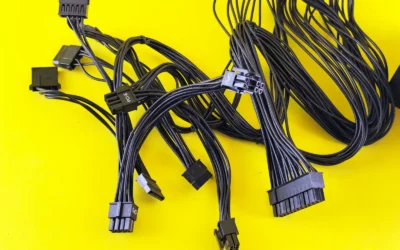
Build quality is a clear strength, with 100 percent Japanese 105C rated capacitors and a 140mm fluid dynamic bearing fan for quiet cooling. The fully modular design and ultra flexible embossed cables with low profile combs make installation cleaner, improve airflow and reduce clutter.
There are a few tradeoffs to consider. Some users note the fan becomes noticeable when it ramps up under heavy load, and the ATX form factor is not ideal for compact small form factor builds. It also sits at a higher price point than non modular or older standard units.
Overall the RM850x stands out as a reliable, future ready choice that balances efficiency, quiet operation and ease of installation. Backed by a ten year warranty, it is a smart long term investment for gamers and enthusiasts who want clean power and room to upgrade.
Output: 850W, ATX Form Factor, Fully Modular Design
Efficiency: Cybenetics Gold Certified, up to 91 percent efficiency
Standard: ATX 3.1 Compliant, PCIe 5.1 Ready with Native 12V-2x6 Connector
Cooling: 140mm FDB Fan with Low Noise Operation, Single Fan Design
Capacitors: 100 percent Japanese 105C Rated Electrolytic Capacitors
Dimensions: 5.91 x 3.39 x 2.3 inches, Weight 3.9 pounds
Warranty: 10 Year Manufacturer Warranty, Model CP-9020270-NA/AM
Pros
- Extremely quiet operation even under demanding loads
- Excellent power stability with support for high transient GPU spikes
- Native support for both next gen PCIe 5.1 and current gen GPUs
- High Gold efficiency reduces heat and energy consumption
- Strong build quality backed by a 10 year warranty
Cons
- Non-modular design makes cable management more difficult in compact cases
- Large ATX form factor requires a spacious chassis
- Lacks full modularity found on some competing 850W units
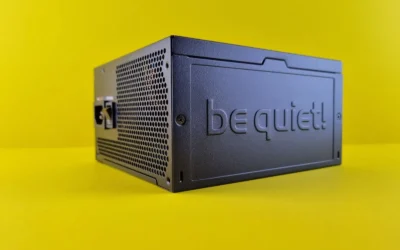
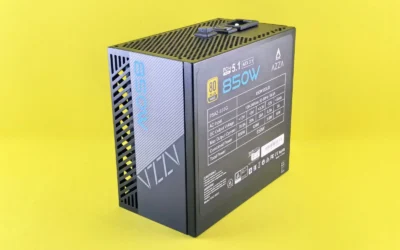
The be quiet! Pure Power 12 850W is an ATX 3.1 power supply built for modern gaming PCs and quiet workstation builds. With 850W of continuous power and next gen GPU support, it is ideal for users planning a build around RTX 40 or 50 series cards or future upgrades.
Its 80 PLUS Gold certification delivers up to 92.7 percent efficiency for lower heat, lower energy waste and quieter operation. The powerful single 12V rail handles power excursions up to twice its rated power, while native 12V-2x6 and three PCIe 6+2 pin connectors ensure stable performance under heavy gaming and creation loads.
Build quality is a clear strength, with LLC topology for tight voltage regulation and a temperature controlled 120mm be quiet! fan with airflow optimized blades. The result is exceptionally quiet cooling that stays nearly inaudible at low to medium loads, living up to the brand name.
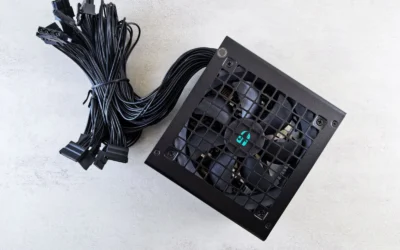
The main trade off is its non-modular design, which means all cables are permanently attached and can make cable management more challenging in compact cases. Its larger ATX form factor also requires a roomy chassis, and builders who want full modularity will need to look at a higher tier model.
Overall, the Pure Power 12 850W offers excellent efficiency, future ready connectivity and class leading silence backed by a 10 year warranty. It is a smart, reliable choice for gamers and creators who value stability and quiet operation over modular convenience.
Model: be quiet! Pure Power 12 850W BP004US
Output: 850W Continuous Power, Single Massive 12V Rail
Efficiency: 80 PLUS Gold, up to 92.7 percent
Standard: ATX 3.1, PCIe 5.1 Ready
GPU Connectors: 1x Native 12V-2x6, 3x PCIe 6+2 pin
Topology: LLC for superior voltage regulation
Cooling: 1x 120mm Temperature Controlled Silent Fan, Air Cooled
Design: Non-Modular, ATX Form Factor
Dimensions: 5.12 x 7.87 x 12.6 inches
Warranty: 10 Year Manufacturer Warranty
Matching a Part to Your Build
Scenario 1: Quiet 1440p gaming build in a mid tower with an RTX 5070. You want low noise at long gaming sessions and clean cable routing. The be quiet! Pure Power 12 850W PSU | 80 Plus Gold is a strong illustration here, with its 80 PLUS Gold rating for up to 92.7% efficiency, ATX 3.1 and PCIe 5.1 support with a native 12V-2×6 connector plus three PCIe 6+2 pin connectors, a single massive 12V rail, LLC topology for voltage regulation, and a temperature controlled 120mm fan tuned for quiet operation. It also handles power excursions up to double its rated power, which aligns with ATX 3.1 expectations for transient loads. This type of unit suits you if quiet operation and versatile GPU support are priorities and you want 850W of continuous power without stepping to a higher end pick.
Scenario 2: Premium build where cable flexibility and low noise are top priorities. If you value fully modular convenience and flexible cables for a tight or showcase case, the CORSAIR RM850x ATX 3.1 PCIe 5.1 Ready Fully is a useful example. It is Cybenetics Gold certified for up to 91% efficiency, ATX 3.1 compliant with PCIe 5.1 support, offers a native 12V-2×6 connector, and uses fully modular ultra flexible embossed cables with low profile combs to simplify routing. Owners commonly report that this class of unit runs quietly and stays cool under gaming loads. Choose this direction if you want the more premium choice for ease of building and a refined cable experience, and you are comfortable with the higher end pick in the 850W class.
Scenario 3: Upgrade focused build where you may keep the PSU through a GPU change. If you plan to carry your PSU into a next generation GPU, prioritize ATX 3.1 and PCIe 5.1 with native 12V-2×6 on both example units, plus extra PCIe connectors for flexibility. Either 850W example gives you headroom for an RTX 5070 today while leaving margin for a more power hungry card later, provided you stay within the combined CPU and GPU guidance and do not exceed the continuous rating. If your current case is small or has limited PSU length, double check dimensions and cable bend radius before you commit, and favor the unit whose cable set and fan profile best match your case airflow.
Common Mistakes
Buying too little headroom. A common error is matching PSU wattage exactly to average gaming draw and forgetting about transient spikes and future upgrades. Even if your system posts, running close to the limit can mean more heat, more fan noise and less stability under load. Size for continuous power with margin, follow the GPU maker recommendation, and remember that an 850W unit is chosen for headroom, not because every build needs all 850W all the time.
Ignoring connector and standard mismatches. Another pitfall is buying a PSU without native 12V-2×6 support for a PCIe 5.1 GPU and then relying on adapters or the wrong cable. Check that the PSU is ATX 3.1 and PCIe 5.1 ready and that it includes the native connector you need, plus the PCIe 6+2 pins if you want backward compatibility. Also verify cable length and flexibility for your case, so you are not forced into tight bends at the GPU socket.
Overlooking efficiency, noise and fit. Shoppers sometimes chase wattage alone and ignore efficiency tier, fan behavior and physical fit. A Gold rated unit with a temperature controlled 120mm fan will often be quieter than a less efficient unit working harder, and fully modular flexible cables can be the difference between clean airflow and a cramped build. Always check PSU length against your case spec, confirm fan intake is not blocked, and follow manufacturer instructions for installation with proper anti static precautions.
Who Should Wait or Buy Differently
An 850W ATX 3.1 PSU is not ideal for every RTX 5070 shopper. If you are building a compact small form factor system with strict length limits, a standard ATX 850W unit may not be the right choice and you should look at SFX or SFX-L options that fit your case. It is also not a good fit if your overall platform is much lower power and you have no plans to upgrade, where a quality 750W unit with the same ATX 3.1 and PCIe 5.1 features could be more appropriate, or if you are planning a significantly higher power GPU and CPU combo where you should size up and recheck the GPU maker guidance before you buy. When in doubt, wait until you have finalized your CPU, GPU model and case, then match the PSU to that exact list.
Frequently Asked Questions
Is 850W enough for an RTX 5070 gaming build?
For most RTX 5070 builds with a modern mainstream or high end CPU, 850W provides comfortable headroom over typical gaming loads and covers transient spikes when the PSU is ATX 3.1 compliant. You should still add your specific CPU and GPU peak draws, include fans and storage, and follow the GPU maker recommended wattage for your exact card model rather than assuming any 850W will do.
Do I need ATX 3.1 and a native 12V-2×6 connector for an RTX 5070?
It is highly recommended. ATX 3.1 with PCIe 5.1 is designed to handle power excursions and resist shutdowns during rapid load changes, and a native 12V-2×6 lets you connect the GPU directly without an adapter. Both example units in this guide offer ATX 3.1, PCIe 5.1 and a native 12V-2×6, with one also providing three PCIe 6+2 pin connectors for added versatility.
Which 850W option is quieter for a living room PC?
Noise depends on efficiency, fan design and case airflow. The be quiet! Pure Power 12 850W PSU | 80 Plus Gold is tuned for quiet operation with a temperature controlled 120mm fan and airflow optimized blades, and its up to 92.7% efficiency helps keep heat down. The CORSAIR RM850x ATX 3.1 PCIe 5.1 Ready Fully is also designed for low noise operation with Cybenetics Gold efficiency and flexible cables that can improve airflow, so choose based on which fan profile and cable set best fits your case and your sensitivity to noise.

Write Your Review
No reviews yet. Be the first to share your experience!