

If you are choosing between the GIGABYTE GeForce RTX 5060 WINDFORCE OC 8G Graphics and the ASUS Dual GeForce RTX 5060 Ti 16GB GDDR7 OC for RTX 5060 Ti 16GB vs RTX 5060 for 1440p gaming, you are deciding how much VRAM and thermal headroom you want from the same Blackwell generation. Both cards are built on NVIDIA Blackwell architecture with DLSS 4, yet they aim at different longevity and texture quality targets at 1440p.
That decision matters more at 1440p than at 1080p, because higher resolution textures, ray tracing, and future titles can push memory usage quickly. As of November 2026, many players want to know whether the 8GB option remains sensible for competitive and single player games, or if the 16GB option is the safer long term pick. Our Graphics Cards coverage evaluates these tradeoffs so you can match a card to your monitor, case, and platform without overspending.
This article contains affiliate links. If you buy through one of our links, CustomPCGaming may earn a commission at no extra cost to you. Commissions never influence which products we recommend or how we rank them. Read our Affiliate Disclosure for details.
Quick Picks at a Glance

GIGABYTE GeForce RTX 5060 WINDFORCE OC 8GB
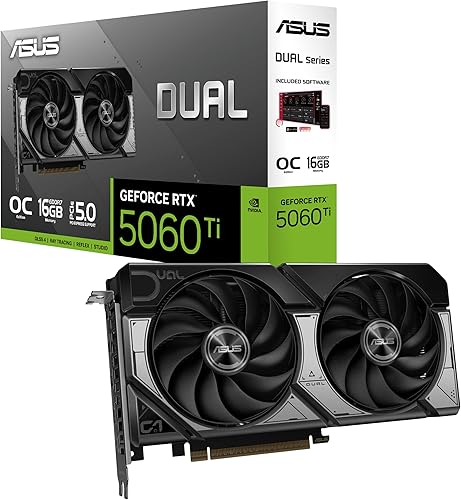
Prime ASUS Dual GeForce RTX 5060 Ti 16GB GDDR7 OC
As an Amazon Associate we earn from qualifying purchases. Product prices and availability are accurate as of the date/time indicated.
Pros
- Excellent 1080p and 1440p gaming performance with DLSS 4 and ray tracing
- Cool and quiet WINDFORCE dual fan thermal design even under load
- Compact and lightweight build for easy installation in smaller cases
- Future ready with GDDR7 memory and PCIe 5.0 support
- Factory overclocked for extra performance without manual tuning
Cons
- 8GB VRAM may require settings adjustments in demanding AAA titles and heavy creative apps
- 128-bit memory interface offers less bandwidth than higher tier RTX 50 series cards
- May require a clean driver install with DDU when upgrading from older GPUs
The GIGABYTE GeForce RTX 5060 WINDFORCE OC 8G is a Blackwell powered graphics card built for gamers and creators who want next generation performance without a flagship footprint. It is ideal for 1080p and 1440p gaming, esports competition, and AI accelerated creative work that benefits from ray tracing and DLSS.
In real world use it delivers smooth, high frame rates with DLSS 4 and enhanced RT and Tensor Cores, with users reporting over 250 FPS in competitive titles and strong results in Cyberpunk and DOOM. The 8GB of ultra fast GDDR7 memory clocked at 28000 MHz and a factory boost clock of 2512 MHz provide responsive gameplay and support for resolutions up to 7680x4320.
Build quality is a highlight thanks to the proven WINDFORCE dual fan cooling system. The compact 7.83 inch card weighs just 1.6 pounds, runs cool and quiet under load, and installs easily via PCIe 5.0 x16 with DisplayPort and HDMI outputs. The clean, sleek shroud fits well in most mid tower builds.
There are some limitations to consider. The 8GB VRAM and 128 bit bus handle most modern games well but can require texture or settings management in the most demanding AAA titles. A few users also reported driver conflicts when upgrading from older cards, so a clean install using Display Driver Uninstaller is recommended.
Overall, the RTX 5060 WINDFORCE OC is a compelling mainstream upgrade that balances efficiency, thermals, and modern features. If you want quiet operation, a compact size, and access to DLSS 4 for future proof gaming, this card is an excellent choice for most gaming desktops.
Model: GIGABYTE GV-N5060WF2OC-8GD, GeForce RTX 5060, NVIDIA Blackwell Architecture
Memory: 8GB GDDR7, 128-bit interface, 28000 MHz memory clock
Clock Speed: 2512 MHz boost clock, factory overclocked
Interface: PCI-Express 5.0 x16, DisplayPort and HDMI outputs, max resolution 7680x4320
Cooling and Size: WINDFORCE dual fan cooling system, 7.83 x 4.57 inches, 1.6 pounds, 2 fans
Compatibility: Desktop PCs, dedicated graphics, 3 year manufacturer warranty
Pros
- Large 16GB GDDR7 frame buffer is excellent for future gaming and creative workloads
- Compact 2.5-slot design fits small and mid-tower builds without sacrificing cooling
- Very quiet operation with 0dB tech and durable dual ball bearing Axial-tech fans
- Strong out-of-box performance with OC mode and DLSS 4 support
Cons
- 2.5-slot thickness may still be tight for ultra-compact mini-ITX cases
- Dual-fan cooler has less thermal headroom than larger triple-fan models for heavy overclocking
- Requires a desktop with PCIe x16 slot and adequate power supply
The ASUS Dual GeForce RTX 5060 Ti 16GB GDDR7 OC Edition is a compact, high-performance graphics card built on NVIDIA Blackwell architecture. It is designed for gamers and creators who want flagship-level features like DLSS 4 and 16GB GDDR7 in a smaller, more compatible form factor.
Real-world performance stands out with a boost clock up to 2632 MHz in OC mode and 767 AI TOPS for DLSS 4 upscaling and frame generation. The 16GB GDDR7 memory ensures smooth 1440p, capable 4K gaming and excellent handling of texture-heavy and AI workloads.
Build quality is a clear strength, with two Axial-tech fans that use a smaller hub, longer blades and a barrier ring to increase air pressure. Dual ball bearings last longer than sleeve designs, while 0dB technology keeps the card silent during light loads and Dual BIOS offers Quiet and Performance modes.
There are a few tradeoffs to consider. The 2.5-slot design is compact but not single-slot, so ultra-small cases may still struggle. As a dual-fan model, it will run warmer and offer less overclocking headroom than larger triple-fan cards.
Overall, the ASUS Dual RTX 5060 Ti 16GB OC is a smart pick for gamers who want powerful, future-proof performance without a huge card. It balances efficiency, acoustics and size exceptionally well, making it ideal for compact builds that still demand heavyweight graphics power.
Model: ASUS DUAL-RTX5060TI-O16G, NVIDIA GeForce RTX 5060 Ti, Blackwell architecture
Memory: 16GB GDDR7, 2632 MHz boost clock in OC mode, 2602 MHz default
Interface and Outputs: PCI-Express x16, 3x DisplayPort 2.1b, 1x HDMI 2.1b, max resolution 7680x4320
Cooling and Design: Dual Axial-tech fans, dual ball bearings, 0dB technology, Dual BIOS, 2.5-slot, 9 x 4.7 inches, 0.66 kg
Features: DLSS 4, 767 AI TOPS, compact compatibility for small chassis, 3-year warranty
How They Compare
VRAM Capacity and Memory Subsystem
The clearest difference is memory. The GIGABYTE GeForce RTX 5060 WINDFORCE OC 8G Graphics ships with 8GB of GDDR7 on a 128-bit memory interface, while the ASUS Dual GeForce RTX 5060 Ti 16GB GDDR7 OC doubles that to 16GB of GDDR7. At 1440p, that extra capacity gives you more room for ultra textures, mods, and creative workloads that keep large assets resident, which owners commonly report helps reduce stutter when games exceed 8GB.
For many current 1440p titles at high settings, 8GB remains workable if you are willing to tune texture quality or shadow detail. If you plan to keep the card for several years, play heavily modded games, or run AI assisted features that benefit from larger memory pools, the 16GB ASUS model provides a more comfortable buffer. If you want to see where a step up lands, our top RTX 5070 ti cards for 1440p gaming overview shows how higher tier memory and bandwidth scale at the same resolution.
Architecture, Clock Speeds and AI Features
Both cards are powered by the NVIDIA Blackwell architecture and support DLSS 4, so you get the same generation of ray tracing, AI acceleration, and upscaling features on either choice. Per the spec sheet, the ASUS Dual GeForce RTX 5060 Ti 16GB GDDR7 OC lists an OC mode of 2632 MHz and a default mode of 2602 MHz, which points to a factory tuned boost profile. The GIGABYTE GeForce RTX 5060 WINDFORCE OC 8G Graphics is also an OC model in the WINDFORCE family, but no specific boost clock is listed in the data provided, so we assess it qualitatively as a tuned 5060 rather than by direct megahertz comparison.
The ASUS card also lists AI Performance of 767 AI TOPS, which reflects its throughput for AI driven tasks and DLSS related workloads. While both cards accelerate AI features, that figure highlights why the 16GB model is often favored by players who also do stable diffusion, video enhancement, or other local AI work alongside gaming. For pure raster gaming at 1440p, the Ti tier is positioned above the non Ti tier, but your monitor refresh rate and settings will determine how noticeable that gap feels day to day.
Cooling System and Physical Footprint
Cooling design is where these two diverge in philosophy. The GIGABYTE GeForce RTX 5060 WINDFORCE OC 8G Graphics uses the WINDFORCE cooling system, which is designed to move heat efficiently while keeping noise controlled under load. The ASUS Dual GeForce RTX 5060 Ti 16GB GDDR7 OC uses two Axial-tech fans with a smaller hub for longer blades and a barrier ring to increase downward air pressure, plus 0dB technology that lets the fans stop during light loads for quieter operation.
Size and case fit also matter. The ASUS model is described as a 2.5-slot design that maximizes compatibility and cooling efficiency in small chassis, with dual ball fan bearings rated to last up to twice as long as sleeve bearing designs and a Dual BIOS switch for Quiet and Performance profiles. That makes it friendly for compact builds that still want strong cooling. The GIGABYTE card does not list a slot width in the provided data, so you should check your case GPU clearance, PCIe slot spacing, and airflow before you buy. If you are planning a compact or budget oriented build, our Budget Build Guides can help you balance cooler size, case choice, and fan layout.
Power Delivery, PCIe Interface and System Fit
On platform fit, the GIGABYTE GeForce RTX 5060 WINDFORCE OC 8G Graphics lists PCIe 5.0 support, which aligns with current motherboards and helps ensure full bandwidth on modern platforms. The ASUS Dual GeForce RTX 5060 Ti 16GB GDDR7 OC does not list a PCIe version in the data provided, but as a Blackwell card it is designed for current PCIe slots, so either card should seat cleanly in a modern ATX or micro ATX board. For both, follow the GPU maker recommended PSU wattage, leave headroom over your combined CPU and GPU draw, and use the correct PCIe power connectors from your power supply rather than adapters where possible.
We also recommend you verify your power supply age, cable availability, and case ventilation before you finalize either card. Neither card is described with a specific total board power in the data provided, so we avoid assigning wattage numbers and instead advise a conservative approach: choose a reputable PSU with headroom, route cables for clear airflow, and follow manufacturer mounting instructions with anti-static handling. If you are reusing an older PSU or building on a tight budget, see how other builders balanced CPU and GPU choices in our ryzen 5 7600 RX 7700 XT 1000 dollar gaming PC amazon build for context on system balance.
Which One Should You Get
Choose GIGABYTE GeForce RTX 5060 WINDFORCE OC 8G Graphics if your focus is value at 1440p with sensible settings tuning. You get Blackwell and DLSS 4, WINDFORCE cooling, and PCIe 5.0 in a package that keeps cost lower as the more accessible pick. This is a strong match if you play competitive shooters, esports titles, or single player games where you are comfortable keeping textures at high rather than ultra, and you want to allocate budget to a better CPU, monitor, or SSD. It also suits smaller power budgets where you want modern features without paying the premium for extra VRAM you may not use immediately.
Choose ASUS Dual GeForce RTX 5060 Ti 16GB GDDR7 OC if you want more headroom for 1440p ultra textures, future titles, and heavier multitasking. The 16GB GDDR7 frame buffer, listed OC mode of 2632 MHz and default of 2602 MHz, and 767 AI TOPS give you a higher tier within the 5060 family, while the 2.5-slot Axial-tech cooler with 0dB technology, Dual BIOS, and dual ball bearings adds flexibility for quiet or performance oriented builds. This is the more premium choice for players who keep cards for several years, run texture heavy games, or use local AI and creation apps alongside gaming and want fewer compromises at 1440p.
Who Should Skip Both
Both cards are not ideal for players targeting 4K ultra at high refresh rates or for compact low airflow cases with limited GPU clearance and an older, low wattage PSU. If you need 4K 120Hz with maxed ray tracing, you are not a good fit for this tier and should consider a higher class GPU and a PSU with proper headroom. Likewise, if you are building a strict entry level 1080p system on a tight budget, neither card is the right choice compared to a more affordable 1080p focused option that leaves room for a balanced CPU and memory.
Frequently Asked Questions
Is 8GB enough for 1440p gaming or do I need the RTX 5060 Ti 16GB?
For many current games at 1440p, 8GB is workable when you tune textures and keep drivers updated, and owners commonly report smooth play at high settings. The ASUS Dual GeForce RTX 5060 Ti 16GB GDDR7 OC with 16GB GDDR7 provides more headroom for ultra textures, mods, and future titles, so it is the safer pick if you want to avoid lowering texture quality over the next few years.
What is the difference between the GIGABYTE RTX 5060 WINDFORCE OC and the ASUS Dual RTX 5060 Ti OC at 1440p?
The GIGABYTE GeForce RTX 5060 WINDFORCE OC 8G Graphics offers 8GB GDDR7 on a 128-bit interface with WINDFORCE cooling and PCIe 5.0, positioned as the more accessible Blackwell option. The ASUS Dual GeForce RTX 5060 Ti 16GB GDDR7 OC steps up to 16GB GDDR7, lists an OC mode of 2632 MHz and 767 AI TOPS, and adds a 2.5-slot Axial-tech cooler with 0dB technology and Dual BIOS for quiet or performance operation.
Will these cards fit in a small case and what should I check before buying?
The ASUS Dual GeForce RTX 5060 Ti 16GB GDDR7 OC is listed as a 2.5-slot design built for better compatibility in small chassis, which helps in compact builds. For either card, check your case GPU length and slot clearance, confirm you have the required PCIe power cables and PSU headroom per the GPU maker guidance, and follow manufacturer instructions with anti-static precautions during installation.




Write Your Review
No reviews yet. Be the first to share your experience!