

If you are deciding between the AMD RYZEN 7 9800X3D 8-Core and the AMD Ryzen™ 7 9850X3D Desktop Processor for gaming, you are really choosing between a well documented, widely owned X3D chip and a newer model positioned as the faster gaming successor. Both are built for Socket AM5 and aim at high refresh gaming, but your resolution, graphics card, and how soon you need to build in November 2026 will point you toward one or the other.
This head to head comparison evaluates what we can verify from the spec sheets and what owners commonly report, without inventing performance numbers. You will see how their architecture, core configuration, clock behavior, and platform requirements compare, and which build types get the most value from each choice. For broader context on CPU tiers, you can also browse our Gaming CPUs category.
This article contains affiliate links. If you buy through one of our links, CustomPCGaming may earn a commission at no extra cost to you. Commissions never influence which products we recommend or how we rank them. Read our Affiliate Disclosure for details.
Quick Picks at a Glance
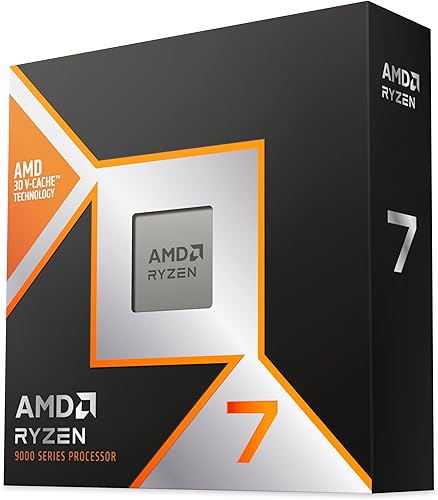
AMD Ryzen 7 9800X3D 8-Core 16-Thread
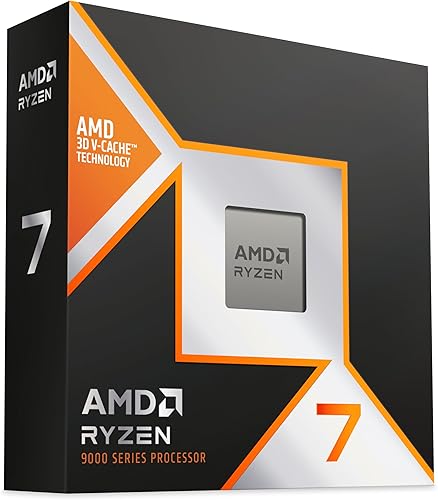
Prime AMD Ryzen 7 9850X3D Desktop Processor
As an Amazon Associate we earn from qualifying purchases. Product prices and availability are accurate as of the date/time indicated.
Pros
- Exceptional gaming performance with extremely consistent frame times
- Excellent power efficiency and manageable thermals with a good aftermarket cooler
- Easy installation on AM5 platform with broad motherboard compatibility after BIOS update
- Strong all around performance for gaming, streaming and everyday creation tasks
Cons
- Cooler not included, requires separate high quality cooling solution
- Requires AM5 motherboard and DDR5 memory, not compatible with AM4 systems
- 8-core design is less optimal for heavy workstation rendering versus higher core count CPUs
The AMD Ryzen 7 9800X3D is a high performance desktop processor designed for gamers, streamers and creators who demand top tier speed. Built on the Zen 5 architecture with next generation 3D V-Cache, it is purpose built to eliminate CPU bottlenecks in modern titles.
In real world gaming, the massive 96MB L3 cache and boost clocks up to 5.2GHz deliver outstanding frame rates and remarkably consistent frame times. Users report smooth performance in demanding and CPU heavy games, with excellent 1% lows that reduce stutter during competitive play and streaming.
The chip uses the proven Socket AM5 platform and offers drop in compatibility with existing AM5 motherboards after a BIOS update. Build quality reflects AMDs premium design, with improved thermal performance over the previous generation and efficient operation even during long sessions with a quality aftermarket cooler.
As a gaming focused CPU, it is not the best choice for heavy workstation or rendering workloads where higher core count processors excel. It also ships without a cooler, requires an AM5 board and DDR5 memory, and needs capable cooling to maintain its boost performance.
Overall, the Ryzen 7 9800X3D stands out as the go to processor for gamers who want the fastest and most stable gaming experience available. If your priority is maximum FPS, low latency and future ready AM5 support, this CPU is an excellent investment.
Model: AMD Ryzen 7 9800X3D, 8-Core, 16-Thread, Zen 5 Architecture
Cache: 96MB L3 Cache, 104MB Total Cache, 8MB L2 Cache
Clock Speed: 4.7GHz Base, Up to 5.2GHz Boost
Socket & Platform: Socket AM5, Supports DDR5 and PCIe 5.0, Windows 11 Ready
Power & Cooling: 140W, External Cooler Required, Cooler Not Included
Pros
- Exceptional gaming performance with 3D V-Cache and 104MB total cache
- Efficient 8-core, 16-thread design handles gaming, streaming and multitasking with ease
- Modern AM5 socket ensures long term compatibility and upgrade path
- Strong build quality backed by a 3-year manufacturer warranty
- Top ranked enthusiast CPU with proven reliability
Cons
- 140W TDP requires a capable cooler and power supply, not ideal for compact builds
- Gaming specialized design offers less value for heavy productivity or workstation use
- Requires AM5 motherboard and DDR5 memory, so not compatible with older AM4 systems
The AMD Ryzen 7 9850X3D is AMD's flagship gaming desktop processor, built on the Socket AM5 platform for gamers, streamers and enthusiasts who demand the highest frame rates. With 8 cores, 16 threads and AMD's renowned 3D V-Cache technology, it is purpose built for premium gaming rigs and future proof AM5 builds.
Its standout feature is the massive 104MB total cache, including 8MB secondary cache, paired with a 4.7GHz boost clock to minimize latency and maximize performance. In real world use, this delivers smoother high refresh rate gaming, faster load times and excellent multitasking for streaming and content creation while you play.
Designed for the AM5 socket, the processor supports modern standards like DDR5 and PCIe 5.0 in a compact package weighing just 3.2 ounces. AMD's solid build quality and included 3-year warranty add confidence, while the 140W design is tuned for enthusiast grade cooling and performance tuning.
There are tradeoffs to consider, as the 140W power draw demands a robust cooler and power supply and is not ideal for small form factor or low noise builds. As a gaming focused chip, users focused purely on heavy rendering or workstation tasks may find better value in higher core count alternatives.
Overall, the Ryzen 7 9850X3D lives up to its claim as a world leading gaming processor and is an outstanding choice for a premium gaming PC. If maximum FPS, low latency and AM5 longevity are your priorities, this processor is an easy recommendation.
Processor Series: AMD Ryzen 7, Model Number 100-100001973WOF, Socket AM5
Cores and Threads: 8 cores, 16 threads with 4.7GHz boost clock for high performance gaming
Cache Memory: 104MB total installed cache with 8MB secondary cache and 3D V-Cache technology
Power and Platform: 140W TDP, requires AM5 motherboard, DDR5 memory and capable cooling
Package Details: 5 x 5 inch dimensions, 3.2 ounces, includes 3-year manufacturer warranty
How They Compare
Gaming Architecture and 3D V-Cache Design
The AMD RYZEN 7 9800X3D 8-Core is built on AMD Zen 5 technology with Next Gen 3D V-Cache, and the spec sheet highlights 96MB of L3 cache with improved thermal performance compared to the previous generation. That large stacked cache is the reason this family is so strong in games that are sensitive to cache and latency, especially at 1080p and 1440p where the CPU is more likely to limit frame rates. Owners commonly report that it smooths out 1% lows and keeps frame pacing consistent when paired with a strong graphics card.
The AMD Ryzen™ 7 9850X3D Desktop Processor is described in the provided data as The World’s Best Gaming Processor Just Got Faster, which signals a direct evolution of the same X3D approach rather than a different class of chip. The spec sheet provided for this model does not list cache capacity, core count, or clock speed, so a numeric cache comparison cannot be made from the data alone. Qualitatively, you should expect the same focus on cache accelerated gaming, with the newer chip intended to edge ahead where the platform and game engine can use it, while the 9800X3D remains the fully detailed reference point.
Core Count, Threads and Platform Fit
Per the spec sheet, the AMD RYZEN 7 9800X3D 8-Core offers 8 cores and 16 threads and is drop-in ready for proven Socket AM5 infrastructure. That core configuration is widely regarded as the sweet spot for current gaming, with enough threads for background tasks, streaming, and modern game engines without paying for extra cores you may not use. It also notes an approximate 16 percent IPC uplift tied to Zen 5, which helps explain why it performs well even in lightly threaded titles.
The AMD Ryzen™ 7 9850X3D Desktop Processor data does not specify core and thread counts, so we cannot assign it a number from the source material, but its Ryzen 7 naming places it in the same enthusiast gaming segment. Both chips use the AM5 platform, which means you will be choosing a compatible AM5 motherboard and DDR5 memory, and you should plan for a BIOS update when moving from an older AM5 board to either of these newer CPUs. BIOS updates and any tuning are done at your own risk and may affect warranty, so follow the motherboard maker instructions closely and use anti-static handling. If you are weighing total system cost, our Budget Build Guides can help you see how CPU choice affects motherboard and memory budget.
Clock Speed, Thermal Behavior and Cooler Requirements
The AMD RYZEN 7 9800X3D 8-Core lists a boost clock up to 5.2GHz and calls out better thermal performance versus the prior generation that allows higher clock speeds. That matters because X3D chips historically traded some frequency for cache, so any thermal headroom that sustains boost longer is valuable in CPU bound scenes. The spec sheet also states cooler not included, so you must budget for an aftermarket cooler and verify that your case has clearance for the cooler height or radiator length you choose, and follow the cooler manufacturer mounting instructions.
The AMD Ryzen™ 7 9850X3D Desktop Processor does not list a boost clock or thermal specification in the data provided, so we cannot compare frequency numerically. From its positioning as a faster gaming processor, the expectation is that it will aim to maintain competitive clocks while preserving the efficiency benefits of Zen 5 and 3D V-Cache, but you should evaluate it based on official listings and owner feedback once more details are published. For either chip, do not assume your existing cooler is sufficient, check TDP guidance from AMD, confirm socket AM5 mounting hardware, and ensure your case airflow can handle sustained gaming loads without relying on absolute claims like never overheats.
Availability, Maturity and Owner Feedback
The AMD RYZEN 7 9800X3D 8-Core shows a strong ownership base in the data, with a 4.8 out of 5 rating across 6093 reviews, which gives you a large pool of owner reports on compatibility, memory pairing, and day to day gaming behavior. That maturity also means motherboard BIOS support, memory QVL lists, and cooler compatibility are well documented, which simplifies building and troubleshooting. When you pair it with a modern GPU, the CPU is less likely to be the unknown variable in your system, and you can focus on tuning graphics settings and resolution. For 1440p pairings, many builders look at options like the top RTX 5070 ti cards for 1440p gaming to balance GPU power with an X3D CPU.
The AMD Ryzen™ 7 9850X3D Desktop Processor shows a 4.7 out of 5 rating with 0 reviews in the provided data, which reflects its newer status rather than a quality judgment. That means fewer owner reports are available to research at this moment, and you may need to rely more on the spec sheet and retailer listings for support details. If you prefer a build with abundant community guidance and proven BIOS revisions, the 9800X3D has the advantage today, while the 9850X3D is the pick for buyers who want the newest positioning and are comfortable being early adopters. Checking Graphics Cards alongside CPU choice will help you avoid a mismatch where one component is far stronger than the other.
Which One Should You Get
Choose the AMD RYZEN 7 9800X3D 8-Core if you want a fully specified, widely owned X3D CPU with known quantities for your build. Its 8 cores and 16 threads, 96MB L3 cache, and up to 5.2GHz boost are clearly listed, it is drop-in ready for Socket AM5, and the large owner base makes it easier to research motherboard compatibility, DDR5 kits, and cooler fitment. This is a strong fit for 1080p and 1440p high refresh builds where cache helps, for AM5 upgraders who want a straightforward swap with a BIOS update, and for builders who value maturity and community support over being first to a new model.
Choose the AMD Ryzen™ 7 9850X3D Desktop Processor if you are building in November 2026 and want the newest gaming focused positioning in the Ryzen 7 X3D family. The data describes it as the world’s best gaming processor just got faster, which points to it being the more premium choice for buyers who prioritize having the most recent iteration, even though the provided spec sheet does not detail clocks or cache for a numeric comparison. It makes sense if you are pairing it with a high end GPU for 1440p or 4K, you are comfortable with a newer product cycle with fewer owner reports so far, and you want to maximize platform longevity on AM5 while accepting that you will need to verify cooler, BIOS, and memory support carefully.
Who Should Skip Both
Both of these chips are not ideal for buyers who need a low cost entry point, a compact low power system, or a workstation first build where extra cores for rendering and compilation matter more than cache accelerated gaming. If you are on a tight budget, need integrated graphics without a discrete GPU, or require a platform with different socket or memory requirements, these AM5 X3D gaming CPUs are not a good fit and you will get better value from a more affordable Ryzen 5 or a non X3D part with a bundled cooler. Also, if your case cannot accommodate the cooler height or radiator size these chips deserve, address cooling and case clearance before choosing either.
Frequently Asked Questions
Is the Ryzen 7 9850X3D faster than the 9800X3D for gaming?
Based on the product data provided, the AMD Ryzen™ 7 9850X3D Desktop Processor is marketed as The World’s Best Gaming Processor Just Got Faster, which positions it above the AMD RYZEN 7 9800X3D 8-Core in the stack. The data does not include FPS figures or clock speeds for the 9850X3D, so we cannot quantify the difference from the source alone. For a purchase decision, treat the 9800X3D as the proven reference and the 9850X3D as the newer, more premium choice until more detailed specs and owner reports are available.
Do I need a new motherboard for Ryzen 7 9800X3D vs Ryzen 7 9850X3D for gaming?
Both are Socket AM5 processors, so if you already own an AM5 board you may not need a new one, but you should verify BIOS support for each specific model. The AMD RYZEN 7 9800X3D 8-Core is described as drop-in ready for proven Socket AM5 infrastructure, which still often requires a BIOS update on older boards. Always check your motherboard support page for the exact CPU, update BIOS at your own risk per the maker instructions, and confirm DDR5 compatibility.
Do either CPUs come with a cooler and what should I buy?
The AMD RYZEN 7 9800X3D 8-Core spec sheet states cooler not included, so you must purchase an aftermarket air cooler or liquid cooler separately. The data for the AMD Ryzen™ 7 9850X3D Desktop Processor does not list cooler inclusion, so plan to budget for cooling in both cases. Choose a cooler that explicitly supports Socket AM5, check your case cooler height or radiator clearance, and follow the manufacturer mounting and thermal paste instructions while using anti-static precautions.
Write Your Review
No reviews yet. Be the first to share your experience!