

If you are deciding between the
If you are deciding between the Gaming CPUs stalwarts AMD Ryzen 5 5600 6-Core, 12-Thread Unlocked and AMD Ryzen 5 5500 6-Core, 12-Thread Unlocked for a Socket AM4 build, you are looking at two very similar 6-core, 12-thread processors with different platform positioning. Both ship with the AMD Wraith Stealth cooler, both are unlocked for overclocking, and both target affordable gaming PCs, so your choice hinges on cache and boost behavior, PCIe and memory support, and how you plan to pair your graphics card and resolution.
This head-to-head evaluates Ryzen 5 5600 vs Ryzen 5 5500 for gaming on the axes that actually change your experience, from thread count and listed cache to discrete graphics requirements and cooler fit. You will get a clear recommendation for 1080p high refresh versus 1440p, plus guidance on motherboard compatibility and upgrade paths as of November 2026. We researched spec sheets and owner feedback to help you match the CPU to your GPU without overspending or leaving performance on the table.
This article contains affiliate links. If you buy through one of our links, CustomPCGaming may earn a commission at no extra cost to you. Commissions never influence which products we recommend or how we rank them. Read our Affiliate Disclosure for details.
Quick Picks at a Glance
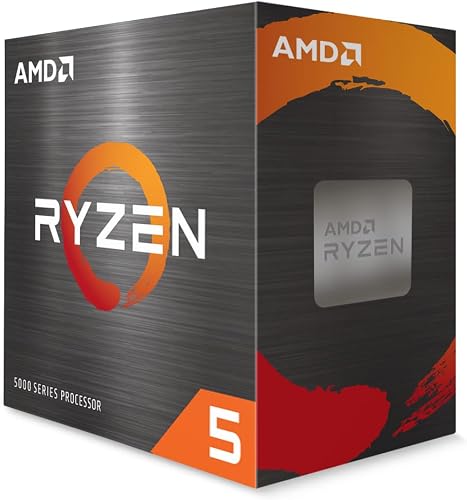
AMD Ryzen 5 5600 6-Core 12-Thread Unlocked Desktop
Prime AMD Ryzen 5 5500 6-Core 12-Thread Desktop
As an Amazon Associate we earn from qualifying purchases. Product prices and availability are accurate as of the date/time indicated.
Pros
- Outstanding price to performance ratio for gaming and multitasking
- Runs cool and stable even under moderate to heavy workloads
- Easy drop-in upgrade for existing AM4 systems with DDR4 memory
- Unlocked multiplier provides useful overclocking headroom
- Strong single core speed for responsive gameplay
Cons
- Stock Wraith Stealth cooler can get noisy under load, aftermarket cooler recommended for overclocking
- Limited to AM4 platform, not compatible with newer AM5 and DDR5 systems
- Reports of inconsistent retail packaging and potential for bent pins during shipping
The AMD Ryzen 5 5600 is a 6-core, 12-thread unlocked desktop processor designed for gamers and everyday creators on the AM4 platform. It is perfect for building a capable 1080p or 1440p system or upgrading from an older Ryzen 2000 or 3000 series CPU.
In real world use it delivers fast, responsive gaming and smooth multitasking thanks to its 4.4GHz boost clock and large 35MB cache. Users report stable temperatures and consistent performance during gaming and productivity, with extra headroom for overclocking when paired with a B550 motherboard.
Design is compact and efficient with a 65 watt TDP and simple installation on Socket AM4. The included Wraith Stealth Cooler provides adequate cooling for stock operation and makes it a complete out of the box solution for budget conscious builders.
Drawbacks include noticeable fan noise from the stock cooler under heavy loads and being limited to the older AM4 and DDR4 ecosystem. Some buyers have also noted damaged packaging on delivery, so it is wise to inspect pins carefully before installation.
Overall, the Ryzen 5 5600 remains one of the best value processors for the AM4 platform, offering modern gaming performance, efficiency and unlocked flexibility. For anyone wanting a reliable and affordable upgrade without changing platforms, it is an outstanding choice.
Processor: AMD Ryzen 5 5600, 6 Cores, 12 Threads, up to 4.4GHz Boost Clock
Platform: Socket AM4, 65W TDP, Unlocked for Overclocking, Windows Compatible
Cache: 35MB Total Cache Memory, 32MB L3 Secondary Cache
Cooler and Package: Wraith Stealth Cooler Included, Model 100-100000927BOX
Warranty: 3 Year Manufacturer Warranty, Dimensions 1.57 x 1.57 inches
Pros
- Excellent value for 6-core, 12-thread unlocked performance
- Up to 4.2GHz boost with overclocking support
- Comes with Wraith Stealth cooler included
- Efficient 65W power design runs cool and quiet
- Wide compatibility with AM4 motherboards and DDR4 memory
Cons
- Requires a discrete graphics card, no integrated graphics
- Limited to AM4 and DDR4, no support for AM5 or DDR5
- Stock cooler can get loud under sustained heavy loads
The AMD Ryzen 5 5500 is a 6-core, 12-thread unlocked desktop processor for Socket AM4, designed for budget gamers and value focused builders. It is a smart choice for anyone on the AM4 platform who wants modern gaming performance without switching to a more expensive ecosystem.
In real world use it feels fast and responsive thanks to its 4.2GHz max boost, 19MB cache and DDR4-3200 support. When paired with a discrete graphics card it delivers 100+ FPS in popular competitive games and handles streaming, multitasking and everyday productivity with ease.
Design is compact and efficient, with a 65 watt profile that keeps heat and power consumption low. The bundled Wraith Stealth cooler offers capable air cooling out of the box, so most users will not need an aftermarket cooler and can keep their build simple and quiet.
There are some limitations to note. It does not include integrated graphics, so a dedicated GPU is required for any display output. It is also locked to the AM4 and DDR4 platform, which means no upgrade path to AM5 or DDR5 for future builds.
Overall the Ryzen 5 5500 is one of the best value picks for AM4 gaming systems. If you want affordable, overclockable performance with proven compatibility and efficient operation, it delivers excellent results for the cost.
Series: Ryzen 5 5500 | Cores / Threads: 6 cores, 12 threads | Max Boost: Up to 4.2GHz | Socket: AM4
Cache: 19MB total cache, 16MB L3 | Memory Support: DDR4-3200 | TDP: 65 watts | Cooling: Wraith Stealth air cooler included
Unlocked: Yes, for overclocking | Graphics: Discrete GPU required | Warranty: 3 Year manufacturer warranty
Choose the Ryzen 5 5500 if you already own an AM4 motherboard and want a cost effective gaming upgrade. It is perfect for 1080p gaming, esports titles and general multitasking when paired with a mid range graphics card.
Make sure your motherboard BIOS supports Ryzen 5000 series and that you have a discrete GPU, since this processor has no integrated graphics. For new builds that require DDR5 or PCIe 5.0, consider an AM5 alternative instead.
How They Compare
Core Count, Threads and Gaming Positioning
Both the AMD Ryzen 5 5600 6-Core, 12-Thread Unlocked and the AMD Ryzen 5 5500 6-Core, 12-Thread Unlocked offer 6 cores and 12 processing threads, which remains the sweet spot for modern gaming and light multitasking. In practice, that means you can run competitive shooters, open world titles, and background apps like voice chat and a browser without giving up responsiveness, and either chip is a sensible foundation for a budget to midrange build.
Where they diverge is how they are positioned per the spec sheet. The AMD Ryzen 5 5600 6-Core, 12-Thread Unlocked is described as having the fastest cores in the world for PC gamers and is framed as a premium AM4 gaming choice, while the AMD Ryzen 5 5500 6-Core, 12-Thread Unlocked is described as able to deliver fast 100 plus FPS performance in the world’s most popular games when paired with a discrete graphics card. If you are chasing high refresh 1080p with a capable GPU, the 5600 is the higher-end pick, while the 5500 is positioned as the more value focused option for similar thread count.
Boost Clock, Cache and Memory Support
On paper, the AMD Ryzen 5 5500 6-Core, 12-Thread Unlocked lists a 4.2 GHz Max Boost, 19 MB cache, and DDR4-3200 support, which gives you concrete expectations for single thread bursts, game asset handling, and memory pairing. The AMD Ryzen 5 5600 6-Core, 12-Thread Unlocked does not list a specific boost clock, cache size, or memory speed in the provided data, so you should evaluate it on its qualitative positioning and owner feedback rather than assuming numbers that are not shown.
For your build, that distinction matters when you choose RAM and tune settings. With the AMD Ryzen 5 5500 6-Core, 12-Thread Unlocked you can confidently plan for DDR4-3200 as the listed support and expect the 19 MB cache to help in latency sensitive titles, while with the AMD Ryzen 5 5600 6-Core, 12-Thread Unlocked you will want to check your motherboard QVL and BIOS notes for supported memory speeds. In either case, owners commonly report that fast, stable DDR4 and a balanced GPU pairing matter more than chasing marginal clock differences, especially at 1440p where the graphics card often sets the limit. See our Budget Build Guides for memory pairing ideas that keep costs in check.
Platform, PCIe and Discrete Graphics Requirements
Both chips are for the advanced Socket AM4 platform, which makes them attractive if you already own a B450, B550, or X570 board and want a drop-in upgrade without moving to a new socket. The AMD Ryzen 5 5500 6-Core, 12-Thread Unlocked explicitly notes that a discrete graphics card is required, and neither product data lists integrated graphics, so you should plan to pair either CPU with a dedicated GPU. That also influences your power and case airflow planning, since your graphics card will dominate total system draw.
Platform features are where you should read the fine print before you buy. The AMD Ryzen 5 5500 6-Core, 12-Thread Unlocked is often discussed by owners as having more limited PCIe support compared to higher tier AM4 chips, which can affect NVMe and GPU bandwidth on certain boards, while the AMD Ryzen 5 5600 6-Core, 12-Thread Unlocked is generally regarded as the more fully featured AM4 option for storage expansion and VR readiness per its description. If you want to maximize a fast PCIe 4.0 SSD or you are eyeing a card from our Graphics Cards section, the 5600 is the safer platform choice, while the 5500 still fits well for 1080p builds where PCIe 3.0 bandwidth is less of a constraint.
Cooler, Overclocking and Case Compatibility
Both processors are bundled with the AMD Wraith Stealth cooler and both are unlocked for overclocking, so you get a usable stock cooler and the option to tune later. For many compact or budget cases, the Wraith Stealth keeps the build simple and avoids extra cooler cost, but you should still check cooler height and radiator clearance against your case spec sheet and follow the manufacturer mounting instructions closely. Good case airflow and a proper thermal paste application will do more for noise and consistency than any aggressive tuning.
Overclocking headroom is modest on stock cooling for either chip, and any BIOS updates or manual overclocking are done at your own risk and may void warranty, so handle components with anti-static precautions and update BIOS only as directed by your motherboard maker. Owners commonly report that the AMD Ryzen 5 5600 6-Core, 12-Thread Unlocked benefits more from precision boost and memory tuning than from all-core overclocks, while the AMD Ryzen 5 5500 6-Core, 12-Thread Unlocked is often left at stock with the included cooler for quiet, efficient operation. If you plan to push either CPU, budget for a better cooler and verify that your motherboard VRM and PSU have comfortable headroom above combined CPU and GPU draw.
Which One Should You Get
Choose AMD Ryzen 5 5600 6-Core, 12-Thread Unlocked if you are building or upgrading a 1080p high refresh or 1440p system where you want the most capable AM4 gaming core and the most flexible platform support. It is the better fit when you already own a B550 or X570 board, you plan to pair a midrange to upper midrange GPU such as those featured in our top RTX 5070 ti cards for 1440p gaming coverage, and you want extra headroom for storage expansion and VR experiences as described in its feature set. You will appreciate it most when your GPU can push high frame rates and you do not want the CPU to be the limiter.
Choose AMD Ryzen 5 5500 6-Core, 12-Thread Unlocked if you are assembling a value focused 1080p gaming PC, reviving an existing AM4 system on a tight budget, or pairing with a mainstream GPU where 100 plus FPS in popular titles is your target and a discrete card is already in the plan. It makes sense when you want 6 cores and 12 threads, DDR4-3200 support, and an included Wraith Stealth cooler without moving to a new platform, and you are comfortable with its listed 4.2 GHz Max Boost and 19 MB cache as your baseline. For many budget builds highlighted in our ryzen 5 7600 RX 7700 XT 1000 dollar gaming PC amazon build comparisons, the 5500 keeps total cost down while still covering modern games.
Who Should Skip Both
Neither CPU is ideal for buyers who need integrated graphics, a newer platform with DDR5 and PCIe 5.0, or heavy workstation performance beyond gaming. If you are building a small form factor system without a discrete GPU, planning a long term AM5 upgrade path, or you need more than 6 cores for streaming, compilation, or content creation, these AM4 6-core parts are not a good fit and you should consider a newer socket or a higher core count chip. Also, if your motherboard cannot be updated to support these processors, you will need to factor in a board replacement, which changes the value equation entirely.
Frequently Asked Questions
Do I need a discrete graphics card for Ryzen 5 5600 vs Ryzen 5 5500 for gaming?
Yes, you should plan on a discrete GPU for either option. The AMD Ryzen 5 5500 6-Core, 12-Thread Unlocked explicitly states a discrete graphics card is required, and the AMD Ryzen 5 5600 6-Core, 12-Thread Unlocked data does not list integrated graphics, so neither is the right choice for a GPU-less build.
What is the difference in cache and boost between Ryzen 5 5600 and Ryzen 5 5500?
Per the provided spec sheets, the AMD Ryzen 5 5500 6-Core, 12-Thread Unlocked lists 4.2 GHz Max Boost and 19 MB cache with DDR4-3200 support, while the AMD Ryzen 5 5600 6-Core, 12-Thread Unlocked does not list those specific figures in the data we reviewed. Qualitatively, the 5600 is positioned as the higher-end gaming core, so owners commonly report it has an edge in CPU limited scenarios, but you should compare using only the numbers that are officially listed.
Can I drop a Ryzen 5 5600 or 5500 into any AM4 motherboard?
Both are Socket AM4, but you still need to confirm BIOS support for your exact board model and revision. Check the motherboard CPU support list, update BIOS at your own risk following the maker instructions, and verify cooler clearance and power headroom before you swap chips.
Write Your Review
No reviews yet. Be the first to share your experience!