

If you are asking is the Corsair SF750 a good PSU for an RTX 5070 gaming build, you are really asking whether a compact 750W unit with modern standards is the right match for your case, your CPU, and your upgrade plans. The answer depends less on the brand name and more on how you balance wattage headroom, connector support, form factor, and noise for the system you actually want to build in 2026.
This guide gives you a decision framework you can reuse for any PSU choice. You will learn what to prioritize for an RTX 5070 class GPU, how to compare features that matter for stability and ease of building, and how to avoid common sizing mistakes. You will see a few example units that illustrate the range, so you can map the right type of PSU to your build without overspending or undersizing.
What Actually Matters
Wattage Headroom and GPU Maker Guidance
Start with the combined power draw of your GPU and CPU, then add headroom. For any RTX 5070 gaming build, you should follow the GPU maker recommended wattage for the card and make sure your PSU comfortably exceeds your measured or estimated system draw under load. A PSU that runs near its limit will be louder, hotter, and less efficient, while a unit with healthy headroom stays quieter and handles transient spikes more gracefully.
For most single GPU gaming systems with a modern mid range to high end CPU, owners commonly report that a quality 750W unit is the sweet spot for an RTX 5070 class card. That capacity gives you room for boost behavior, storage and fans, and modest overclocking without pushing the PSU hard. If you plan to move to a higher tier GPU or a very power hungry CPU later, consider whether you want extra headroom now rather than replacing the PSU during your next upgrade.
ATX 3.1, PCIe 5.1 and the 12V-2×6 Connector
Newer GPUs use a single 12V-2×6 connector instead of multiple 8 pin cables, and the ATX 3.1 standard was created to handle those loads and the brief transient spikes that current generation cards can produce. When you shop in September 2026, prioritize units that are explicitly ATX 3.1 compliant and PCIe 5.1 ready, with a native 12V-2×6 cable included. That gives you a direct GPU to PSU connection with no adapter, cleaner cable routing, and better resilience to spikes.
Both of the example units in this guide are ATX 3.1 compliant and support PCIe 5.1, which is exactly what you want for an RTX 5070 build. Check the spec sheet for language like “resists transient power spikes” or “withstands 2x transient power excursions” as a sign the platform was designed for modern GPU behavior. If a PSU lacks native 12V-2×6 support, you will need an adapter and you lose some of the simplicity and reliability benefits.
Form Factor, Modularity and Case Fit
Form factor determines whether the PSU will physically fit and how easy your build will be. The Corsair SF750 you are researching is an SFX unit built for small form factor cases, while many 750W alternatives are standard ATX size for mid towers and larger cases. Before you buy, confirm your case PSU clearance and whether it supports SFX, SFX-L, or ATX, and check cable length for your chassis. A great PSU that does not fit your case is not a good value.
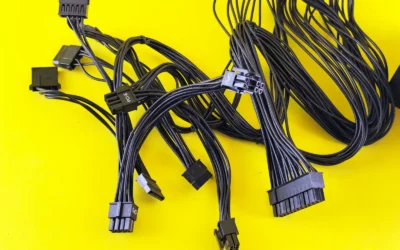
Fully modular cabling is highly recommended for gaming builds, especially in compact cases where airflow is tight. With a fully modular design you only connect the cables your system needs, which improves airflow, simplifies routing, and makes future changes easier. Also look at cable flexibility. Ultra flexible embossed cables with low profile combs, as seen on some premium models, can save you time and frustration during installation. For more help matching PSU size to chassis airflow, see our Cases & Airflow category and our guide to how to choose an airflow case for a hot GPU.
Efficiency, Noise and Component Quality
Efficiency ratings tell you how much power is wasted as heat. Cybenetics Gold efficiency, which both example units carry, indicates strong efficiency that helps keep temperatures and noise lower. One of the examples is rated for up to 91% efficiency, which translates to less heat dumped into your case and a quieter fan profile under load. Do not chase small efficiency differences at the expense of core features like ATX 3.1 support or proper protections.
Noise and longevity come from the fan and internal components. Look for a well tuned fan curve with a quality bearing, such as a 120mm rifle bearing fan that stays quiet even at higher loads, and for capacitors rated for high temperature operation like 105C rated capacitors for steady electrical performance. Features like Modern Standby compatibility can also improve low load efficiency and wake times if you use sleep often. You can explore more component context in our Power Supplies archive and our Graphics Cards section when planning GPU and PSU pairings.
To show what this looks like in practice, here are a few options that show the range:
This article contains affiliate links. If you buy through one of our links, CustomPCGaming may earn a commission at no extra cost to you. Commissions never influence which products we recommend or how we rank them. Read our Affiliate Disclosure for details.
Quick Picks at a Glance

Prime CORSAIR RM750x 750W Fully Modular ATX 3.1 Power
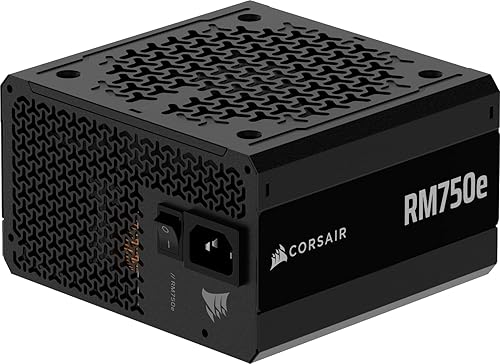
CORSAIR RM750e 750W ATX 3.1 Fully Modular PSU
As an Amazon Associate we earn from qualifying purchases. Product prices and availability are accurate as of the date/time indicated.
Pros
- ATX 3.1 and PCIe 5.1 ready with native 12V-2x6 support for latest GPUs
- Fully modular with flexible embossed cables for clean, easy building
- Cybenetics Gold efficiency for cooler, quieter, more efficient operation
- Premium build quality with Japanese capacitors and quiet 140mm FDB fan
- Excellent long term reliability with 10 year warranty
Cons
- 750W capacity may not be enough for extreme high end builds with flagship GPUs or heavy overclocking
- ATX form factor is not suitable for compact SFF or Mini ITX cases that require SFX supplies
- Lacks extra features like RGB lighting or software monitoring found on some competitors
The CORSAIR RM750x is a 750 watt fully modular power supply designed for gamers, creators, and PC builders moving to ATX 3.1 and PCIe 5.1 hardware. It is ideal for mid to high end systems that need stable power for the latest graphics cards without messy cable clutter.
In real world use, the native 12V-2x6 connector delivers direct, adapter free power to modern GPUs while handling transient spikes common with high performance cards. Cybenetics Gold certification means up to 91 percent efficiency, which translates to less wasted energy, lower heat, and quieter operation during gaming and heavy workloads.
Build quality is a clear strength, with 100 percent Japanese 105C rated capacitors and ultra flexible embossed cables with low profile combs for easier routing. The 140mm fluid dynamic bearing fan keeps cooling effective and noise low, and the fully modular design lets you connect only the cables you need for a cleaner build with better airflow.
There are a few tradeoffs to consider. At 750 watts, it is not the best fit for extreme enthusiast rigs with power hungry flagship GPUs that are better paired with 850W or 1000W units, or for small form factor cases that need SFX supplies. As a premium focused unit, it also lacks extras like RGB lighting or digital monitoring software found on some competing models.
Overall, the RM750x stands out as a quiet, efficient, and future ready power supply backed by a ten year warranty. For most modern gaming PCs, it offers the right balance of performance, reliability, and ease of installation, making it a smart long term investment.
Model: CORSAIR RM750x (CP-9020285-NA/AM) - 750W ATX Power Supply
Compliance: ATX 3.1 and PCIe 5.1 with native 12V-2x6 connector, Cybenetics Gold certified up to 91 percent efficiency
Design: Fully modular, ultra flexible embossed cables with low profile combs, air cooling with 140mm FDB fan
Build: 100 percent Japanese 105C rated electrolytic capacitors, ATX form factor, dimensions 2.3 x 3.39 x 5.91 inches, weight 3.9 pounds
Warranty: 10 year manufacturer warranty
Pros
- Fully modular design makes installation and cable management much easier
- Very quiet operation praised by users even during gaming
- Handles GPU transient spikes reliably thanks to ATX 3.1 compliance
- Gold efficiency and high quality capacitors with 7 year warranty
- Includes both native 12V-2x6 and PCIe 8 pin cables for wide compatibility
Cons
- Audible click on power on is normal for this model but can alarm first time builders
- Only one dedicated PCIe 8 pin cable included, additional GPUs may need the included dual adapter
- Rifle bearing fan is reliable but not as durable as fluid dynamic bearing fans found on higher end units
The CORSAIR RM750e is a 750W fully modular power supply designed for modern gaming and creator PCs. Built to the latest ATX 3.1 and PCIe 5.1 standards, it is aimed at builders running mid-range to high-end GPUs who need reliable power and future ready connectivity.
In real world use it delivers quiet, stable performance with Cybenetics Gold efficiency and strong transient response for GPU power spikes. Users report silent operation, easy cable routing and dependable power for cards like the RTX 3060 and RTX 2070 Super, even under heavy load.
Build quality is a clear strength with industrial grade 105°C rated capacitors, a compact 140mm casing and a full set of modular cables. The included native 12V-2x6 cable, EPS and SATA cables are flexible and well made, and the 120mm rifle bearing fan keeps noise low.
Drawbacks are minor but worth noting. The unit produces a brief click at startup which is normal but can be confusing at first. Cable selection is generous but power users with multiple older PCIe devices may need to use the dual adapter.
Overall the RM750e offers excellent value for builders who want quiet, efficient and dependable power with modern standards. It is a smart pick for clean, future proof builds backed by a 7 year warranty.
Model: CORSAIR RM750e CP-9020295-NA/AM, Form Factor: ATX, Wattage: 750W, Efficiency: Cybenetics Gold
Compliance: Intel ATX 3.1, PCIe 5.1 with native 12V-2x6 600W connector, Modern Standby compatible
Design: Fully modular, 120mm rifle bearing fan, 105°C rated capacitors, 140mm compact depth
Connectors: 1x 24 pin ATX, 2x 8 pin EPS 4+4 pin, 1x PCIe 8 pin 6+2 pin, 1x 12V-2x6, 1x 12V-2x6 to dual 8 pin adapter, 6x SATA, 2x PATA
Dimensions: 5.91 x 5.51 x 3.35 inches, Weight: 3.3 pounds, Warranty: 7 Year Manufacturer
Matching a Part to Your Build
If you are building in a compact mini ITX case and you specifically want SFX size, the question is the Corsair SF750 a good PSU for an RTX 5070 gaming build comes down to case support and cable reach. An SFX 750W unit makes sense when your chassis requires it, but if you have a standard ATX mid tower you will have more options, often with longer cables and more flexible routing. In that situation an ATX unit like the Power Supplies examples below can be easier to install and may offer quieter operation due to larger fan size.
For a typical 1440p high refresh build with an RTX 5070 and a current generation mid range CPU in an ATX case, a 750W ATX 3.1 PSU is a balanced choice. The CORSAIR RM750x ATX 3.1 PCIe 5.1 750W Power Supply illustrates the higher end pick in this wattage class, with Cybenetics Gold certification up to 91% efficiency, a native 12V-2×6 connector, and ultra flexible embossed cables that help with clean routing. That combination is helpful if you value low noise and a premium cable experience while keeping full ATX 3.1 transient protection.
If you want the same core ATX 3.1 and PCIe 5.1 readiness with a more value focused approach, the CORSAIR RM750e ATX 3.1 PCIe 5.1 Ready 750W Power shows how the essential features can be delivered in a streamlined package. It is fully modular, ATX 3.1 certified with PCIe 5.1 support, uses a 120mm rifle bearing fan with a tuned curve for quiet operation, and includes 105C rated capacitors and Modern Standby support. Choose this type of option when you want reliable modern connectivity and solid efficiency without paying for extra cable refinements.
Common Mistakes
Buying too little wattage because you only looked at average power. GPUs can create brief transient spikes well above their typical draw, and a PSU without ATX 3.1 style headroom can trip protections or cause instability. Always follow the GPU maker recommended wattage, add headroom over your combined CPU plus GPU estimate, and favor ATX 3.1 units that are designed to handle those excursions.
Ignoring form factor and cable clearance. An SFX unit is excellent for small cases but may need an adapter bracket in an ATX case and can have shorter cables, while an ATX PSU will not fit many compact chassis. Check your case manual for PSU length and mounting support, and verify that the included 12V-2×6 cable will reach your GPU cleanly without sharp bends.
Overlooking noise, efficiency, and protection features to save a small amount. A non modular or older standard PSU may seem cheaper up front but can cost you in heat, noise, and cable clutter, and may lack the protections you want for a current generation GPU. Look for fully modular cabling, Cybenetics Gold efficiency, and clear ATX 3.1 and PCIe 5.1 compliance on the spec sheet.
Who Should Wait or Buy Differently
A 750W SFX or ATX PSU is not ideal for you if your case cannot support its form factor, if you plan to upgrade soon to a much higher power GPU where the maker recommends a larger capacity, or if you are building a very compact system where you need to prioritize cable length and thermal headroom differently. In those situations it is better to wait and choose a unit that matches your final case and GPU plan, or to step to a different wattage class that gives you comfortable headroom for your specific CPU and GPU combination. If you are unsure, compare your case specs and the GPU maker guidance before you commit, and consider browsing our Budget Build Guides for balanced part pairings.
Frequently Asked Questions
Is 750W enough for an RTX 5070 gaming build?
For most single GPU gaming builds with a modern CPU, a quality 750W ATX 3.1 PSU is generally enough when you follow the GPU maker recommended wattage and leave headroom over your combined draw. If your CPU is particularly power hungry or you plan to upgrade to a higher tier GPU, you may want more headroom. Always check the spec sheet and your case power needs before you decide.
Do I need ATX 3.1 and a native 12V-2×6 connector for an RTX 5070?
You should prioritize them. ATX 3.1 with PCIe 5.1 support is designed to handle transient spikes and provides a native 12V-2×6 connection so you can connect the GPU directly without an adapter. Both example units in this guide include that support, which simplifies installation and improves stability with current generation cards.
Should I choose SFX like the SF750 or an ATX PSU for my RTX 5070 build?
Choose based on your case. Pick an SFX unit like the SF750 when your chassis requires SFX for fit, and pick a standard ATX unit when your case supports ATX and you want longer cables and potentially quieter operation. Either way, confirm PSU clearance, mounting support, and that the PSU is fully modular with modern ATX 3.1 compliance.


Write Your Review
No reviews yet. Be the first to share your experience!