

Figuring out how to choose RAM speed and capacity for a Ryzen 9000 build can feel confusing when every kit advertises a different speed, latency and capacity. You want memory that lets your AM5 processor run efficiently, fits your case and motherboard, and leaves room for the games and apps you actually use, without paying for headroom you will never need.
In this buying guide you will learn the decision framework we use when evaluating DDR5 for Ryzen 9000. We will cover the speed sweet spot and why it matters for the memory controller, how to decide between 32GB and 64GB, what timings and voltage really tell you, and how to check physical and platform compatibility. You will also see a few options that show the range, so you can map the advice to a real build based on your resolution and refresh target, platform and socket, case size and clearance, power budget, and whether you are building for now or for a longer upgrade path. If you are still exploring the category, start with our Memory (RAM) archive for the latest DDR5 explainers.
What Actually Matters
The Speed Sweet Spot for Ryzen 9000
For Ryzen 9000 on AM5, DDR5 speed is not just a bigger number is better story. The memory controller and Infinity Fabric work best when memory runs in a balanced ratio, and owners commonly report that DDR5-6000 is the practical sweet spot for stability and performance on this platform. Both example kits in this guide are rated up to DDR5-6000, which reflects where AMD and board partners have focused their validation. Going much lower can leave performance on the table, while going much higher often requires manual tuning and may not stay in that efficient ratio without extra voltage and BIOS adjustments.
What you see on the box is an overclock profile, not the default boot speed. Per the spec sheet, these kits will boot at the JEDEC default SPD speed at default BIOS settings, and you enable the rated speed through AMD EXPO in the BIOS. That is considered overclocking, so it is done at your own risk and may void warranty if you push beyond manufacturer specifications. Always check your motherboard QVL or configurator tool for validated kits, and make sure your board is on a recent BIOS. For the kits shown here, validation covers AMD X870, X670, B850, B840 and B650 platforms, which covers most current AM5 choices. If you are pairing memory with a new graphics card, our Graphics Cards section can help you balance GPU and memory budget.
Capacity Planning: 32GB vs 64GB
Capacity is about what your system needs to keep in memory at once. For most gamers targeting 1080p or 1440p at high refresh rates, 32GB configured as 2x16GB is the comfortable baseline in 2026. It gives you headroom for the game, background apps, browser tabs and voice chat without forcing the system to page to storage. According to owners, 32GB is also the point where you stop worrying about closing apps before launching a demanding title, which is why it is the most common recommendation for pure gaming builds.
64GB as 2x32GB makes sense when your workload regularly exceeds gaming. If you edit 4K video, work with large photo libraries, run virtual machines, compile large projects, or stream with multiple production apps open, the extra capacity prevents slowdowns when many tasks are resident. It is also a way to buy headroom for a longer upgrade path if you plan to keep the platform for several years and do not want to replace the kit later. The trade off is cost and slightly more stress on the memory controller compared to a 2x16GB kit, so do not buy 64GB just because it sounds more future proof if your actual use is gaming and light multitasking.
Timings, Voltage and EXPO Support
Timings tell you how many clock cycles the memory needs to complete operations, and lower numbers generally mean quicker response at the same frequency. The G.SKILL Trident Z5 Neo RGB Series DDR5 RAM kit in our examples is rated at CL30-40-40-96 at 1.40V for its DDR5-6000 EXPO profile, which is a tight primary timing for that speed. Tighter timings can help with latency sensitive tasks, but the benefit is smaller than moving from a very low speed to the sweet spot. Focus on the full timing string and voltage together, not just CAS latency alone.
Voltage and profile support matter for ease of use. DDR5 includes onboard voltage regulation, and kits that advertise AMD EXPO and Intel XMP 3.0 compatibility give you one click profiles that set frequency, timings and voltage together. The CORSAIR Vengeance DDR5 32GB (2 x 16GB) for example lists both AMD EXPO and Intel XMP 3.0 support, plus onboard voltage regulation that allows finer tuning through software than older motherboard controlled approaches. Per the spec sheet, maximum speed requires overclocking and BIOS adjustments, and results depend on your motherboard and CPU. If you are not comfortable tuning manually, choose a kit whose EXPO profile is validated for your exact board and be prepared to run at JEDEC defaults if stability is your priority.
Form Factor, Kit Configuration and Physical Fit
For desktop AM5 builds you need Non-ECC, DDR5 U-DIMM, 288-pin modules, which both example kits provide. Always buy a matched kit rather than mixing two separate kits, even if the part numbers look identical. Manufacturers sell kits as matched sets that are designed to run together, and mixing can result in stability issues or failure to boot at the rated speed. A 2-module kit also leaves two DIMM slots free on most ATX boards for a future matched upgrade, though adding a second kit later still requires revalidation.
Physical clearance is easy to overlook. Tall heatspreaders and RGB bars can interfere with large air coolers, so check cooler height and RAM clearance against your case before you buy. Follow the manufacturer mounting instructions, handle modules by the edges, and use anti-static precautions when installing. If you are working inside a compact case or using a big dual tower cooler, consider low profile modules or verify measurements from the cooler and case spec sheets. Our Budget Build Guides have examples of how case and cooler choices constrain memory height.
To illustrate how these criteria play out in real products, here are a few options that show the range from mainstream 32GB to higher capacity 64GB at the Ryzen 9000 sweet spot:
This article contains affiliate links. If you buy through one of our links, CustomPCGaming may earn a commission at no extra cost to you. Commissions never influence which products we recommend or how we rank them. Read our Affiliate Disclosure for details.
Quick Picks at a Glance

Prime G.SKILL Trident Z5 Neo RGB 64GB DDR5 6000 CL30 Kit

CORSAIR Vengeance DDR5 32GB (2x16GB)
As an Amazon Associate we earn from qualifying purchases. Product prices and availability are accurate as of the date/time indicated.
Pros
- Excellent 6000MT/s CL30 performance, the recognized sweet spot for AMD AM5
- High 64GB capacity in a matched 2x32GB kit for future proofing
- Stunning Trident Z5 Neo RGB design with efficient heat dissipation
- Easy EXPO setup and broad AMD motherboard QVL validation
- Limited lifetime manufacturer warranty
Cons
- Requires enabling EXPO in BIOS to reach rated 6000MT/s, defaults to lower JEDEC speed otherwise
- Relatively high 1.40V EXPO voltage runs warmer than lower voltage kits
- Designed for AMD EXPO, Intel users should choose an XMP variant for best compatibility
The G.SKILL Trident Z5 Neo RGB F5-6000J3040G32GX2-TZ5NR is a 64GB DDR5 kit built specifically for AMD AM5 platforms, delivering two matched 32GB modules rated at DDR5-6000. It is designed for gamers, content creators and power users who need high capacity without sacrificing speed on Ryzen 7000 and 9000 systems.
In real world use, DDR5-6000 at CL30-40-40-96 is widely considered the sweet spot for AMD Zen 4 and Zen 5, offering excellent gaming frame rates and low latency. With AMD EXPO enabled in BIOS, the kit hits its rated speed with one click, while the default JEDEC profile ensures reliable booting on any compatible board.
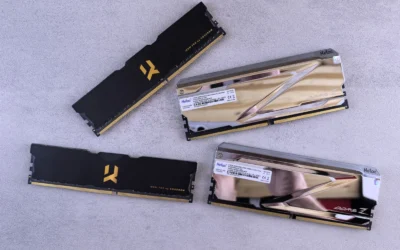
Build quality is premium, with a matte black brushed aluminum heatspreader that dissipates heat efficiently and looks sharp in any build. The integrated RGB bar is bright, fully customizable through motherboard software, and adds flair without being overly bulky for most air coolers.
There are a few caveats to consider. The 1.40V EXPO voltage is higher than many DDR5 kits and reaching the rated speed depends heavily on your CPU and motherboard silicon quality. It is also AMD EXPO focused, so Intel users should choose a Trident Z5 RGB XMP variant for guaranteed compatibility.
Overall, this is a top tier DDR5 kit for AMD enthusiasts who want 64GB of fast, low latency memory with headroom for multitasking and future games. If you are building a high end AM5 gaming or workstation PC and want plug and play EXPO performance with standout looks, this kit is an excellent investment.
Model: F5-6000J3040G32GX2-TZ5NR | Trident Z5 Neo RGB Series | 64GB (2x32GB) DDR5 U-DIMM, 288-pin, Non-ECC
Speed & Timings: Up to 6000MT/s (DDR5-6000) at CL30-40-40-96, 1.40V via AMD EXPO profile. JEDEC default profile for standard boot compatibility.
Compatibility: Validated for AMD X870, X670, B850, B840 and B650 platforms. Check G.SKILL QVL or RAM Configurator for your motherboard.
Features: Matte black aluminum heatspreader, customizable RGB lighting, Intel/AMD desktop compatible form factor. Limited Lifetime Manufacturer Warranty.
To get the rated 6000MT/s, you must enable the AMD EXPO profile in your motherboard BIOS, as the kit will boot at JEDEC default speed otherwise. Enabling EXPO is considered overclocking and stability depends on your CPU memory controller and motherboard.
Do not mix this kit with other memory kits, even of the same model, as mixing can cause stability issues or boot failure. Always install matched kits as sold.
For best results, use a motherboard from the G.SKILL QVL list and update to the latest BIOS before enabling EXPO. Refer to G.SKILL's website for the most current validated configurations.
Pros
- Excellent 6000MHz bandwidth for gaming and content creation workloads
- Universal compatibility with both AMD EXPO and Intel XMP 3.0 platforms
- Onboard voltage regulation allows finer, more stable overclocking through iCUE
- Compact aluminum heatspreader ensures broad motherboard and CPU cooler compatibility
- Limited lifetime warranty and strong reputation for reliability
Cons
- Requires BIOS adjustments to enable EXPO or XMP and reach advertised 6000MHz speed
- CL36 latency is solid but not the tightest option for enthusiast tuners
- Isolated user reports of a faulty stick requiring replacement
The CORSAIR Vengeance DDR5 32GB kit bundles two 16GB modules rated up to 6000MHz for modern AMD and Intel DDR5 desktops. It is aimed at gamers, creators and power users who want a straightforward high speed upgrade without bulky heatsinks or complex tuning.
Standout features include dual AMD EXPO and Intel XMP 3.0 profiles for one click overclocking and onboard voltage regulation for more precise control through CORSAIR iCUE. In real world use, the tightly screened chips deliver noticeably faster load times, smoother multitasking and improved rendering performance when the profile is enabled.
Build quality is a clear strength, with a distinctive solid aluminum heatspreader that keeps temperatures in check while maintaining a low profile for wide compatibility. The compact DIMM design fits easily under large air coolers and the modules feel premium and well constructed.
There are a few caveats to consider. You must enable the EXPO or XMP profile in BIOS to hit the full speed, and the CL36 timing, while competitive, is not the lowest latency available for hardcore overclockers. A small number of buyers have also reported receiving a faulty stick, so testing after install is wise.
Overall, this Vengeance DDR5 kit is a reliable, high performance choice for a new DDR5 build. If you want proven 6000MHz speed, easy tuning and broad platform support in a cooler friendly package, it is an excellent pick.
Model: CORSAIR Vengeance DDR5 CMK32GX5M2E6000Z36 (2 x 16GB)
Technology: DDR5 DIMM, 288-Pin, Dual Channel Kit
Speed: Up to 6000MHz (requires EXPO/XMP enabled in BIOS)
Latency: CL36, Voltage 1.4V, Registered Memory
Compatibility: AMD EXPO and Intel XMP 3.0, Desktop DDR5 Motherboards
Features: Onboard Voltage Regulation, CORSAIR iCUE Support, Solid Aluminum Heatspreader
Warranty: Limited Lifetime Warranty
Choose this 32GB 6000MHz kit if you are building or upgrading to a DDR5 system and want the current sweet spot for gaming and productivity. It balances capacity, speed and compatibility without requiring manual timing adjustments.
Make sure your motherboard and CPU support DDR5 and have an available EXPO or XMP option in BIOS to unlock full performance. The low profile design is especially helpful if you use a large tower air cooler.
For best results, install modules in the recommended slots, enable the profile in BIOS, and verify stability with a memory test. This ensures you get the advertised speed and catch any rare hardware issues early.
Matching a Part to Your Build
For a pure gaming build targeting 1440p high refresh with a Ryzen 9000 CPU and a modern GPU, the straightforward choice is a 32GB (2x16GB) DDR5-6000 kit with EXPO support. The CORSAIR Vengeance DDR5 32GB (2 x 16GB) aligns well here because its dual EXPO and XMP 3.0 profiles make it easy to enable the rated speed on a wide range of AM5 boards, and the 2x16GB layout keeps stress on the memory controller lower than a 4-DIMM population. You get the sweet spot speed without paying for capacity you will not use, and you can allocate budget to the GPU or a better cooler. See how we balance those trade offs in builds like the ryzen 5 7600 RX 7700 XT 1000 dollar gaming PC amazon build where memory is sized to the gaming target first.
For a gaming plus creation or streaming build where you edit video, run Chrome with many tabs, Discord, OBS and a game at the same time, 64GB (2x32GB) DDR5-6000 is the more comfortable fit. The G.SKILL Trident Z5 Neo RGB Series DDR5 RAM kit is an example of this approach, offering 64GB total capacity with a tight CL30-40-40-96 EXPO profile at 1.40V and RGB styling. You gain headroom for large timelines and multitasking while staying at the validated speed for X870, X670, B850, B840 and B650 boards. Just confirm QVL support for that exact model on your motherboard, and remember you will need to enable EXPO manually to reach the rated speed.
For a compact or value focused AM5 build where you want stability and easy setup, prioritize a validated 2-module kit at DDR5-6000 with clear QVL coverage and a heatspreader that clears your cooler. If your case has limited CPU cooler height or you use a large air cooler that overhangs the DIMM slots, measure before choosing RGB tall modules. In that scenario either capacity can work, but many builders start with 32GB and plan to replace the kit with a larger matched set later rather than mixing kits. Whichever you choose, install as a matched pair in the primary slots recommended by your motherboard manual and enable the EXPO profile only after confirming the system boots reliably at JEDEC defaults.
Common Mistakes
Mixing kits or filling four DIMMs without a plan. Buying two separate 2x16GB kits to make 64GB, or adding a second kit later, often leads to instability at the rated DDR5-6000 speed. Kits are binned and validated as a set, and the memory controller has to work harder with four modules. If you need 64GB, buy a single matched 2x32GB kit from the start and check the QVL for that exact part number.
Assuming the advertised speed is automatic. Systems boot at JEDEC default SPD speed unless you enter the BIOS and enable the AMD EXPO profile. Maximum speed requires overclocking and depends on your CPU and motherboard, and pushing beyond validated settings is at your own risk. Update the BIOS using the board maker instructions, enable EXPO, then research stability with your normal workload before tightening timings or voltage further.
Ignoring physical and platform compatibility. Tall RGB heatspreaders can conflict with big air coolers, and some boards have stricter QVL lists for high speed DDR5. Check cooler height and RAM clearance against your case, verify the kit is listed for your X870, X670, B850, B840 or B650 board, and handle modules with anti-static care. Also remember these are Non-ECC U-DIMMs for desktop use, so do not expect server ECC features.
Who Should Wait or Buy Differently
This sweet spot DDR5-6000 approach is not ideal for everyone. If you are on a tight budget and your current workload is light gaming and web browsing, you may be better served by a more modest capacity or by waiting for a sale on a validated kit rather than stretching for 64GB you will not use. It is also not a good fit if you need ECC memory for workstation reliability, or if your motherboard or CPU is an older DDR4 platform that cannot use DDR5 at all. In those cases, confirm your platform requirements first, or consider a lower cost 32GB kit and put the savings toward a GPU or SSD that will affect your experience more directly.
Frequently Asked Questions
Do I need 64GB for gaming on Ryzen 9000?
For most gamers, 32GB as 2x16GB at DDR5-6000 with EXPO is the balanced choice in 2026. You get the sweet spot speed and enough capacity for games plus background apps. Choose 64GB as 2x32GB only if you regularly edit large media, run virtual machines, or keep many heavy apps resident while gaming.
Is DDR5-6000 the best speed for Ryzen 9000, and do I need to enable EXPO?
Per the spec sheets evaluated, DDR5-6000 is the commonly validated sweet spot for Ryzen 9000 on AM5 boards including X870, X670, B850, B840 and B650. Kits boot at JEDEC default speed, so you must enable the AMD EXPO profile in BIOS to reach the rated speed, which is an overclock and should be done at your own risk after checking QVL support.
Can I mix two kits or add more RAM later?
Mixing memory kits is not recommended, even if they share the same model number. Kits are sold as matched sets designed to run together, and mixing can cause stability issues or system failure at the rated speed. If you think you will need more capacity later, buy the larger matched kit now or plan to replace the existing kit with a new validated matched set.
Write Your Review
No reviews yet. Be the first to share your experience!